Power capacitors play a vital role in improving power factor, stabilizing electrical systems, and reducing energy losses. In industrial and commercial facilities, power capacitors are installed in capacitor banks or reactive power compensation cabinets to maintain efficient operations. When a capacitor stops functioning or shows abnormalities, production systems may suffer from voltage fluctuation, overheating, or unexpected downtime.
Understanding how to check if a power capacitor has power is therefore essential for plant engineers, procurement managers, electrical contractors, and facility maintenance teams.
Table of Contents
Why a Power Capacitor Needs Testing
A power capacitor does not operate like traditional electrical devices. Unlike motors or transformers, there is no visible sign that indicates whether a power capacitor has power. The internal structure stores energy, which means it may remain charged even after disconnection. Therefore, careful inspection and safe testing procedures are required. For B2B buyers and industrial users, regular evaluation minimizes these risks:
- Reactive power loss
- Reduced efficiency of the power distribution network
- Unexpected equipment shutdown
- Higher energy bills due to low power factor
Routine testing also extends equipment lifespan and lowers operational costs.
Safety Precautions Before Testing
1. Ensure system isolation
Disconnect the power supply and confirm that the capacitor is isolated from the electrical grid.
2. Discharge stored energy
A capacitor retains charge. The stored charge should be manually discharged using approved discharge tools by qualified personnel.
3. Ensure grounding
Grounding avoids electric shock and prevents tools from shorting during testing.
Only experienced technicians or electricians should perform testing. In industrial settings, maintenance teams follow SOPs and lockout–tagout procedures.
Safety becomes even more critical when dealing with devices designed for demanding industrial environments. High Voltage Power Capacitor units are designed to provide reliable performance in complex electrical networks, but due to stored energy, strict testing procedures must be followed.
Step-by-Step Guide: How to Check if a Power Capacitor Has Power
Step 1: Visual inspection
Before measuring anything, always start with appearance. Look for:
- Swelling or bulging
- Burn marks or unusual odors
- Leaking dielectric material
- Loose or damaged terminals
Physical deformation indicates internal faults.
Step 2: Confirm the capacitor is discharged
Capacitors retain charge even when disconnected. Discharge only with qualified equipment.
Step 3: Use a multimeter with capacitance measurement
A multimeter with a capacitance function helps determine whether the capacitor stores energy properly. Procedure overview:
- Set the multimeter to capacitance mode.
- Connect test leads to the capacitor terminals.
- Observe if the value fluctuates or stabilizes at an expected level.
If the capacitance value does not rise or remains at zero, the capacitor may not be charged and could be damaged.
Step 4: Check for continuity
A continuity test helps determine whether internal components are still connected.
- A continuous beep means internal circuits are complete.
- No sound usually means an internal open circuit.
Step 5: Measure equivalent series resistance (ESR)
Although not mandatory, ESR analysis gives insight into capacitor health. Excessive resistance indicates deterioration.
Step 6: Verify performance under load
Final confirmation involves observing capacitor behavior during operation. This must be performed by trained personnel to avoid safety hazards. Signs of an unhealthy capacitor include:
- Fluctuating power factor
- Sudden disconnection from the compensation system
- Overheating of reactive power equipment
Routine testing allows proactive maintenance without interrupting production schedules.
Common Problems Found During Inspection
| Issue Identified | Meaning |
| Capacitance value drops steadily | Aging or dielectric degradation |
| Visible deformation or burn marks | Internal failure |
| Terminal damage | Risk of arcing or unstable connection |
| Excessive ESR | Reduced efficiency and overheating |
Power capacitors are consumable components. Proactive replacement prevents costly downtime.
How to Tell if a Power Capacitor Is Still Good
A healthy power capacitor should:
- Maintain stable capacitance during testing
- Show no swelling or deformation
- Stay within acceptable temperature range during operation
- Integrate smoothly with reactive power compensation devices
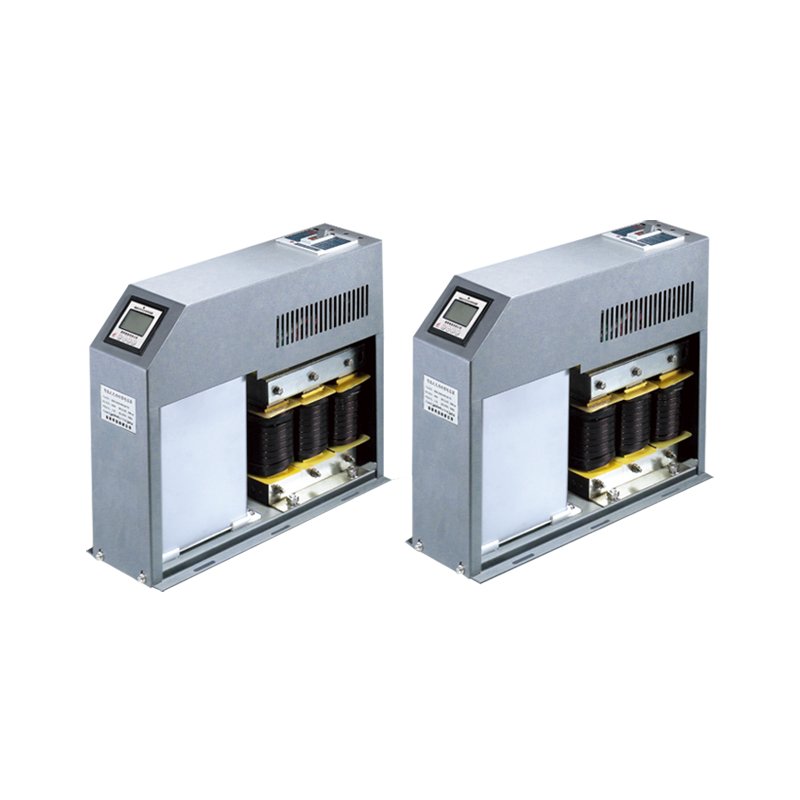
In industrial usage, capacitors are often part of automated capacitor banks that intelligently switch based on power factor demand. When a single capacitor fails, the entire system may compensate by switching more frequently or operating outside optimal ranges—this increases wear and energy waste.
When Should a Capacitor Be Replaced?
Consider replacement under these conditions:
- Capacitor shows repeated failure in capacitance testing
- Physical damage or leakage is detected
- The capacitor frequently drops offline in the compensation system
- Unstable power factor persists despite proper control settings
Predictive maintenance helps reduce energy consumption and improves power distribution system reliability.
Why Businesses Choose Professional Manufacturers
In B2B procurement, reliability and long-term stability are key decision factors. A strong manufacturer offers:
- Customized capacitor solutions based on power factor correction needs
- Technical guidance during system integration
- Long-term supply for project expansion or replacement
- Application support for capacitor bank configuration
ZHIMING GROUP CO., LTD. focuses on power capacitor design and manufacturing, with capabilities covering high-voltage and low-voltage capacitors, capacitor switches, compensation controllers, and integrated capacitor equipment. Products are widely used in industrial facilities, commercial buildings, and energy infrastructure projects.
The group adheres to continuous innovation, technical R&D, and quality assurance based on international standards and carries multiple technical certifications and patents.
Why Testing Power Capacitors Matters to B2B Buyers
In a business environment, testing capacitors helps achieve:
- Stable system operation
- Better cost control in energy consumption
- Reduced downtime and maintenance frequency
- Improved efficiency in reactive power management
For procurement teams, well-tested power capacitors ensure long-term ROI for electrical systems and maximize operational stability. For buyers and technicians exploring installation and application-level details, additional guidance may be useful. For more information, see our article Does It Matter How You Plug In a Power Capacitor?
Final Thoughts
Checking whether a power capacitor has power is a necessary step in maintaining efficient electrical systems. Visual inspection, multimeter testing, ESR checking, and load observation provide reliable tracing methods. When handled correctly, these practices reduce energy losses, extend equipment lifespan, and support better operational continuity.
In B2B projects involving reactive power compensation, choosing a professional capacitor manufacturer ensures stable supply, technical expertise, and long-term system support.
By applying these methods, businesses can confidently assess capacitor condition and maintain efficient power systems.