Reactive power imbalance is a pervasive issue in modern power systems, triggering low power factor, line losses, voltage fluctuations and utility penalty charges across industrial, commercial and residential scenarios. Reactive power compensation devices are specialized electrical equipment designed to balance reactive power demand, stabilize grid voltage, optimize power factor and enhance overall transmission efficiency. These devices target the lagging or leading reactive power generated by inductive and capacitive loads, delivering targeted regulation to keep power systems operating in an optimal state. This guide classifies core compensation devices, elaborates their characteristics, application boundaries and selection logic, combining field application experience to clarify practical usage details.
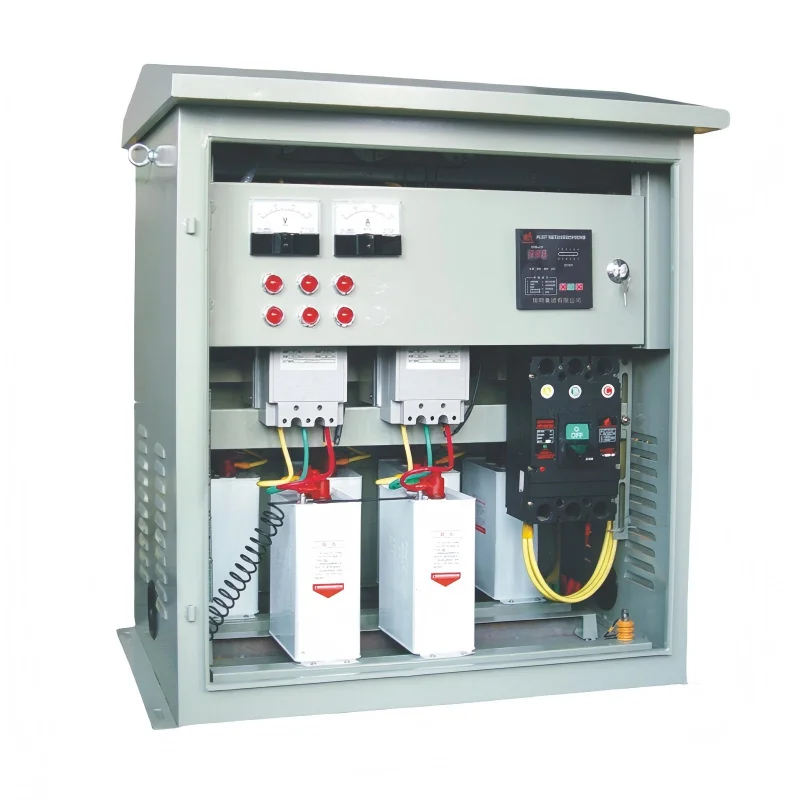
Table of Contents
Classification of Reactive Power Compensation Devices by Operating Principle
Reactive power compensation devices are divided into distinct categories based on regulation mode, dynamic response speed and structural design, catering to different load characteristics and compensation precision demands. Each category has unique adaptive scenarios, with differences in investment cost, maintenance difficulty and compensation effect. The mainstream classification covers passive compensation devices, active compensation devices and hybrid compensation devices, covering fixed and dynamic regulation needs of various power grids.
- Passive compensation devices: Rely on passive components like capacitors and reactors to realize fixed or stepped reactive power regulation, simple structure and low cost
- Active compensation devices: Adopt power electronic conversion technology to achieve fast, stepless dynamic compensation, suitable for fluctuating and impact loads
- Hybrid compensation devices: Integrate passive and active modules, balancing compensation effect, cost and stability for large-scale power systems
Typical Passive Reactive Power Compensation Devices
Shunt Capacitor Bank
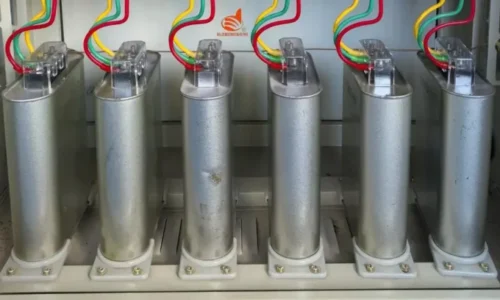
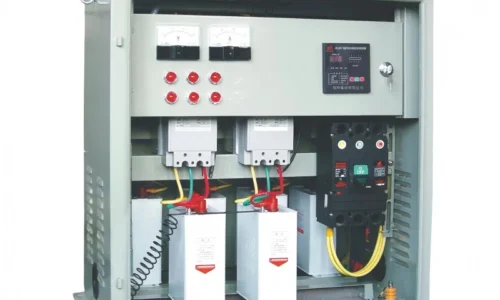
The shunt power capacitor bank is the most widely used static reactive power compensation device, mainly used to offset lagging reactive power generated by inductive loads such as motors, transformers and compressors. It stores electric energy in the form of electric field, outputs leading reactive power in parallel with the load, neutralizes reactive power deficit and improves system power factor. This device features mature technology, small floor area and low initial investment, suitable for steady load scenarios with small fluctuation range.
Shunt Reactor and Series Reactor
Shunt reactors absorb excess leading reactive power, preventing voltage overrun caused by light load in high-voltage transmission systems, mostly applied in substations and long-distance transmission lines. Series reactors are matched with capacitor banks to limit inrush current and harmonic magnification, protecting compensation equipment from impulse damage and enhancing system operation stability. Both reactor types belong to auxiliary passive compensation equipment, often used in combination with capacitor banks.
Fixed Capacitor-Reactor (FC) Combination Device
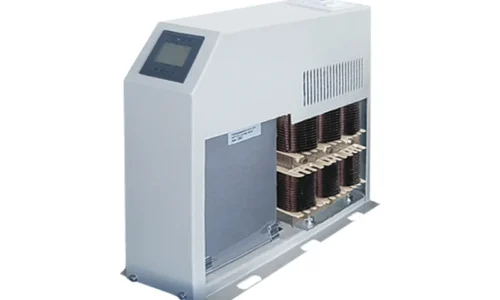
This device combines capacitors and reactors in fixed proportion, realizing basic reactive power compensation and harmonic filtering simultaneously. It is suitable for occasions with small load changes and low harmonic content, realizing one-time investment and long-term stable operation without complex control modules.
Active and Dynamic Reactive Power Compensation Devices
For impact loads, fluctuating loads and nonlinear loads (such as electric arc furnaces, frequency conversion equipment, electric vehicle charging stations), passive devices cannot meet fast response demands, so active dynamic compensation devices become the preferred solution. These devices adopt fully-controlled power electronic devices, with millisecond-level response speed, realizing stepless continuous regulation of reactive power.
- Static Var Generator (SVG): Also known as static synchronous compensator, directly generates or absorbs reactive power through inverter circuit, with high compensation precision and strong harmonic suppression ability
- Static Var Compensator (SVC): Adopts thyristor controlled reactor (TCR) and fixed capacitor (FC) combination, realizing stepped dynamic regulation, cost-effective for medium and large power systems
- Active Power Filter (APF): Focuses on harmonic elimination while completing reactive power compensation, suitable for scenarios with serious harmonic pollution and high power quality requirements
FAQ
Which reactive power compensation device is best for small industrial workshops?
For small industrial workshops with steady inductive loads and low load fluctuation, shunt capacitor bank is the most cost-effective choice. It can effectively improve power factor, avoid utility penalties and reduce line losses, with simple installation and low maintenance workload. If the workshop contains a small number of nonlinear loads, a capacitor bank with series reactor can be selected to suppress harmonic interference.
What is the core difference between passive and active reactive power compensation devices?
Passive devices rely on passive components for fixed or stepped compensation, slow response and low cost, suitable for steady loads; active devices use power electronics for fast stepless regulation, strong adaptability to fluctuating loads, but higher investment cost. Passive devices solve basic compensation needs, while active devices meet high-precision and dynamic power quality demands.
Can reactive power compensation devices be used in residential power systems?
Residential systems have small reactive power demand, mostly using miniature compensation modules or integrated power factor correction devices. Large-scale devices like capacitor banks and SVG are not necessary for residential use, while small household appliances carry built-in passive compensation circuits to optimize local power factor and reduce energy waste.