If you look at the electricity bill for a large factory or a sprawling office complex, you might notice a strange charge near the bottom. It isn’t for the amount of energy used, but for how “efficiently” it was used. This is often called a Power Factor penalty, and for many businesses, it is a massive, invisible leak in their budget.
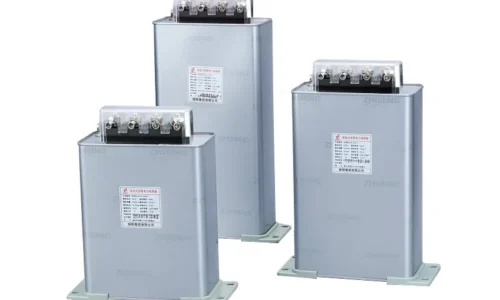
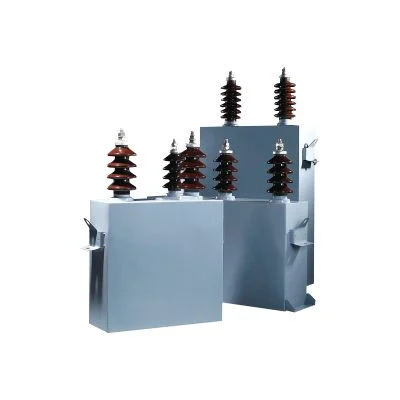
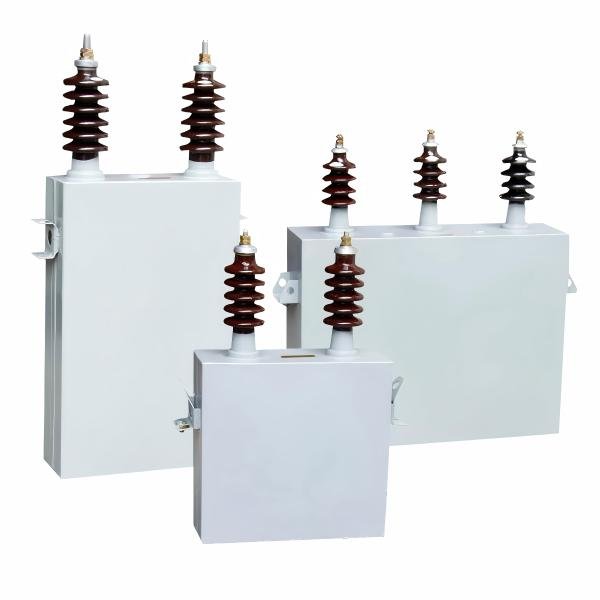
This is exactly why we use the shunt power capacitor.
It isn’t just a piece of technical equipment for the sake of engineering; it is a financial tool. While the physics behind it involves complex vectors and angles, the practical reason for its existence is simple: our electrical grids are clogged with “useless” current, and this device clears the blockage.
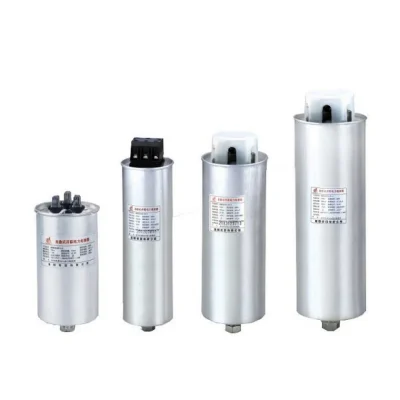
Table of Contents
The Problem with Inductive Loads
To understand why we need these devices, you have to look at what we are plugging into the wall. Most industrial work is done by motors. Compressors, conveyors, pumps, fans—they all use magnetic fields to turn electricity into motion.
These are called “inductive loads.” The tricky thing about them is that they demand a specific type of energy—Reactive Power—just to create that magnetic field. They borrow this energy from the grid, use it to magnetization, and then send it back, back and forth, 60 times a second.
This back-and-forth movement clogs up the wires. It creates traffic. The utility company has to generate this power and send it down the line, even though it doesn’t actually “do work” (like lighting a bulb or heating an oven).
A shunt power capacitor solves this by acting as a local storage tank for that magnetic energy. Instead of the motor asking the power plant for it, it asks the capacitor sitting right next to it. It’s like having a water cooler at your desk so you don’t have to walk to the kitchen every time you’re thirsty.
Financial Benefits of Installing a Shunt Power Capacitor
The most compelling reason facility managers sign off on these installations is the return on investment (ROI). It’s purely observational: you install the box, and the bill goes down.
- Eliminating Penalties: Utilities hate low power factor because it stresses their equipment. If your efficiency drops below a certain point (usually 0.95 or 0.90), they hit you with surcharges. The capacitor fixes the math, removing the fine.
- Lowering Demand Charges: Many industrial tariffs are based on peak kVA (Apparent Power) demand. By reducing the reactive portion of the load, the total kVA drops, lowering the monthly base rate.
- Reduced Losses: When you reduce the current flowing through your internal cables, you reduce heat (I²R losses). It’s a small amount, but over a year, it adds up to real money saved on wasted heat.
Voltage Support and System Stability
Have you ever been in a building where the lights dim momentarily when the air conditioner kicks on? That is a voltage dip (or sag).
It happens because the rush of current to the motor pulls down the pressure in the electrical pipes. A shunt power capacitor is excellent at propping this up. Because it is connected in parallel (shunt) to the system, it provides a steady voltage support.
For facilities at the end of a long rural power line, voltage drop is a constant headache. Machines might stall, or computers might reboot unexpectedly. Installing capacitors acts like a stiffener for the local grid, keeping the voltage within the safe “green zone” so sensitive electronics don’t panic and shut down.
Freeing Up System Capacity
There is another reason to use a shunt power capacitor that often gets overlooked until a factory tries to expand.
Every transformer has a limit. It can only handle so much total power (kVA). If your transformer is full of “reactive foam” (useless current), you have no room for more machines. You might think you need to buy a bigger, expensive transformer.
But often, you don’t. By installing capacitors, you remove the reactive load from the transformer. Suddenly, you have “free” capacity again. You can add more motors or assembly lines to the existing electrical infrastructure without blowing a fuse or overheating the main transformer.
| Parameter | Without Shunt Capacitor | With Shunt Capacitor |
|---|---|---|
| Power Factor | Low (e.g., 0.75 – 0.85) | High (e.g., 0.95 – 0.99) |
| Utility Bill | Includes Surcharges/Penalties | No Surcharges |
| Line Current | High (Cables run warmer) | Reduced (Cables run cooler) |
| Transformer Capacity | Maxed out by reactive load | Capacity released for new loads |
| Voltage Stability | Prone to dips and sags | Stable and consistent |
Why "Shunt" and Not Series?
You might wonder why we connect them in parallel (shunt) rather than in a line (series).
It comes down to control. A shunt power capacitor provides a fixed amount of reactive power regardless of how much current the load is drawing (mostly). This makes them predictable and easy to switch on and off as needed.
Series capacitors are used, but they are wilder beasts. They are typically found on massive cross-country transmission lines to improve stability over hundreds of miles. For a factory or a city substation, the shunt connection is safer, easier to maintain, and does a better job of correcting the specific problem of poor power factor. If you want to know more about shunt power capacitor, please read What is a shunt power capacitor.
Resources
For further reading on the economics and physics of power correction, please refer to these sources:
- Power Factor Correction – Wikipedia: A deep dive into the calculations and benefits of correcting power factor.
FAQ
Does a shunt power capacitor save energy at home?
Usually, no. Residential meters generally charge for “Real Power” (Watts), which is what your appliances actually consume. While a capacitor might reduce heat in your wiring slightly, the savings are negligible for a homeowner compared to the cost of the device.
Are there risks to using them?
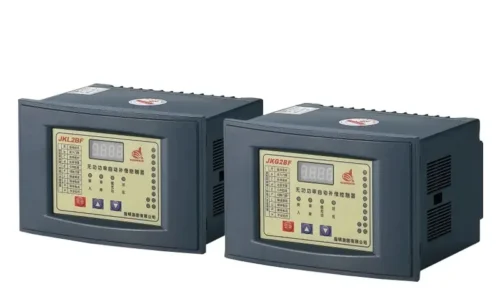
es, if not managed correctly. If you leave a large capacitor bank connected when the factory motors are turned off (like on weekends), the voltage can rise to dangerous levels. This is why automatic controllers are used to switch them off when not needed.
How long do shunt power capacitors last?
A typical unit lasts about 10 to 15 years. However, heat is their enemy. If the cooling fans in the cabinet fail, or if the grid has a lot of “harmonic” noise (dirty power), the life of a shunt power capacitor can be cut in half.