If you have ever walked past a utility substation or through the back room of a large factory, you might have heard a deep, steady hum. That is the sound of massive amounts of electricity moving through transformers and motors. But there is a silent partner in that room, usually sitting quietly in a gray metal enclosure, doing some of the most important work on the grid.
That component is the shunt power capacitor.
It isn’t a battery, and it doesn’t generate electricity in the way a generator does. Instead, it acts like a shock absorber for the electrical system. Without it, our power grids would be incredibly inefficient, voltage levels would drop unpredictably, and your electricity bill—especially if you run a factory—would be astronomically higher.
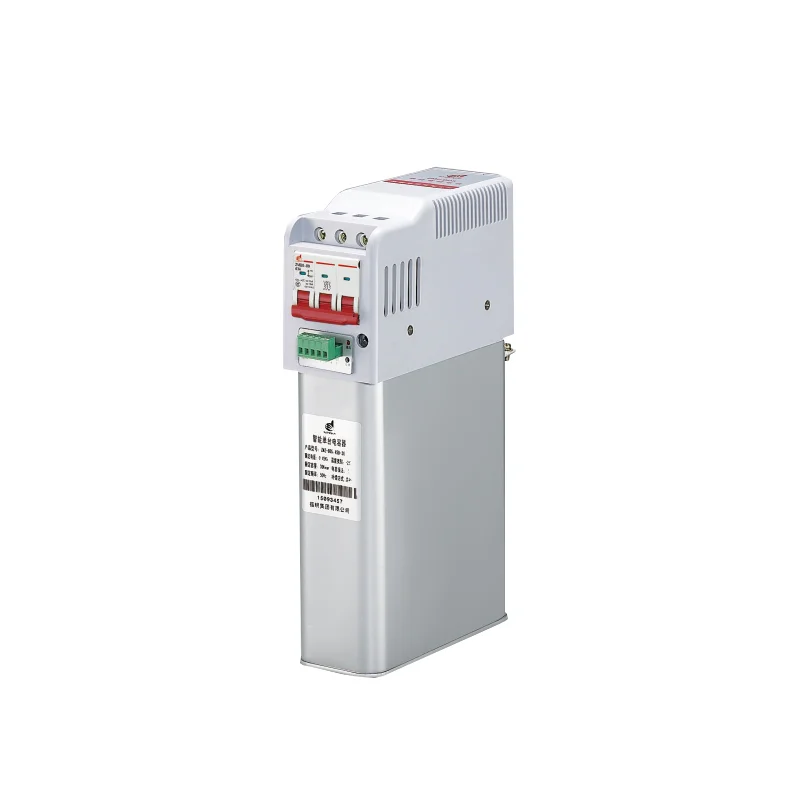
Table of Contents
The Core Function of a Shunt Power Capacitor
To understand why we need these devices, you have to understand that not all electricity is created equal. When you switch on a simple lightbulb, the electricity flows directly and does work. This is called “active power.”
But when you turn on a heavy electric motor, like in an air conditioner or an industrial conveyor belt, the physics change. These machines rely on magnetic fields to spin. Creating that magnetic field requires energy that doesn’t actually do any “work” (it doesn’t turn the shaft); it just sustains the field. This is called “reactive power.”
Here is the problem: The power company has to send both types of power down the wire. This clogs up the lines.
A shunt power capacitor solves this by acting as a local reservoir for that reactive power. Instead of the motor asking the power plant for that magnetic energy, it asks the capacitor sitting right next to it. The capacitor provides the reactive kick, leaving the main power lines free to carry just the useful, active power.
The "Beer" Analogy
Engineers love to explain this with a mug of beer.
- The Liquid: This is the Active Power (kW). It’s what you actually want (the work).
- The Foam: This is the Reactive Power (kVAR). It takes up space in the glass, but you can’t drink it.
- The Glass Capacity: This is the Apparent Power (kVA).
If you have too much foam, you get less beer in the glass. A shunt power capacitor essentially reduces the foam so you can fill the glass with more liquid.
Why Industries Rely on Shunt Power Capacitor Banks
For a homeowner, this doesn’t matter much. But for a large facility, “bad power” is expensive.
When a factory has too many motors running without capacitors, their “Power Factor” drops. Power Factor is just a score from 0 to 1 measuring efficiency. If the score drops below 0.95, utility companies usually slap the business with a heavy fine or a surcharge. They do this because the utility has to burn more coal or gas to push that useless “foam” through the wires.
By installing a shunt power capacitor bank, facility managers can:
- Eliminate Penalties: It brings the Power Factor back up to near 1.0.
- Stabilize Voltage: Heavy loads can cause lights to dim or computers to crash. Capacitors prop up the voltage level.
- Cool Down the Wires: Less current flowing through the system means less heat build-up in the cables and transformers.
Shunt vs. Series: Knowing the Difference
It is easy to get confused because there are different types of capacitors on the grid. The word “shunt” is the key here. In electrical terms, “shunt” means “parallel.”
A shunt power capacitor is connected across the lines (between the live wire and neutral, or between phases). It is there to maintain voltage and provide reactive power.
There is also something called a “series capacitor,” but it does a totally different job. It is wired in line with the wire to reduce the impedance of long transmission lines. You usually only see series capacitors on those massive high-voltage towers stretching across the countryside, whereas shunt capacitors are everywhere, from the pole outside your house to the factory floor.
| Feature | Shunt Power Capacitor | Series Capacitor |
|---|---|---|
| Connection | Connected in Parallel (Phase-to-Ground) | Connected in Series (In-line) |
| Primary Purpose | Power Factor Correction & Voltage Control | Improving Transmission Stability |
| Current Flow | Draws a small current continuously | Full line current flows through it |
| Typical Location | Substations, Factories, Distribution Poles | Very Long High-Voltage Transmission Lines |
Operation and Safety Considerations
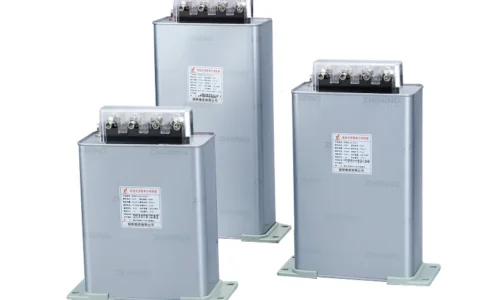
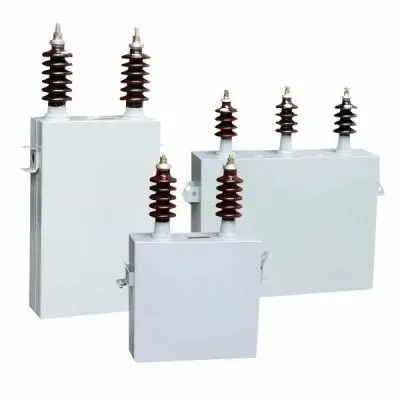
Walking up to a capacitor bank can be intimidating. They are often large metal cans or rectangular boxes. Inside, layers of foil and plastic film are tightly wound and soaked in a dielectric fluid. This fundamental construction is similar for a low voltage power capacitor, though on a much smaller physical scale.
One critical safety thing to remember from an observational standpoint is that a capacitor is never truly “off” just because you flipped the switch. They are energy storage devices. Even if disconnected from the grid, a large shunt power capacitor can hold a lethal charge for minutes or even hours. While the stored energy in a typical low voltage power capacitor is far less dangerous, the principle of residual charge still applies.
That is why modern units, from large banks to smaller assemblies, have “discharge resistors” built-in. These little components slowly bleed off the stored energy when the power is cut, making them safe to touch after a short time. If you ever see a capacitor—whether a high-voltage bank or a low voltage shunt power capacitor—with a bulging case or oil leaking out, it means the internal insulation has failed. This is often due to overheating or voltage spikes, and it’s a clear sign the component is a ticking time bomb that needs immediate replacement.

Resource
For further reading on electrical distribution and the physics behind reactive power, please refer to these established sources:
- Power Factor – Wikipedia: A detailed explanation of the relationship between real, reactive, and apparent power.
- Capacitor Bank Applications: Overview of how capacitors are used in utility grids.
FAQ
Why is it called a "Shunt" capacitor?
In electrical engineering, “shunt” refers to a parallel connection. The capacitor is wired in a parallel path to the load (like a motor), rather than in a series line with it. It “shunts” (or bridges) the connection between the power phases.
Can a shunt power capacitor reduce my home electricity bill?
Probably not. Residential meters usually only charge you for “active power” (watts), not reactive power. While a capacitor might make your home slightly more efficient electrically, it won’t lower the bill unless your utility company charges for kVA (which is rare for homes).
Do these capacitors last forever?
No. They are stressed by heat and voltage spikes. Over time, the dielectric material inside degrades. A typical industrial shunt power capacitor might last 10 to 15 years, but in environments with “dirty” power (lots of harmonics), they can fail much sooner.