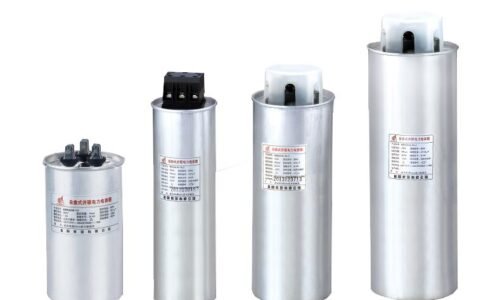
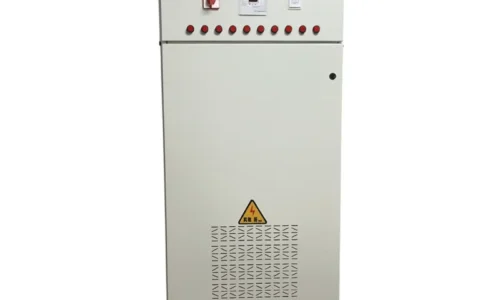
Low voltage electrical panels serve as the distribution heart of most commercial and industrial facilities. Within these panels, various components work together to manage power delivery. Among them, the capacitor bank plays a particularly important role—though its function often goes unnoticed by building occupants.
Walk into any large manufacturing plant or commercial building, and there’s likely a capacitor bank humming quietly inside the main LV panel. These installations have become standard practice for good reason. The benefits they provide affect everything from electricity bills to equipment lifespan.
Table of Contents
Power Factor Correction—The Primary Function of a Capacitor Bank
What Power Factor Actually Means
Electrical systems deal with two types of power. Real power does actual work—running motors, producing light, generating heat. Reactive power flows back and forth without producing useful output but remains necessary for certain equipment to function.
Motors, transformers, fluorescent lighting, and many industrial processes require reactive power. They draw more current from the supply than their actual consumption would suggest. This creates inefficiency.
The ratio between useful power and total apparent power is called power factor. A power factor of 1.0 (or unity) represents perfect efficiency. Most industrial facilities naturally operate somewhere between 0.7 and 0.85 without correction.
How Capacitor Banks Improve Power Factor
A capacitor bank supplies reactive power locally. Instead of drawing reactive current from the utility supply, equipment draws it from nearby capacitors. The effect is significant:
- Current in supply cables decreases
- Power factor approaches unity
- Utility penalties disappear
- System efficiency improves
Most facilities aim for power factor between 0.95 and 0.99 after correction.
Technical Benefits in LV Distribution Systems
Voltage Improvement
Low power factor contributes to voltage drop throughout the distribution system. Motors running on low voltage consume more current, run hotter, and fail sooner. Sensitive equipment may malfunction.
A capacitor bank reduces current flow through cables and transformers. Voltage drop decreases. Equipment operates closer to rated voltage.
Released System Capacity
Here’s a practical example. A 1000 kVA transformer operating at 0.8 power factor can only deliver 800 kW of useful power. The remaining capacity gets consumed by reactive current.
Correct the power factor to 0.95, and the same transformer now delivers 950 kW. That’s almost 20% more useful capacity—without changing any equipment.
Reduced Losses
Current flowing through conductors produces heat. This represents wasted energy. Since reactive current contributes to total current, reducing reactive current reduces losses.
The effect compounds through the system. Cables run cooler. Connections last longer. Transformers operate more efficiently.
Types of Capacitor Bank Configurations for LV Panels
Fixed Versus Automatic
Fixed capacitor banks provide constant compensation. Simple and inexpensive. Suitable when loads remain relatively stable.
Automatic capacitor banks adjust compensation based on actual demand. A controller monitors power factor continuously and switches capacitor steps as needed. Better for facilities with varying loads.
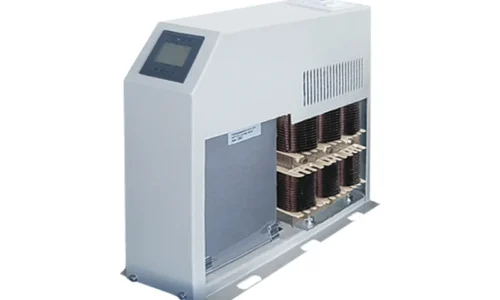
Detuned Systems
Some facilities have significant harmonic distortion from variable frequency drives, LED lighting, or other nonlinear loads. Standard capacitors can amplify harmonics—creating more problems than they solve.
Detuned capacitor banks include series reactors that shift the resonant frequency away from common harmonic frequencies. This prevents amplification while still providing reactive compensation.

Installation Considerations for LV Panel Capacitor Banks
Proper installation matters considerably.
Key considerations include:
- Available panel space
- Ventilation and cooling
- Harmonic content of the system
- Load variation patterns
- Future expansion plans
- Protection and switching requirements
A capacitor bank generates heat during operation. Adequate ventilation prevents premature failure. Harmonic analysis should precede installation in systems with nonlinear loads.
Concluding Thoughts
The use of a capacitor bank in LV panels delivers meaningful benefits across multiple dimensions. Power factor correction reduces utility costs directly. System efficiency improves. Equipment runs better and lasts longer. Capacity gets freed up for productive use.
For most commercial and industrial facilities, these installations represent sound investments. The technology is mature and well-understood. When properly specified and maintained, a capacitor bank provides years of reliable service while paying for itself many times over. If you want to know more about capacitor bank, please read What is a capacitor bank.
FAQ
What size capacitor bank does a typical LV panel need?
Sizing depends on several factors—existing power factor, target power factor, total load, and load variation. Generally, an electrical survey determines actual reactive power demand. The capacitor bank gets sized to compensate for measured deficiency plus some margin. Oversizing wastes money while undersizing leaves penalties on the table.
Can a capacitor bank damage other equipment in the LV panel?
Improperly specified installations can cause problems. In systems with significant harmonic distortion, standard capacitor banks may resonate with system inductance and amplify harmonics. This stresses capacitors and other equipment. Detuned or filtered designs prevent these issues. Proper engineering avoids damage.
How long does a capacitor bank typically last in an LV panel?
Quality installations commonly last 10-15 years or longer with proper maintenance. Capacitor elements gradually degrade over time. Automatic banks with stepped switching experience more wear on contactors. Regular inspection, cleaning, and replacement of failed components extends useful life. Operating temperature significantly affects longevity.