It’s one thing to know what a device is called, but it’s another thing entirely to understand why it’s actually there. Walk into any electrical room, and those donut-shaped devices clamped around busbars are everywhere. So, what is the purpose of a current transformer? On the surface, it looks like it’s just there to feed a meter. But dig a little deeper, and it becomes clear that the current transformer serves as the eyes and ears of the entire power system. Without them, managing electricity at scale would be guesswork at best, and downright dangerous at worst.
From a practical standpoint, a current transformer is a translator. It takes something too big to handle—high current—and scales it down to something manageable. But that translation serves multiple purposes: safety, standardization, and the ability to monitor what’s happening without getting in the way of the actual power flow.
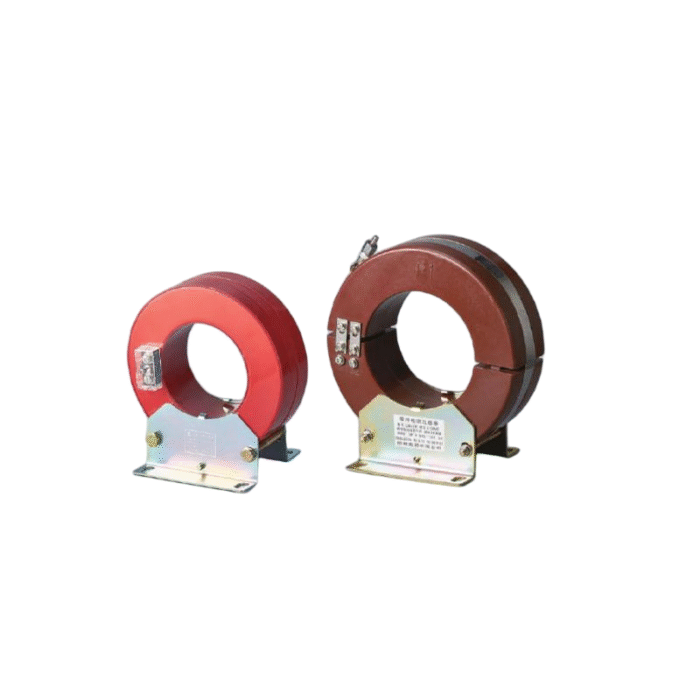
Table of Contents
The Core Purpose: Measurement and Metering
The most obvious role, and the one people usually think of first, is measurement. Utility companies need to know exactly how much power a facility uses to bill accurately. Industrial plants need to track energy consumption to manage costs. A current transformer makes this possible by reducing high primary currents to a standard secondary value—typically 5 amps or 1 amp.
Revenue-Grade Accuracy
For billing purposes, accuracy isn’t just nice to have; it’s mandatory. There’s a noticeable difference between a general monitoring CT and a revenue-grade unit. The latter is built with tighter tolerances and better core materials to ensure that every ampere-hour is accounted for. In facilities where energy costs are a major operational expense, having the right current transformer in place can mean the difference between an accurate utility bill and one that’s consistently overestimated.
Protection: Safeguarding Equipment and Personnel
Beyond measurement, there’s a more critical function: protection. Electrical faults happen. Maybe it’s a motor winding that shorts out, or a cable insulation failure. When that occurs, current can spike to dozens of times the normal level. A current transformer paired with a protection relay acts as the tripwire.
How CTs Enable Protective Relays
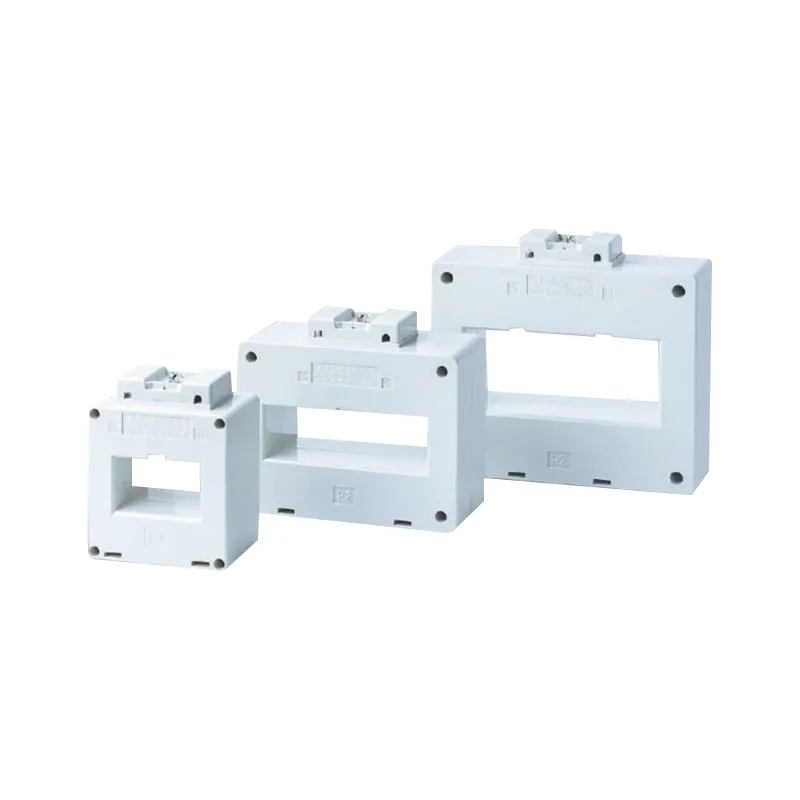
Protection relays need to see the fault current to operate. They rely entirely on the current transformer to supply a signal that’s proportional to the actual fault. The relay monitors that signal, and if the current exceeds a set threshold (and lasts longer than a defined time), it sends a trip signal to the breaker. It’s a split-second decision. Without a properly sized CT, the relay is essentially blind. In many older installations, there’s a tendency to overlook CT health until a fault occurs—and that’s usually when weaknesses become painfully obvious.
| Purpose | CT Requirement | Typical Application |
|---|---|---|
| Revenue Metering | High accuracy (Class 0.3 or 0.6) | Utility billing points, tenant submetering |
| Protection (Overcurrent) | High saturation point (Class 5P10, 10P20) | Motor feeders, transformer inrush protection |
| Energy Management | Moderate accuracy (Class 1.0) | Building automation, load shedding systems |
| Differential Protection | Matched CT ratios and characteristics | Generator protection, busbar protection schemes |
Energy Management and Load Profiling
In recent years, the purpose of a current transformer has expanded into energy efficiency. Facilities now use them to track where power is going, not just how much total power is coming in.
Identifying peak demand periods to reduce utility demand charges
Monitoring individual equipment to detect efficiency degradation
Balancing loads across phases to prevent nuisance tripping
Integrating with building management systems for automated control
These applications rely on the same basic CT hardware, but the data is used differently. Instead of just billing or protection, it’s about operational insight. There’s a growing realization that without accurate current data at the branch circuit level, meaningful energy savings are hard to achieve. If you want to know more about current transformer, please read What is the current transformer.
FAQ
Can a single Current Transformer serve both metering and protection purposes?
Generally, it’s not recommended to use the same CT core for both. Metering CTs are designed to saturate under fault conditions to protect the meter, while protection CTs need to faithfully reproduce fault currents. However, many CTs come with multiple cores in one housing—one core for metering and another for protection—which solves the problem neatly.
What happens if the secondary of a Current Transformer is left open while the primary is energized?
This is one of the most critical safety rules. An open secondary can generate extremely high voltage spikes—sometimes thousands of volts—due to magnetic flux saturation. This can destroy the CT insulation, damage connected equipment, and create a serious arc flash hazard. Always short the secondary before disconnecting any load.
How do you select the right ratio for a Current Transformer?
The general rule is to choose a ratio where the normal operating current falls between 50% and 100% of the CT’s primary rating. If the CT is oversized too much, the secondary signal sits at the lower end of the accuracy curve, which can lead to poor resolution for metering or insufficient signal strength for protection relays.