Someone once asked: how does a current transformer work? It is a fair question. The device looks simple. A donut-shaped core. A few wires. But what happens inside is not always obvious.
A current transformer is one of those devices that people use every day without thinking about how it actually works. Meters rely on it. Protection relays depend on it. Energy monitoring systems would be useless without it.
This article explains how a current transformer works. Not just the textbook answer. The practical side too.
Table of Contents
Basic Principles of How a Current Transformer Works
To understand how a current transformer works, start with the basics of electromagnetism.
Faraday's Law and the Current Transformer
A current transformer works on Faraday’s law of electromagnetic induction. When current flows through a conductor, it creates a magnetic field. If that magnetic field passes through a coil of wire, it induces a voltage in that coil.
In a current transformer, the primary conductor carries the current to be measured. That conductor passes through the center of a magnetic core. The secondary winding is wrapped around that same core. When primary current flows, the magnetic field induces a secondary current.
Why a Current Transformer Works Differently
A voltage transformer works with constant voltage. A current transformer works with constant current. This difference matters. The secondary current of a current transformer is directly proportional to the primary current.
That is why a current transformer must always have a load connected to its secondary. If the secondary is open, the voltage can rise to dangerous levels.
Key Components of a Current Transformer
To understand how a current transformer works, look at its parts.
Magnetic Core of a Current Transformer
The core is the heart of a current transformer. It is made of high-permeability magnetic material, usually silicon steel. The core concentrates the magnetic field created by the primary current.
A toroidal core (donut-shaped) is common because it has no air gaps. This allows the current transformer to work accurately over a wide range of currents.
Primary Winding of a Current Transformer
In many current transformers, the primary winding is simply the conductor passing through the core. One pass equals one turn.
For a Low Voltage Current Transformer, the primary is typically the conductor passing through the core. For a High Voltage Current Transformer, the primary is often a single turn built into the insulation.
Secondary Winding of a Current Transformer
The secondary winding is a coil of wire wrapped around the core. The number of turns determines the ratio of the current transformer. A typical ratio is 1000:5, meaning 1000 amps primary produces 5 amps secondary.

How a Current Transformer Works: Step by Step
Here is what happens inside a current transformer during normal operation.
Step 1: Primary Current Flows
Current flows through the primary conductor. This conductor passes through the center of the current transformer core.
Step 2: Magnetic Field Forms
The primary current creates a magnetic field around the conductor. Because the core is made of high-permeability material, the magnetic field concentrates in the core.
Step 3: Magnetic Field Links the Secondary Winding
The magnetic field in the core links with the secondary winding. This is the key moment in how a current transformer works. The changing magnetic field induces a voltage in the secondary winding.
Step 4: Secondary Current Flows
Because the secondary winding is connected to a load (a meter or relay), current flows. The secondary current is directly proportional to the primary current. The ratio is determined by the number of secondary turns.
Step 5: The Burden Affects Accuracy
The burden is the load connected to the secondary of a current transformer. If the burden exceeds the rating, the core may saturate. Saturation causes inaccurate readings.
Types of Current Transformers and How They Work
Different types of current transformers work in slightly different ways.
How a Wound Current Transformer Works
A wound current transformer has a primary winding built into the device. This design is used when the primary current is relatively low, typically below 100A.
How a Bar Current Transformer Works
A bar current transformer has a solid primary bar passing through the core. This type is common in high-current applications, often above 1000A.
How a Split-Core Current Transformer Works
A split-core current transformer opens like a hinge. This allows it to be installed around an existing conductor without disconnecting the cable.
How a Zero Sequence Current Transformer Works
A Zero Sequence Current Transformer works differently. It surrounds all three phase conductors. Under normal balanced conditions, the net current is near zero. When a ground fault occurs, the imbalance is detected.
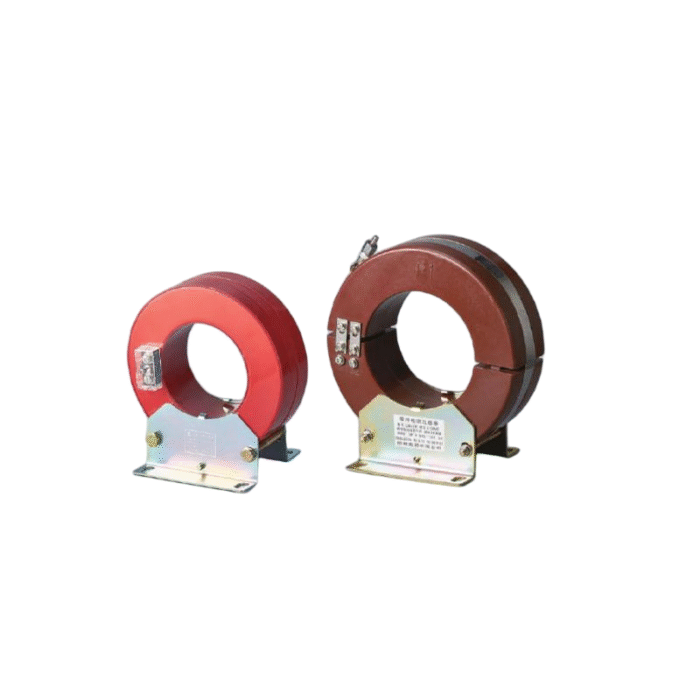
Comparison of Current Transformer Types
The table below summarizes how different current transformers work.
| Type | Primary Conductor | How It Works | Best For |
|---|---|---|---|
| Wound current transformer | Internal winding | Primary current flows through built-in winding | Low current circuits |
| Window current transformer | Passes through opening | Primary current creates magnetic field in core | General purpose |
| Bar current transformer | Solid bar through core | Primary current flows through solid bar | High current circuits |
| Split-core current transformer | Clamps around cable | Opens to install around existing conductor | Retrofits |
| Zero sequence current transformer | All three phases through core | Sums magnetic fields of all three phases | Ground fault detection |
Common Questions About How Current Transformers Work
Why Can't the Secondary of a Current Transformer Be Open?
If the secondary of a current transformer is open while the primary is energized, the voltage can rise to dangerously high levels. Always short the secondary before disconnecting any wiring.
What Happens If a Current Transformer Saturates?
Saturation occurs when the magnetic core cannot handle any more magnetic flux. The secondary current no longer reflects the primary current accurately. A saturated current transformer produces distorted output.
How Does a Current Transformer Work with a Meter?
A current transformer provides a reduced secondary current. The meter measures this secondary current and multiplies it by the ratio to display the primary current.
Practical Examples
Low Voltage Current Transformer Metering
A facility needs to measure current on a 200A feeder. A Low Voltage Current Transformer with a 200:5 ratio is installed. The primary conductor passes through the window once. When 200 amps flows, the current transformer produces 5 amps for the meter.
High Voltage Current Transformer Protection
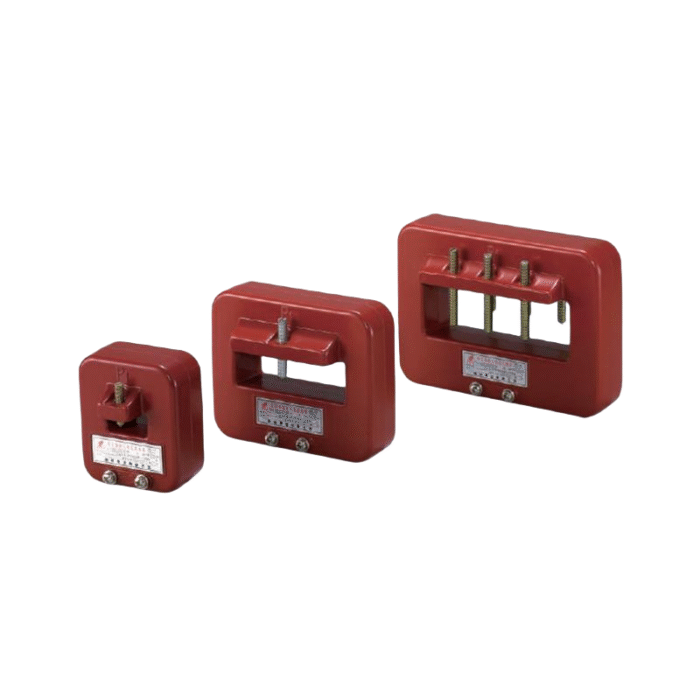
A substation feeder uses a High Voltage Current Transformer for overcurrent protection. Under normal conditions, the current transformer produces a secondary current proportional to the load. During a fault, the secondary current increases proportionally, triggering the relay.
Zero Sequence Current Transformer Ground Fault Detection
A commercial building uses a Zero Sequence Current Transformer for ground fault protection. All three phase conductors pass through the core. Under normal conditions, the output is near zero. When a ground fault occurs, the imbalance creates secondary current that the relay detects.
Conclusion
A current transformer works by electromagnetic induction. The primary current creates a magnetic field in the core. This field induces a proportional secondary current.
Understanding how a current transformer works helps in selecting the right type. A window current transformer works for general purpose. A wound current transformer works for low currents. A bar current transformer works for high currents. A split-core current transformerworks for retrofits. A Zero Sequence Current Transformer works for ground fault detection.
If you want to know more about Current Transformer, please read How to check if current transformer is working or not.
FAQ
Why must the secondary of a current transformer be shorted when not in use?
An open secondary can generate dangerously high voltage. This is a fundamental safety rule for how a current transformer works.
How does a current transformer work at very low primary currents?
At very low currents, a standard current transformer may not produce enough output. A wound current transformer works better for low current applications.
What is the difference between a current transformer and a voltage transformer?
A current transformer produces a proportional secondary current. A voltage transformer produces a proportional secondary voltage. This affects how each device is used.