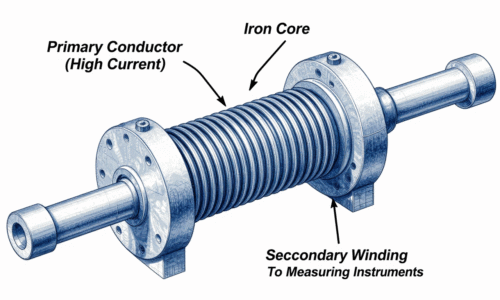
Ask ten engineers how they select a Current Transformer, and you might get ten different answers. Some focus on ratio. Others care more about accuracy class. A few might mention burden. The truth is, all of them matter, but which one matters most depends on the application.
Walk through any substation, and you will see Current Transformers that have been there for decades, still working fine. You will also see Current Transformers that failed after a few years, or worse, Current Transformers that were installed but never worked right from the start. The difference usually comes down to selection.
This is not about memorizing catalog numbers. It is about understanding what the Current Transformer needs to do, and picking one that can actually do it.
Table of Contents
Understand Your Current Transformer Application First
Before looking at any datasheet, ask one question: what is this Current Transformer for? The answer changes everything.
Metering Applications for Current Transformers
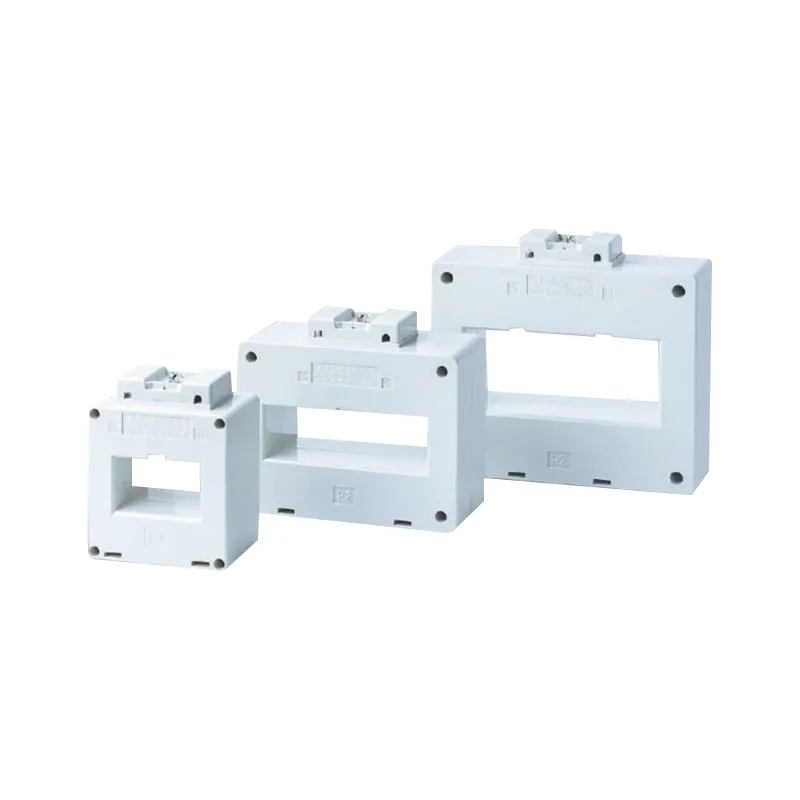
For revenue metering, accuracy is everything. A Three Phase Current Transformer used for billing must maintain precision across the normal load range. Small errors add up over time. A 0.5% error might not sound like much, but on a large industrial account, it means thousands of dollars a year.
Metering Current Transformers typically need:
- High accuracy class (0.2 or 0.5)
- Low burden requirement
- Good linearity from 5% to 120% of rated current
They do not need to perform well under fault conditions. When a fault happens, the meter just needs to survive, not measure accurately.
Protection Applications for Current Transformers
Protection is a different game. A State Grid Series Current Transformer for relaying must reproduce fault currents faithfully, even when those currents are ten or twenty times rated. Accuracy at normal load matters less. Accuracy under fault conditions matters most.
Protection Current Transformers need:
- Appropriate class (5P, 10P, or TP classes for special applications)
- High saturation voltage
- Enough capacity to drive relay burdens
The worst failure mode: a Current Transformer that saturates during a fault, so the relay never sees the overcurrent. The breaker stays closed. Equipment burns.
Special Current Transformer Applications
Some applications need specialized Current Transformers. Ground fault detection, for example. A Zero Sequence Current Transformer fits around all three phases and measures the imbalance. For this to work, the Current Transformer needs sensitivity. Ground fault currents are often small, sometimes just a few amps.
Differential protection needs matched Current Transformers on both sides of the protected zone. Ratios must match. Saturation characteristics must match. Otherwise, the relay sees difference current when there is no fault.
Key Parameters to Check for Current Transformers
Once you know the application, look at the numbers. Every Current Transformer datasheet lists certain parameters. Here is what they actually mean.
Ratio
For any Current Transformer, the ratio tells you the relationship between primary and secondary current. A 1000:5 Current Transformer produces 5A secondary when 1000A flows in the primary.
Seems simple. But consider:
- Will the primary current ever exceed rated? By how much?
- Is the secondary current 5A or 1A? 1A secondaries allow longer cable runs.
- For protection, will the ratio work for both normal load and fault conditions?
Burden
Burden is the load connected to the secondary. Wires, meters, relays—all add impedance. If the actual burden exceeds the Current Transformer rating, accuracy suffers. The Current Transformer may saturate earlier than expected.
Check the connected burden before finalizing selection. Long cable runs add more burden than people think. A 100-meter run of 2.5mm² wire adds about 0.8 ohms per conductor. For a 5A secondary, that is 4VA just in the wiring. Overlooking this is a common mistake when specifying a Current Transformer.
Accuracy Class
Metering accuracy is stated as a class like 0.2 or 0.5. The number is the maximum percentage error at rated current.
Protection classes look different: 5P10 means 5% accuracy at 10 times rated current. The “P” stands for protection. The number after P is the accuracy limit factor.
Current Transformer Selection Guide by Application
The table below summarizes what to look for when selecting a Current Transformer for different applications.
| Application | Priority 1 | Priority 2 | Common Pitfall |
|---|---|---|---|
| Revenue Metering | High accuracy (0.2/0.5) | Low burden | Using protection CTs for metering |
| Phase Protection | High accuracy limit factor | Adequate burden | CT saturation under fault |
| Ground Fault | Sensitivity | Low ratio | Insensitive to small currents |
| Differential | Matched characteristics | High accuracy | Mismatched CTs on two sides |
Physical Considerations for Current Transformer Installation
Numbers are not everything. The physical installation matters too.
Size and Mounting
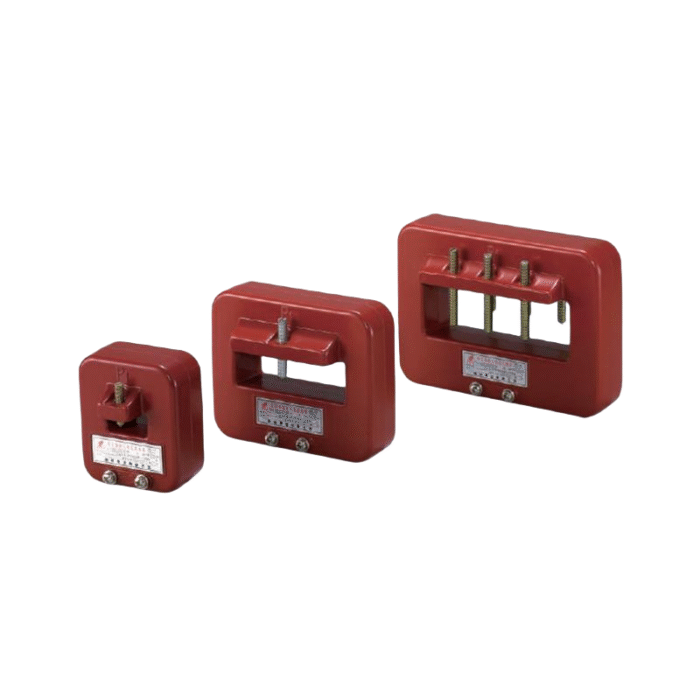
When selecting a Current Transformer, physical fit matters. Will the Current Transformers fit in the available space? Window-type Current Transformers need enough opening for the busbar or cable. Bar-type Current Transformers need clearance for primary connections.
Some retrofits require split-core Current Transformers that can be installed without disconnecting primary conductors. They are less accurate than solid-core types, but sometimes they are the only option.
Insulation Level
System voltage determines insulation requirements. A Current Transformer rated for 0.6kV will not last long on an 11kV system. Check the insulation class and the rated power frequency withstand voltage.
Common Current Transformer Selection Mistakes
After years around electrical systems, patterns emerge in Current Transformer selection. Here are mistakes people make more often than they should.
Wrong Accuracy Class
Using a protection Current Transformer for metering. The utility rejects the installation because errors exceed allowable limits. Or worse, using a metering Current Transformer for protection. It saturates during a fault, the relay never trips, and equipment is damaged.

Ignoring Burden
Selecting a Current Transformer rated for 10VA, then connecting 15VA of burden. The Current Transformer still works, but accuracy is out of spec. For protection, the Current Transformer may saturate early.
Mismatched Ratios
In differential schemes, Current Transformer ratios on both sides must match the power transformer ratio. Small mismatches can be tuned out with relay settings. Large mismatches cause nuisance trips.
Conclusion
Selecting a Current Transformer is not complicated, but it does require attention to detail. The right Current Transformer for one application is the wrong Current Transformer for another. Understanding your specific needs is the first step.
Start with the application. Know what the Current Transformer needs to do. Then check the parameters—ratio, burden, accuracy class. Consider the physical installation. Avoid the common mistakes.
Do that, and the Current Transformer will likely outlast everything else in the panel. Ignore the details, and problems will eventually surface.
For engineers who deal with these decisions regularly, developing a systematic approach saves time and prevents headaches. The few minutes spent checking numbers up front are nothing compared to the cost of a misapplied Current Transformer.
FAQ
Can I use the same current transformer for metering and protection?
It depends on the Current Transformer design. Some Current Transformers have dual cores—one for metering, one for protection—in a single housing. A single-core Current Transformer optimized for metering will likely saturate under fault conditions and not serve protection well. Check the nameplate before connecting both functions to the same core.
What happens if the connected burden exceeds the Current Transformer rating?
Accuracy degrades. The Current Transformer may saturate at lower currents than expected. For metering, errors increase. For protection, the Current Transformer might not reproduce fault currents accurately enough for relays to operate correctly.
How do I know if a Current Transformer is suitable for ground fault detection?
Ground fault detection requires sensitivity to small imbalance currents. Look for Current Transformers specifically designed for zero sequence applications, with appropriate ratio and low exciting current. A standard phase Current Transformer usually lacks the sensitivity needed for ground fault detection.