Table of Contents
The Simple Idea Behind the Current Transformer
If there is one piece of equipment that makes modern electrical systems manageable, it’s the current transformer. It’s one of those things that just sits there, often clamped around a busbar or tucked inside a switchgear, quietly doing its job. When looking at the current transformer working principle, it actually starts with a very simple observation: measuring high voltage directly is dangerous.
You just can’t put a standard ammeter on a 11kV line. That would be a spectacularly bad idea. So, the entire logic hinges on creating a safe, scaled-down replica of the actual current flowing through the system. It’s less about complicated technology and more about a clever application of basic physics. The device essentially acts as a proportional reducer, allowing meters and relays to operate at safe, standardized levels while being isolated from the lethal voltages zipping through the primary conductor.
How Electromagnetic Induction Applies Here
The Core and the Windings
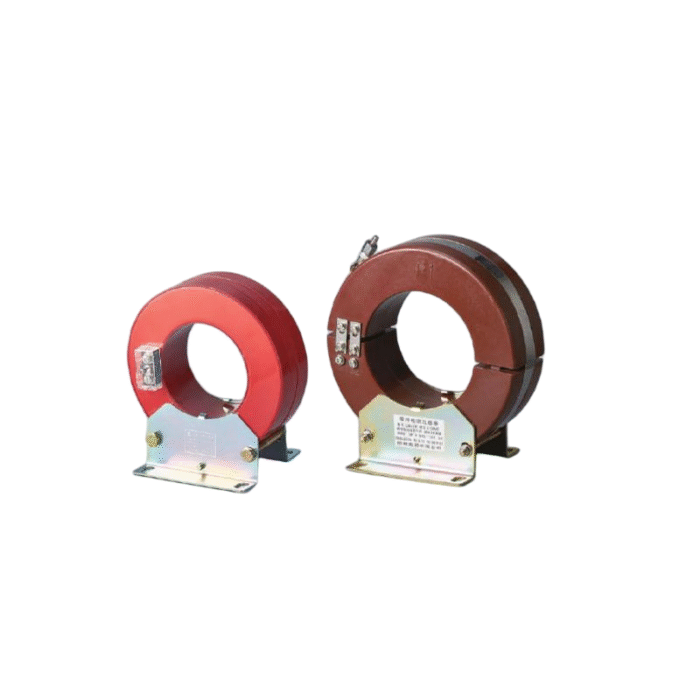
Physically, a current transformer looks deceptively simple. There’s a ferromagnetic core—usually made of high-permeability silicon steel—and then there are the windings. But unlike a standard power transformer that deals with voltage, this one focuses strictly on current.
If one were to open one up, they’d see a primary winding that might just be a single bar or even just a straight conductor passing through a hole in the center. The secondary winding is wrapped around the core hundreds of times. When alternating current flows through that primary conductor, it creates a magnetic field around it. That field alternates, expands, and collapses, which induces a voltage in the secondary winding. Because the secondary circuit is closed (usually through a meter or relay), this induced voltage drives a secondary current.
The fascinating part is the relationship. If the primary has 1 turn and the secondary has 100 turns, a primary current of 100 Amps will induce exactly 1 Amp in the secondary, assuming no losses. It’s a proportional mirror.
The Burden and Accuracy
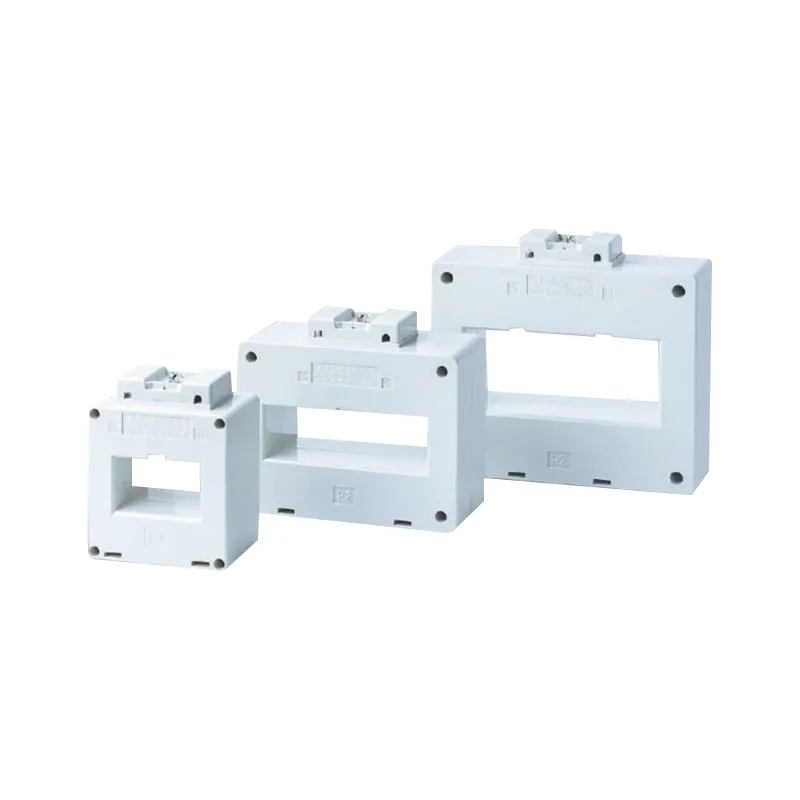
There is a nuance here that often gets overlooked in textbook definitions. It’s the concept of “burden.” People tend to think the transformer generates a perfect current no matter what, but that’s not entirely true. The accuracy depends heavily on the total impedance connected to the secondary.
If the burden (the load of the meters or wires) gets too high, the core starts to saturate. When saturation happens, the waveform gets distorted, and the reading becomes inaccurate. It’s a little like trying to push a cart uphill—there’s only so much force available before things start slipping. In practice, this means technicians have to be careful about how many devices are daisy-chained on a single CT circuit.
Observing the Unique Safety Rules
Why the Secondary Cannot Be Open
One of the unwritten rules that everyone in the field respects is: never open circuit the secondary of a current transformer while the primary is energized. It’s one of those things that sounds theoretical until you see it happen—or hear about it happening.
Under normal operation, the secondary winding’s closed circuit creates a demagnetizing effect that keeps the core flux low. If the secondary is opened, that opposing force disappears. The core flux skyrockets to saturation almost instantly. Since there is nowhere for the induced energy to go, the voltage across the open terminals spikes dramatically.
It’s not uncommon for this voltage to reach several thousand volts. It’s enough to destroy the insulation, start a fire, or cause a serious shock hazard. There’s a kind of unspoken respect for this behavior; you treat a CT circuit with the same caution you’d treat a high-voltage line, even if the meters on the panel only show 5 amps.
Observing Real-World Applications
It is interesting to note how the purpose dictates the design. A current transformer used for metering is designed for high accuracy at normal load currents. It is built to saturate relatively quickly during a fault to protect the sensitive electronics of a watt-hour meter.
On the other hand, a protection-class CT is the opposite. It is built to tolerate massive fault currents without saturating. The goal here is linearity. If a short circuit occurs, the protection relay needs to see the true magnitude of the fault current to trip the breaker instantly, even if that current is 20 times higher than normal. Using a metering CT in a protection role would be risky—it would saturate, the relay would see less current than actually exists, and the system might fail to trip when it should. If you want to know more about current transformer, please read What is the current transformer.
FAQ
What happens if the current transformer is oversized?
It’s a common scenario. If the CT rating is too high (for example, a 2000:5 CT on a circuit that only runs 20 amps), the secondary current becomes very small. While it won’t damage the equipment, the metering accuracy suffers because the device is operating at the very bottom of its excitation curve, leading to higher percentage errors in readings.
Can a current transformer work with DC current?
No, it relies entirely on alternating current to create the changing magnetic field necessary for induction. If DC current is passed through the primary, the core will magnetize in a single direction and saturate. Once saturated, the transformer essentially becomes a resistor; it will not output any signal on the secondary side.
Why is the “knee point” voltage important?
The knee point voltage is essentially the saturation point on the magnetization curve. For protection systems, this is critical. It defines the voltage at which the core stops linearly representing the primary current. Engineers select CTs based on this value to ensure that under fault conditions, the core remains in the linear region long enough for the protection relays to operate correctly.