Table of Contents
Understanding the Storage Capacitor Basics
A storage capacitor is an electronic component designed to hold electrical energy temporarily and release it when needed. Unlike batteries that store energy through chemical reactions, these devices accumulate charge electrostatically between conductive plates separated by insulating material.
The concept seems simple enough on paper. Two conductors, some dielectric material between them, apply voltage and energy gets stored. But the practical applications extend far beyond this basic explanation. From keeping your computer running during a brief power flicker to enabling camera flashes, storage capacitors perform essential functions across countless devices.
What makes a capacitor specifically a “storage” type rather than just any capacitor? Honestly, the distinction relates more to application intent than fundamental construction differences. When engineers select a capacitor primarily for its energy storage capability—rather than filtering, coupling, or timing functions—they’re working with a storage capacitor in the functional sense.
How a Storage Capacitor Works
Basic Operating Principles
The physics behind energy storage in capacitors involves electric field generation. When voltage applies across the plates, electrons accumulate on one plate while depleting from the other. This charge separation creates an electric field within the dielectric material.
The stored energy relates directly to:
- Capacitance value (measured in farads)
- Applied voltage squared
- Dielectric material properties
- Physical plate dimensions
The energy equation—one half times capacitance times voltage squared—reveals why higher voltage ratings matter so much. Doubling the voltage quadruples the stored energy, assuming the capacitor can handle it safely.
Charge and Discharge Behavior
Storage capacitors don’t behave like ideal voltage sources. During discharge, voltage drops as energy depletes. This characteristic differs fundamentally from batteries, which maintain relatively stable voltage until nearly exhausted.
The discharge curve follows exponential patterns determined by:
- Initial charge level
- Connected load resistance
- Capacitor’s equivalent series resistance
- Temperature conditions
- Component age and condition
Understanding this behavior proves critical for application design. Some uses tolerate voltage droop well while others require supplementary regulation circuitry.
Types of Storage Capacitor Technologies
Different applications demand different storage capacitor technologies. No single type excels everywhere, which explains the variety available.
| Capacitor Type | Typical Capacitance | Voltage Range | Best Application |
|---|---|---|---|
| Low Voltage Storage Capacitor | 0.1µF – 1F | 4V – 50V | Compact power storage, local energy buffering |
| High Voltage Storage Capacitor | 1nF – 100µF | 200V – 2000V | Energy storage in high voltage circuits, pulse applications |
| Film Capacitor | 1nF – 100µF | 50V – 2000V | Pulse applications |
| Ceramic (MLCC) | 1pF – 100µF | 6V – 100V | Decoupling, high frequency |
| Tantalum | 0.1µF – 1000µF | 4V – 50V | Compact power storage |
Common Storage Capacitor Applications
Power Supply Smoothing
Nearly every electronic power supply uses storage capacitors to reduce voltage ripple. After rectification, raw DC contains substantial AC components that capacitors absorb and average out.
Backup Power Systems
When main power fails momentarily, storage capacitors can maintain operation long enough for graceful shutdown or generator startup. Uninterruptible power supplies rely heavily on this capability.
Camera Flash Units
Photographic flash requires intense brief illumination. Storage capacitors charge slowly from batteries then dump their energy almost instantaneously through the flash tube. Without adequate capacitance, flashes would be dim and batteries would drain impossibly fast.
Energy Harvesting
Renewable energy systems—particularly solar and regenerative braking—benefit from storage capacitor buffering. The capacitors absorb variable input energy and deliver smoother output to downstream systems.
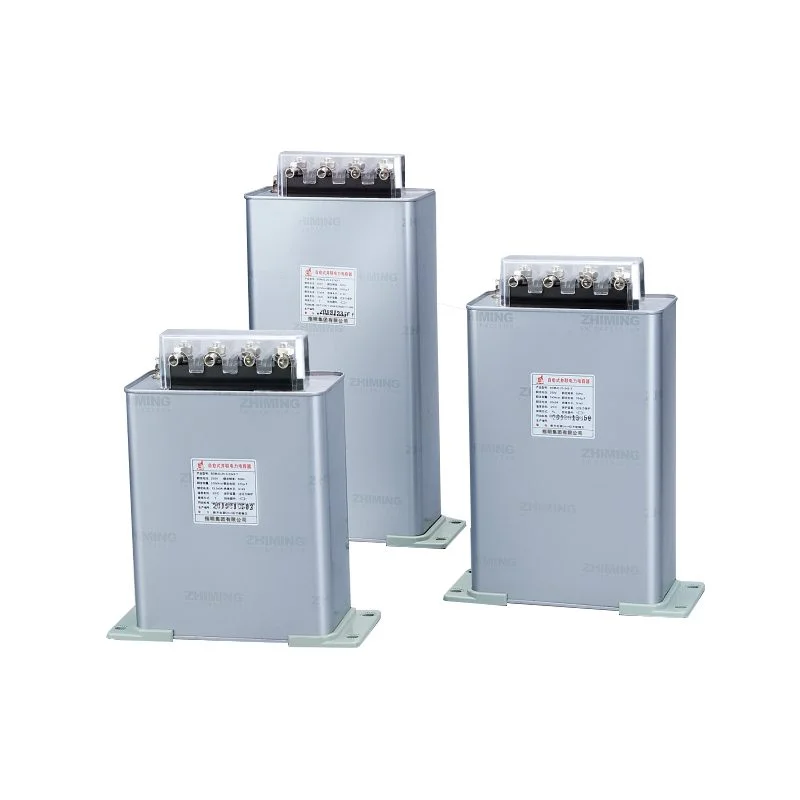
Selecting the Right Storage Capacitor
Choosing appropriate storage capacitors involves balancing multiple factors:
- Required energy storage (joules or watt-seconds)
- Maximum and minimum voltage requirements
- Charge and discharge rate expectations
- Physical size and mounting constraints
- Operating temperature range
- Expected service life
- Budget limitations
Getting this wrong causes problems. Undersized capacitors simply cannot deliver needed energy. Oversized ones waste money and space. Voltage ratings too close to operating levels invite premature failure.
Temperature deserves particular attention. A capacitor rated for thousands of hours at 85°C might last only hundreds of hours at 105°C. Installation location matters enormously for longevity.
The Role of Storage Capacitor Technology Going Forward
Energy storage demands continue growing as electronics proliferate and renewable energy expands. Storage capacitor technology advances steadily, with researchers pursuing higher energy density and longer lifespans.
Hybrid approaches combining capacitor speed with battery capacity show promise for certain applications. Meanwhile, improved manufacturing reduces costs for existing technologies.
Whether powering a tiny sensor or stabilizing an electrical grid, these components remain essential. Understanding their characteristics—and limitations—helps ensure successful application in whatever context they serve.
FAQ
What is the difference between a storage capacitor and a regular capacitor?
Functionally, any capacitor stores energy—that’s inherent to how capacitors work. The term storage capacitor typically describes components selected specifically for their energy storage role rather than filtering or signal coupling. Supercapacitors and large electrolytics often fall into this category. The distinction relates more to application intent than physical differences.
How long can a storage capacitor hold its charge?
Retention time varies enormously by type and conditions. High-quality film capacitors might hold charge for months, while some electrolytics lose significant charge within days or weeks. Leakage current, temperature, and humidity all affect retention. For applications requiring long-term storage, batteries or specialized low-leakage capacitors work better than general-purpose types.
Can a storage capacitor replace a battery?
In certain applications, yes—particularly where rapid charge-discharge cycling matters more than long-duration storage. Supercapacitors handle regenerative braking and short-term backup effectively. However, batteries still offer superior energy density for most portable electronics and extended backup needs. The two technologies complement rather than replace each other in many modern designs.