Table of Contents
Understanding Why Power Capacitor Popularity Matters
When it comes to electrical systems, not all capacitors enjoy the same reputation. Some have earned their place through decades of reliable performance, while others remain niche solutions for specific problems. The question of which power capacitor stands as the most popular isn’t just academic curiosity—it reflects real-world preferences shaped by cost, reliability, and application demands.
Frankly speaking, popularity in the capacitor world tends to follow practical considerations rather than technical sophistication. Facility managers and engineers generally gravitate toward solutions that have proven track records. Nobody wants to experiment with critical power infrastructure, after all.
The Leading Power Capacitor Types in Today's Market
Film Capacitors Take the Crown
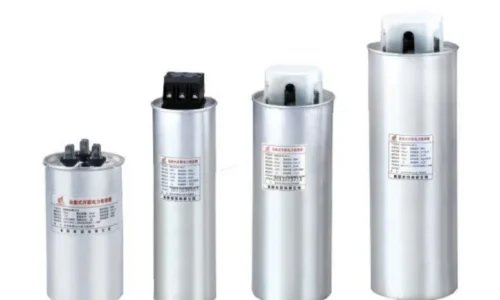
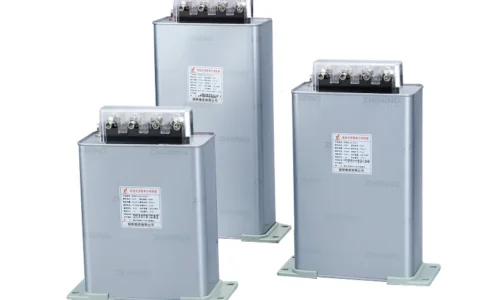
If there’s a clear winner in the popularity contest, film capacitors—particularly metallized polypropylene types—hold that position. These capacitors have essentially become the default choice for power factor correction across commercial and light industrial applications.
What makes them so widely adopted? Several factors contribute:
- Self-healing capability that extends operational life
- Relatively compact footprint compared to older technologies
- Good performance across varying temperature conditions
- Lower maintenance requirements than oil-filled alternatives
- Cost-effectiveness for medium-duty applications
The self-healing feature deserves special mention. When small dielectric breakdowns occur, the thin metallized layer vaporizes around the fault, isolating the damage. This mechanism prevents catastrophic failure—something that matters quite a bit when equipment runs continuously.
Oil-Filled Capacitors for Heavy-Duty Demands
In heavy industrial settings and utility substations, oil-filled capacitors remain tremendously popular despite being older technology. Manufacturing plants with large motor loads, mining operations, and power transmission facilities often rely on these robust units.
The oil serves dual purposes: insulation and heat dissipation. For applications where thermal stress runs high, this design philosophy still makes considerable sense. These capacitors handle overloads more gracefully than their dry counterparts, though they do require more careful installation and occasional maintenance.
Dry-Type Capacitors in Modern Facilities
Data centers, hospitals, and facilities with strict fire codes increasingly favor dry-type capacitors. The absence of oil eliminates certain safety concerns and simplifies installation in sensitive environments.
These units have gained significant ground over the past decade, particularly as power electronics proliferate. Their tolerance for harmonic-rich environments—think variable frequency drives and LED lighting systems—gives them an edge where power quality challenges exist.
Power Capacitor Popularity by Application Sector
Different industries show distinct preferences, and understanding these patterns helps explain overall market trends.
| Application Sector | Most Popular Type | Secondary Choice | Key Selection Factor |
|---|---|---|---|
| Commercial Buildings | Metallized Film | Dry-Type | Space constraints |
| Manufacturing | Oil-Filled | Heavy-Duty Film | Thermal capacity |
| Utilities | Oil-Filled | Gas-Insulated | Voltage handling |
| Data Centers | Dry-Type with Filtering | Film | Harmonic tolerance |
| Renewable Energy | Film | Dry-Type | Cycling endurance |
The table reveals something interesting: oil-filled technology maintains strong positions in traditional heavy industry, while newer applications lean toward film and dry-type solutions. This shift reflects changing load characteristics more than any fundamental improvement in capacitor technology.
Factors Driving Power Capacitor Selection
Voltage and kVAR Requirements
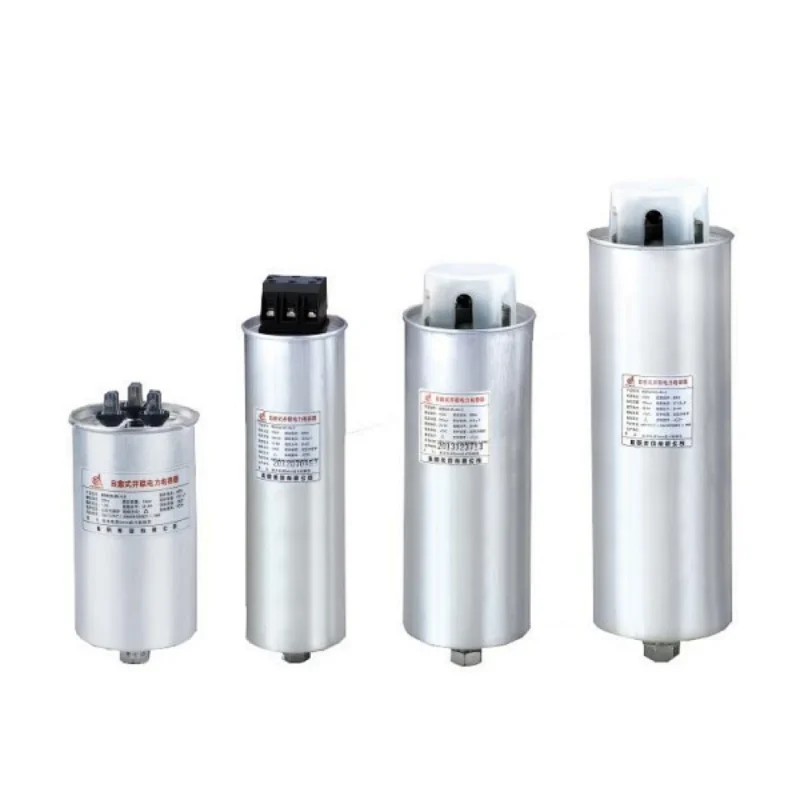
Application voltage remains the primary sorting mechanism. Low voltage power capacitors are abundant in systems under 600V, offering a wide range of options, while medium and high voltage applications narrow the field considerably. The required reactive power compensation—measured in kVAR—determines physical size and configuration.
Most commercial installations fall into predictable ranges:
Small retail and offices: 25-100 kVAR
Medium commercial: 100-400 kVAR
Light industrial: 400-1000 kVAR
Heavy industrial: 1000+ kVAR
Harmonic Environment Considerations
Modern electrical loads generate harmonic currents that older capacitor designs never anticipated. A power capacitor installed in a facility with substantial nonlinear loads—computers, VFDs, electronic lighting—faces stresses that can dramatically shorten its lifespan.
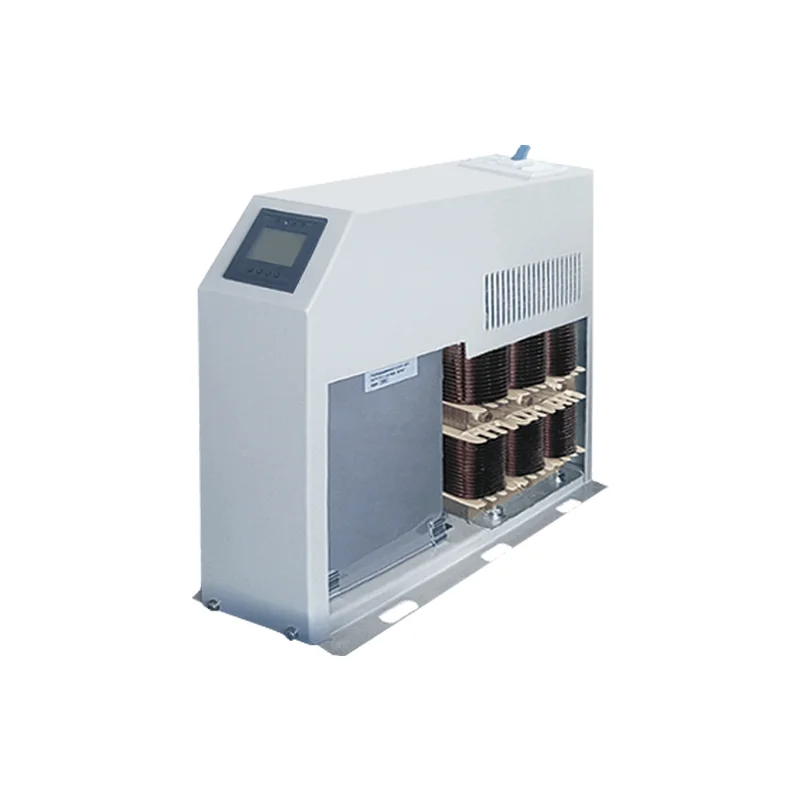
Detuned reactor configurations have become popular solutions, though they add cost and complexity. Some facilities opt for capacitors specifically rated for harmonic-rich environments, accepting higher upfront investment for reduced failure risk.
Physical and Environmental Constraints
Indoor versus outdoor installation, available floor space, ambient temperature ranges, and humidity all influence selection. Coastal facilities dealing with salt air need corrosion-resistant enclosures. Facilities in extreme climates require capacitors rated for expanded temperature ranges.
These practical constraints often override purely electrical considerations. A technically superior capacitor that won’t fit the available space or survive the local environment isn’t really superior at all.
Regional Variations in Capacitor Preferences
North American and European markets show strong preference for automatic capacitor banks with intelligent switching. Asian markets, particularly in developing industrial regions, often favor simpler fixed installations due to cost sensitivity.
Utility-scale applications worldwide remain dominated by established oil-filled designs from major manufacturers, though gas-insulated units are gaining acceptance for new substation projects where space comes at a premium.
Final Thoughts
The metallized film capacitor has earned its position as the most popular choice through balanced performance across diverse applications. Yet popularity shouldn’t be confused with universal suitability. Heavy industrial users still rely on oil-filled technology for good reasons, and specialized applications demand specialized solutions.
What matters most isn’t choosing the most popular option—it’s selecting the right power capacitor for specific operating conditions. Sometimes that means following the crowd, and sometimes it means taking a different path entirely.
FAQ
Which power capacitor lasts the longest?
Oil-filled capacitors typically offer the longest service life, often reaching 20 years or more in appropriate applications. However, proper sizing and installation matter more than capacitor type for longevity. An undersized film capacitor will fail faster than a correctly specified unit of any technology.
Are expensive power capacitors worth the investment?
Generally speaking, yes—but context matters significantly. Premium capacitors from established manufacturers offer better quality control, more accurate ratings, and genuine safety certifications. For critical applications where downtime carries substantial costs, the price difference becomes negligible compared to potential losses from equipment failure.
Can a power capacitor be used with variable frequency drives?
Standard capacitors installed near VFDs often experience problems due to harmonic currents. Dedicated input filters, detuned configurations, or harmonic-rated capacitors address this issue. Simply installing conventional power factor correction capacitors downstream of VFDs usually ends poorly—overheating and premature failure are common outcomes.