Table of Contents
Why Knowing Power Capacitors Types Matters
Selecting the right power capacitor for an electrical system isn’t as straightforward as some might assume. Different applications demand different solutions, and what works perfectly in one scenario could fail miserably in another. Understanding the various types of power capacitors helps engineers, facility managers, and even curious enthusiasts make informed decisions.
The world of power capacitors has evolved considerably over the decades. Some technologies that dominated fifty years ago have faded into specialized niches, while newer designs have claimed broader market share. This evolution reflects changing electrical loads, safety requirements, and performance expectations.
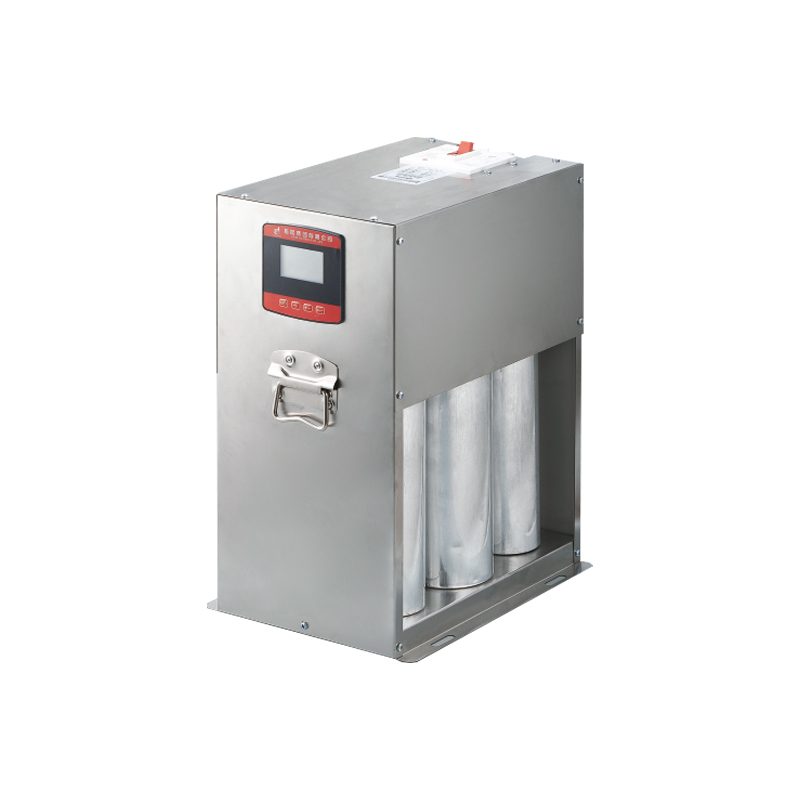
Major Categories of Power Capacitors
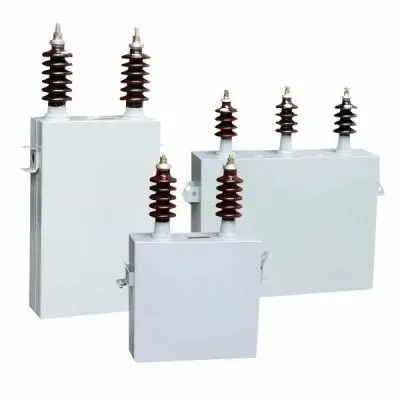
High Voltage Power Capacitor
High voltage power capacitors serve utility substations, transmission networks, and heavy industrial facilities where voltage levels exceed 1000V. These units typically feature oil-filled or gas-insulated construction to handle extreme electrical stress.
Oil-impregnated paper or film dielectrics remain common in this category. The oil provides both insulation and thermal management—critical factors when dealing with substantial power levels continuously.
Key applications for high voltage power capacitors include:
- Reactive power compensation at transmission level
- Voltage regulation in distribution networks
- Harmonic filtering for utility-scale installations
- Series compensation for long transmission lines
- Coupling and protection in substation equipment
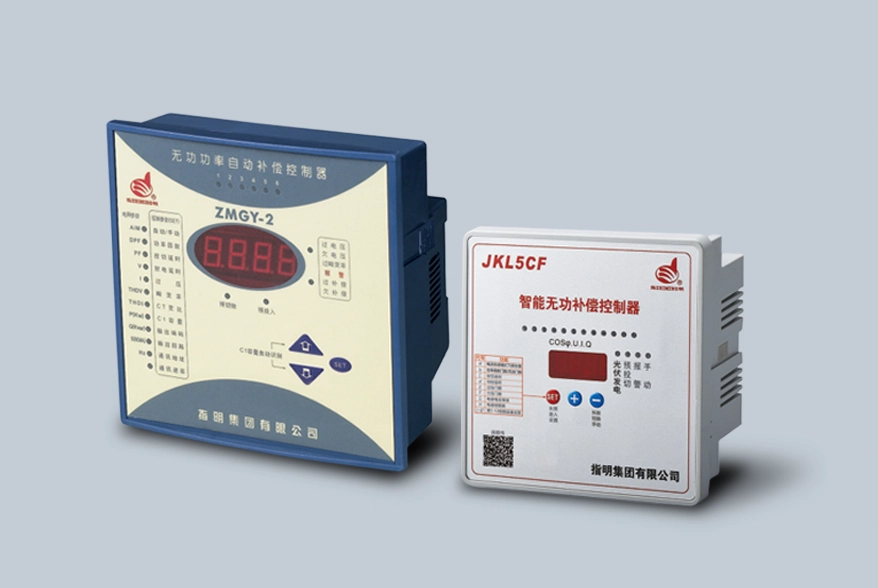
Low Voltage Power Capacitor
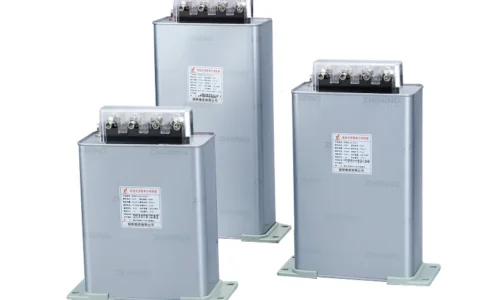
Low voltage power capacitors operate below 1000V—typically at 230V, 400V, or 690V in commercial and industrial settings. This category represents the largest market segment by unit volume, serving countless facilities worldwide.
Metallized polypropylene film construction dominates this space for good reasons:
- Self-healing capability prevents catastrophic failures
- Excellent stability across temperature variations
- Low dielectric losses during operation
- Long service life under proper conditions
- Compact design for given capacitance values
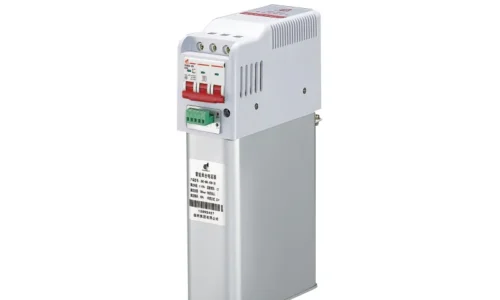
These capacitors handle power factor correction duties in office buildings, retail spaces, small factories, and similar facilities. Their reliability record speaks for itself, really. When something works consistently for decades, it tends to become the default choice.
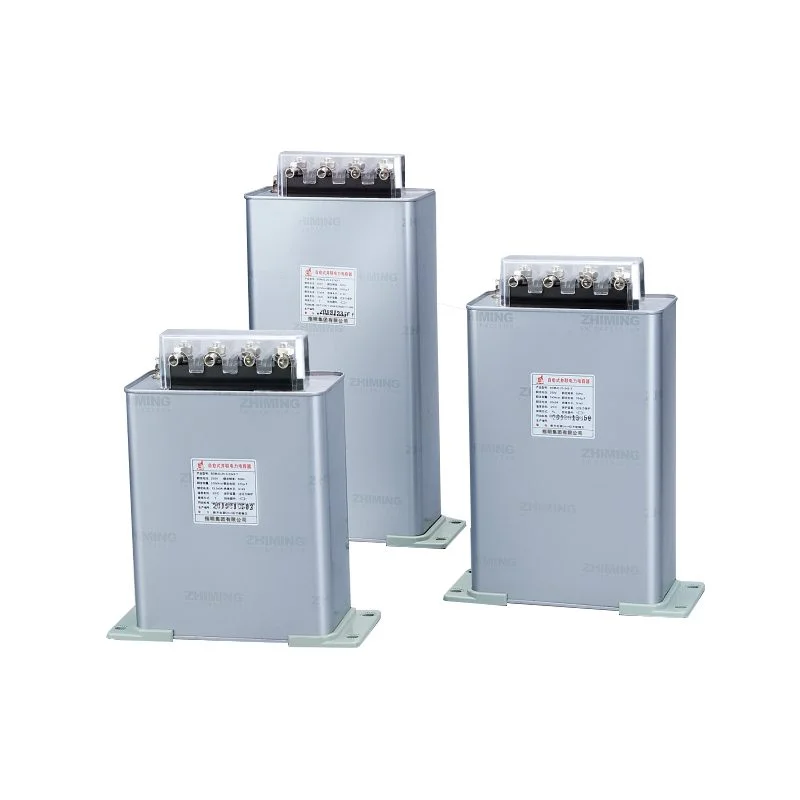
Dry-Type Capacitors
Modern facilities—especially those with strict fire codes—often specify dry-type power capacitors. Data centers, hospitals, and high-rise buildings favor these units because they eliminate oil-related safety concerns.
The construction uses solid or gas insulation instead of liquid. While this limits thermal capacity somewhat, improved materials and design techniques have narrowed the performance gap considerably.
Dry-type units suit environments where:
- Fire suppression systems complicate oil-filled installations
- Space constraints demand compact solutions
- Maintenance access proves difficult
- Clean room conditions must be maintained
Electrolytic Capacitors
Electrolytic capacitors occupy a different niche within power applications. Their high capacitance-to-volume ratio makes them valuable for energy storage and filtering in power electronics.
Aluminum electrolytic types dominate DC applications like power supplies and inverters. They handle ripple currents and provide energy buffering that film capacitors cannot match economically.
However, electrolytics come with limitations. Temperature sensitivity, finite lifespan, and polarity requirements demand careful application engineering. Using them outside their comfort zone leads to premature failure—sometimes dramatically so.
Power Capacitors Comparison by Application
Understanding how different types serve various needs helps clarify selection decisions.
| Capacitor Type | Typical Voltage Range | Primary Application | Service Life |
|---|---|---|---|
| High Voltage Oil-Filled | 2.4kV – 25kV | Utility and transmission | 20-30 years |
| Low Voltage Film | 230V – 690V | Commercial power factor correction | 15-20 years |
| Dry-Type | 230V – 15kV | Fire-sensitive environments | 12-18 years |
| Aluminum Electrolytic | 16V – 500V DC | Power electronics filtering | 5-15 years |
| Ceramic (Power-rated) | 50V – 3kV | High-frequency converters | 10-20 years |
Service life figures represent typical expectations under normal operating conditions. Actual longevity depends heavily on installation quality, loading levels, and environmental factors.
Specialized Power Capacitors for Specific Challenges
Harmonic Filter Capacitors
Facilities with significant nonlinear loads—variable frequency drives, computers, LED lighting—face harmonic distortion challenges. Standard power capacitors can overheat and fail prematurely in such environments.
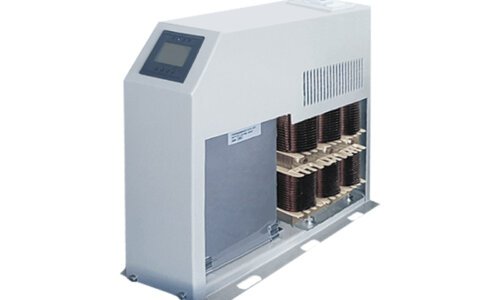
Harmonic filter capacitors incorporate detuning reactors or special ratings to handle distorted waveforms safely. These solutions cost more upfront but prevent expensive failures down the line.
Surge Capacitors
Motor protection applications sometimes employ surge capacitors to limit voltage spikes during switching operations. These specialized units absorb transient energy that would otherwise stress motor insulation.
Choosing Among Power Capacitors Types
The variety of available power capacitors reflects genuine diversity in application requirements. No single type dominates all scenarios, and attempting to force one solution onto every problem leads to suboptimal results.
Film capacitors handle most commercial and light industrial needs admirably. Oil-filled types remain indispensable for heavy-duty service despite environmental pressures. Dry-type units carve out territory where safety codes or installation constraints apply. And specialized variants address challenges that mainstream products cannot.
Understanding these distinctions—even at a basic level—leads to better equipment selection and fewer unexpected failures. Sometimes the popular choice is the right choice.
FAQ
Which type of power capacitors works best for industrial motors?
Film capacitors—particularly heavy-duty metallized polypropylene types—suit most industrial motor applications. For very large motors or harsh environments, oil-filled units may prove more appropriate. The key lies in matching capacitor ratings to actual motor load characteristics rather than defaulting to any single technology.
How long do power capacitors typically last?
Lifespan varies dramatically by type and application. Film capacitors commonly achieve 15 to 20 years, while oil-filled units often exceed 25 years under favorable conditions. Electrolytic capacitors have shorter lives, typically 5 to 15 years depending on operating temperature and ripple current stress. Proper sizing extends life considerably.
Can different types of power capacitors be mixed in one system?
Mixing capacitor types within a single bank isn’t generally recommended. Different technologies have varying impedance characteristics and aging behaviors that can cause uneven loading. However, separate capacitor systems serving different functions—say, power factor correction and harmonic filtering—routinely coexist in the same facility without issues.