Table of Contents
The Real Reason Power Compensation Matters in Electrical Systems
Electricity seems straightforward enough—flip a switch, equipment runs. But beneath that simplicity lies a more complicated reality. Not all the power drawn from the grid actually does useful work. Some of it just oscillates back and forth, accomplishing nothing while still causing problems.
This is reactive power, and it exists in virtually every electrical system that includes motors, transformers, or fluorescent lighting. The issue isn’t that reactive power is inherently bad—these devices genuinely need it to function. The problem comes from how it travels through the system, occupying capacity and creating losses without contributing to actual output.
Power compensation addresses this imbalance. And while the concept might seem purely technical, the practical implications touch everything from monthly utility bills to equipment longevity.
Understanding Reactive Power and Its Effects
What Creates Reactive Power in the First Place
Inductive loads are the primary culprits. When current flows through a motor winding or transformer coil, it creates a magnetic field. Building and collapsing this field requires energy that doesn’t convert into mechanical work or useful output. Instead, it bounces between the load and the power source.
The result? Current flow increases without a corresponding increase in productive power. Cables carry more amperage, transformers work harder, and the entire distribution system operates under unnecessary strain.
Common sources include:
- Induction motors (by far the biggest contributor in most facilities)
- Transformers, even when lightly loaded
- Inductive ballasts in older lighting systems
- Welding equipment
- Induction furnaces and heating systems
How Reactive Power Impacts System Performance
The effects aren’t always obvious at first glance. Equipment still runs. Production continues. But inefficiencies accumulate quietly in the background.
Voltage drop becomes more pronounced as reactive current increases. Motors might run slightly slower or hotter than optimal. Cables sized for a certain load find themselves carrying extra current they weren’t really designed for. Over time, these stresses translate into shortened equipment life and increased maintenance needs.
And then there’s the financial side. Utilities measure apparent power—the combination of real and reactive components—when determining demand charges. Higher reactive power means higher apparent power, which often triggers penalty fees or pushes facilities into more expensive rate tiers.
The Core Benefits of Power Compensation Systems
Reduced Utility Costs
This is usually the most compelling argument for facilities weighing the investment. Utility companies penalize poor power factor, sometimes quite aggressively. A power factor below 0.9 (or 0.95 in some regions) triggers surcharges that can add hundreds or thousands to monthly bills.
Implementing proper power compensation typically eliminates these penalties entirely. The payback period varies, but two to three years is common for industrial applications. Some facilities see returns even faster.
Power Factor Level | Typical Utility Response | Annual Cost Impact |
Below 0.80 | Significant penalties | High surcharges |
0.80 – 0.90 | Moderate penalties | Noticeable fees |
0.90 – 0.95 | Minimal or no penalty | Slight to none |
Above 0.95 | Often eligible for credits | Potential savings |
Increased Electrical Capacity
Here’s something that often gets overlooked. When reactive current decreases, the existing infrastructure can handle more real power. That transformer operating at 95% capacity might drop to 80% after compensation—not because load decreased, but because useless reactive current no longer occupies space.
For growing operations, this matters enormously. Upgrading transformers and switchgear costs serious money. Proper power compensation can defer these upgrades, sometimes indefinitely.
Improved Voltage Regulation
Reactive current flowing through system impedance causes voltage drops. Equipment at the end of long distribution runs might receive noticeably lower voltage than equipment near the main supply. This affects performance, particularly for motors and sensitive electronics.
Compensation reduces current flow, which improves voltage stability throughout the facility. Equipment operates closer to design parameters.
Lower Transmission Losses
Current generates heat as it passes through conductors—the I²R relationship that every electrician learns early. Since reactive power increases total current, it directly contributes to these losses.
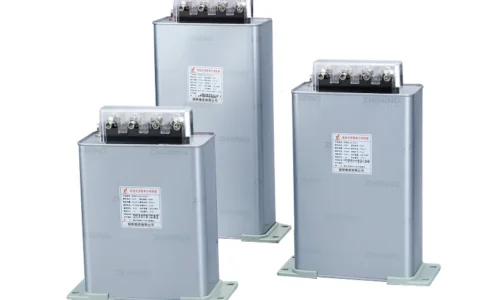
The reduction isn’t dramatic in most cases, perhaps a few percent. But over years of continuous operation, the cumulative energy savings from deploying a high voltage power capacitor become meaningful—each percentage point of reduced current translates directly into lower I²R losses throughout the distribution network.
Methods of Achieving Power Compensation
Capacitor-Based Solutions
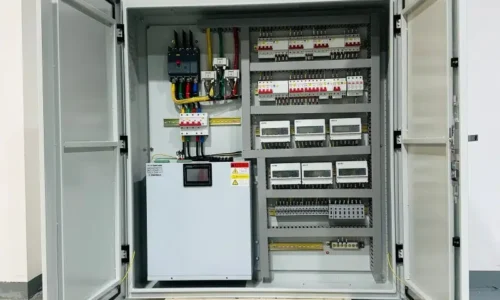
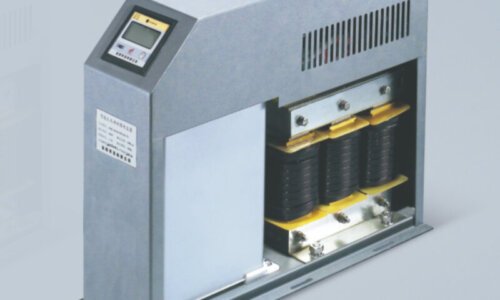
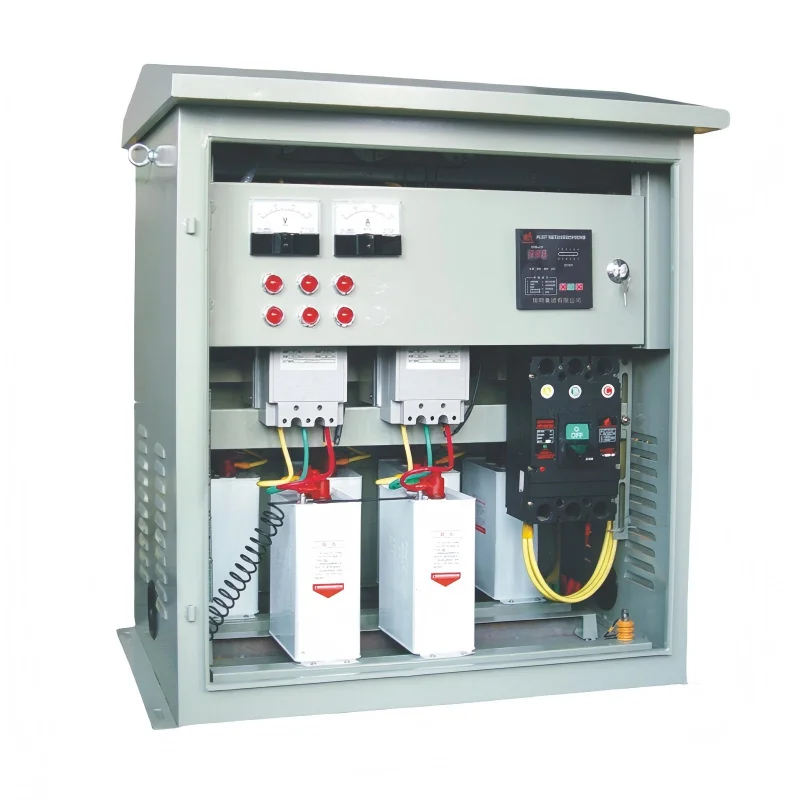
The most common approach involves installing capacitors that produce leading reactive power to offset lagging reactive power from inductive loads. Options range from simple fixed banks to sophisticated automatic systems that adjust in real time.
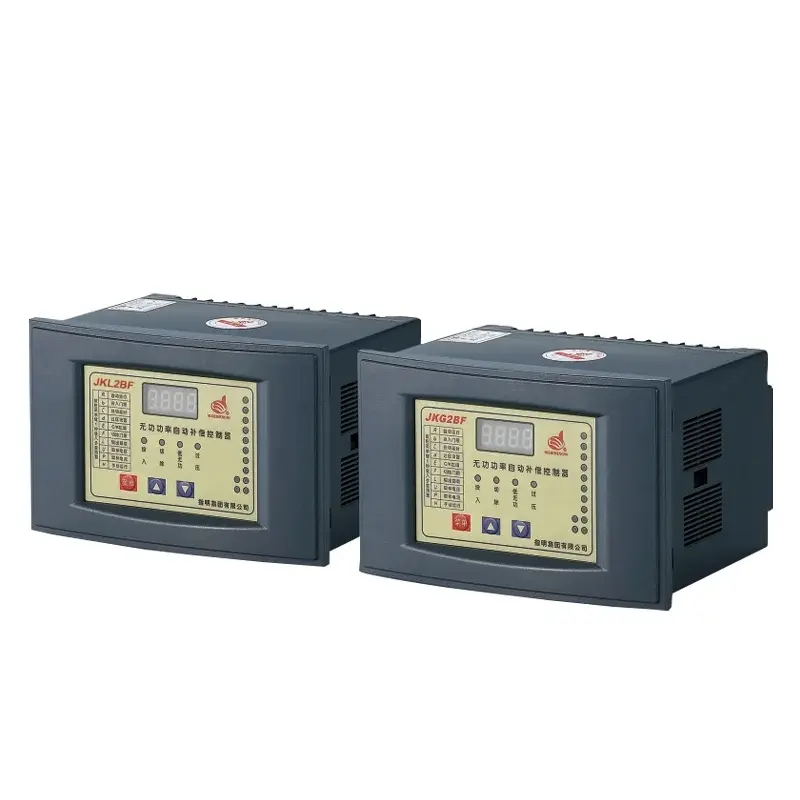
Automatic systems typically work best for facilities with variable loads. They monitor power factor continuously and switch capacitor stages as needed, maintaining target correction levels throughout shifting conditions.
Synchronous Condensers
Less common today but still used in certain applications, synchronous condensers are essentially synchronous motors running without mechanical load. By adjusting their excitation, they can either absorb or generate reactive power.
Static VAR Compensators and Modern Alternatives
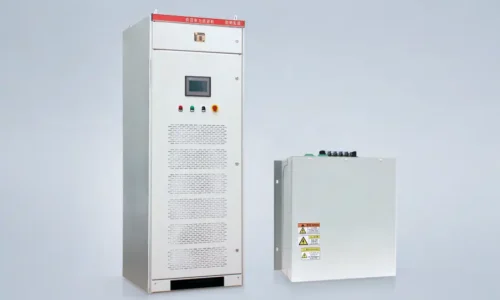
For facilities requiring precise, rapid control—or dealing with significant harmonic distortion—power electronics-based solutions offer advantages. These systems respond almost instantaneously and can handle conditions that would damage traditional capacitor banks.
They cost more, certainly. But in the right application, the premium pays for itself.
When Power Compensation Becomes Essential
Signs That a Facility Needs Correction
Several indicators suggest inadequate power compensation:
- Power factor penalties appearing on utility bills
- Transformers running hot under normal load
- Voltage fluctuations during motor starting
- Frequent nuisance tripping of protective devices
- Plans for expansion without infrastructure upgrades
Ignoring these signs doesn’t make the underlying problem disappear. It just allows inefficiencies to compound over time.
FAQ
Can reactive power compensation damage equipment?
Overcorrection—applying too much capacitive compensation—can cause voltage rise and potentially harm sensitive equipment. Properly sized and controlled systems avoid this issue by maintaining correction within safe limits.
Does every facility need power compensation equipment?
Not necessarily. Small commercial operations with primarily resistive loads (heating, lighting) may have naturally acceptable power factor. Assessment of actual conditions determines whether correction provides meaningful benefit.
How quickly does power compensation equipment pay for itself?
Payback periods typically range from one to four years, depending on facility size, current power factor, utility rate structures, and equipment costs. Larger facilities with poor power factor and high penalty rates see fastest returns.