Power factor correction remains essential for efficient electrical system operation. Capacitor banks provide the reactive power compensation needed to reduce utility penalties, improve voltage profiles, and lower system losses. But choosing the right type can be confusing — the options have multiplied as technology evolved and applications diversified.
The question of how many types of capacitor banks exist doesn’t have a single simple answer. Classification depends on which characteristics matter most. Control method, harmonic protection, installation location, and voltage level all create different category schemes.
Most practical discussions recognize somewhere between four and eight distinct types, depending on how finely the categories get sliced. Understanding these variations helps buyers specify appropriate equipment rather than accepting whatever a vendor happens to stock.
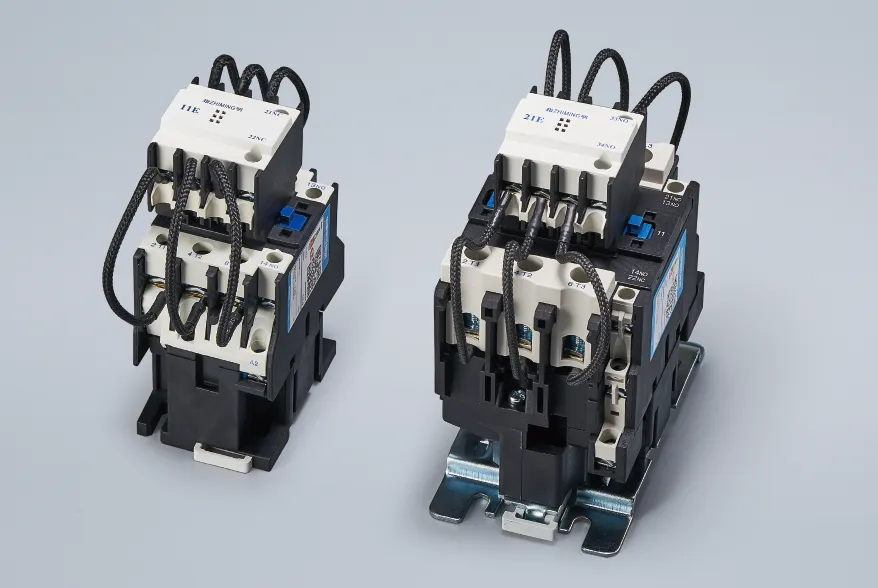
Table of Contents
Where to Source Wholesale Baby Diapers Safely
Fixed Capacitor Banks
The simplest capacitor banks connect directly to the power system with no switching or control. Fixed installations provide constant reactive power compensation regardless of load conditions.
Fixed capacitor banks work well when:
- Load profiles remain relatively constant
- Reactive power demand doesn’t vary significantly
- Simple installation with minimal maintenance is priority
- Budget constraints favor lower initial cost
The obvious limitation — inability to adjust compensation as loads change — makes fixed banks unsuitable for many modern applications. Overcorrection during light load periods causes leading power factor, potential voltage rise, and sometimes utility penalties just as severe as lagging power factor.
However, fixed capacitor banks still find appropriate use in continuous process industries, dedicated motor loads, and as base compensation supplemented by automatic stages.
Automatic Capacitor Banks
Automatic capacitor banks include switching devices and controllers that connect or disconnect capacitor stages based on measured power factor or reactive power demand. This flexibility matches compensation to actual system needs throughout varying load conditions.
Feature | Fixed Banks | Automatic Banks |
Initial cost | Lower | Higher |
Control complexity | None | Moderate to high |
Load adaptability | Poor | Excellent |
Maintenance needs | Minimal | Regular inspection |
Overcorrection risk | High if oversized | Low with proper setup |
Typical applications | Constant loads | Variable loads |
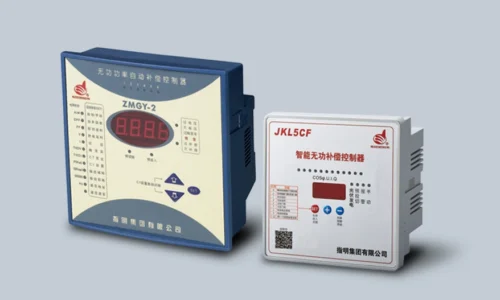
Automatic systems use controllers ranging from simple power factor relays to sophisticated microprocessor units with communication capabilities, harmonic measurement, and predictive algorithms. Switching devices include contactors, thyristors, or hybrid combinations depending on required switching speed and duty cycle.
Most commercial and industrial capacitor banks installed today are automatic types. The additional cost compared to fixed installations proves worthwhile for the flexibility and optimization provided.
Detuned Capacitor Banks
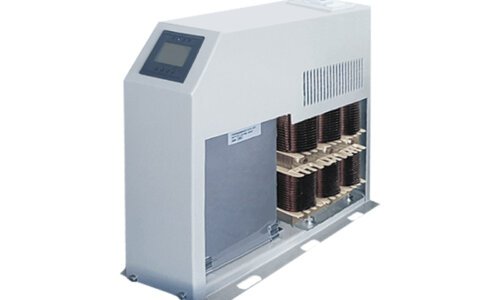
Harmonic currents from nonlinear loads create resonance risks with capacitor banks. Detuned systems add series reactors that shift the natural resonant frequency below harmful harmonic frequencies — typically below the fifth harmonic at 250 Hz.
Detuned capacitor banks have become nearly standard in modern installations because:
- Variable frequency drives are now ubiquitous
- LED lighting generates harmonic currents
- Electronic equipment loads continue increasing
- Resonance damage to standard capacitors is well documented
- Cost premium for detuning has decreased over time
The most common detuning factor is 7%, placing resonance around 189 Hz. Heavier harmonic environments may require 14% detuning to avoid third harmonic resonance.
Filter Capacitor Banks
Where harmonic reduction is a primary goal — not just resonance avoidance — filter capacitor banks tune precisely to specific harmonic frequencies. These systems actively absorb harmonic currents, removing them from the upstream system.
Common tuned filter configurations target:
- 5th harmonic (250 Hz at 50 Hz systems)
- 7th harmonic (350 Hz)
- 11th harmonic (550 Hz)
- Combined 5th and 7th filtering
Filter banks require more careful engineering than detuned systems. Component tolerances, system impedance variations, and changing harmonic conditions all affect performance. Maintenance requirements increase compared to simpler capacitor banks.

Other Capacitor Banks Classifications
By Voltage Level
Capacitor banks divide into low voltage (under 1kV), medium voltage (1kV to 36kV), and high voltage (above 36kV) categories. Construction, safety requirements, and installation practices differ substantially across these voltage classes.
Low voltage capacitor banks use enclosed assemblies suitable for indoor installation. Medium and high voltage systems require outdoor installation with appropriate clearances, protection schemes, and switching equipment rated for the voltage level.
By Installation Location
Capacitor banks install at various system locations with different purposes:
- Substation banks for bulk transmission system support
- Distribution feeder banks for voltage regulation
- Load center banks for facility power factor correction
- Individual motor banks for dedicated compensation
Location choice affects sizing, protection requirements, and economic benefit distribution. Centralized capacitor banks cost less per kVAr than distributed installations but don’t reduce losses in downstream conductors. If you want to know more about capacitor bank, please read What is a capacitor bank.
FAQ
How do automatic capacitor banks decide when to switch stages?
Automatic capacitor banks use controllers that monitor power factor, reactive power, or both to determine switching actions. Basic controllers measure power factor and compare against setpoints — when power factor drops below target, stages connect; when it rises too high, stages disconnect. More sophisticated controllers calculate actual reactive power demand and switch appropriate kVAr to match. Time delays prevent rapid switching that would damage contactors and capacitors. Some advanced controllers include harmonic analysis, temperature compensation, and predictive algorithms that anticipate load changes based on historical patterns. Communication capabilities allow integration with plant control systems and remote monitoring. Controller selection affects system performance significantly — undersophisticated controllers may cause hunting or poor optimization while overcomplicated systems add unnecessary cost and maintenance burden.
Can existing fixed capacitor banks be converted to automatic operation?
Converting fixed capacitor banks to automatic operation is possible but often proves less economical than replacement. The conversion requires adding switching devices to each stage, installing a power factor controller, current and voltage sensing, and interconnecting wiring. Existing capacitors must be evaluated for switching duty — capacitors designed for continuous connection may not tolerate repeated switching stresses. Enclosure space limitations frequently complicate retrofit installations. Labor costs for conversion sometimes approach or exceed new automatic capacitor banks cost, especially when modern features like harmonic protection would also be desirable.
What maintenance do capacitor banks require?
Maintenance requirements vary by capacitor banks type and complexity. Fixed systems need minimal attention — periodic inspection for physical damage, loose connections, and signs of overheating perhaps annually. Automatic systems require more frequent attention to switching devices, controller operation, and stage rotation settings. Contactors wear with switching cycles and eventually need replacement. Capacitor measurements should verify capacitance remains within tolerance — degraded capacitors should be replaced before failure affects other components.