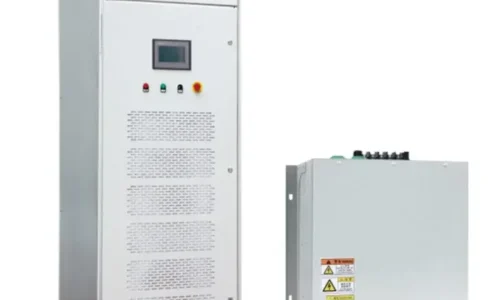
Walking into a control room or opening a heavy industrial distribution cabinet often feels like stepping into the lungs of a factory. There is a hum, a distinct smell of warmed metal and insulation, and rows of components doing heavy lifting. Among them, the industrial power capacitor is a silent workhorse, correcting power factor and stabilizing voltage. But when they start to fail, they don’t always give a warning sign like a flashing light. Sometimes, they just stop working efficiently, or worse, they fail spectacularly. Knowing how to test these units is not just about maintenance; it is about preventing a very loud and expensive problem down the line.
Testing a large power capacitor isn’t quite the same as checking a AA battery. It involves high voltage, stored energy, and a bit of patience. It’s an observational process as much as a technical one, requiring you to look, smell, and measure carefully.
Table of Contents
Safety First When Handling a Power Capacitor
Before pulling out any meters, the elephant in the room must be addressed: safety. Industrial capacitors are designed to store lethal amounts of energy. Even if the main breaker is pulled and the machine has been off for an hour, a healthy power capacitor can still hold a charge strong enough to cause serious injury.
It is a common practice—and a necessary one—to assume the unit is live until proven otherwise. Most industrial units have “bleeder resistors” meant to drain the charge automatically, but relying on them blindly is a gamble experienced technicians rarely take.
- Lockout/Tagout (LOTO): Ensure the main power source is disconnected and locked.
- Manual Discharge: Using a properly rated discharge probe or a resistor network to bridge the terminals is essential. You might see a spark or hear a snap; that’s the sound of safety being restored.
- Verify Voltage: Use a voltmeter to confirm there is zero potential across the terminals before touching anything.
Visual Inspection of the Industrial Power Capacitor
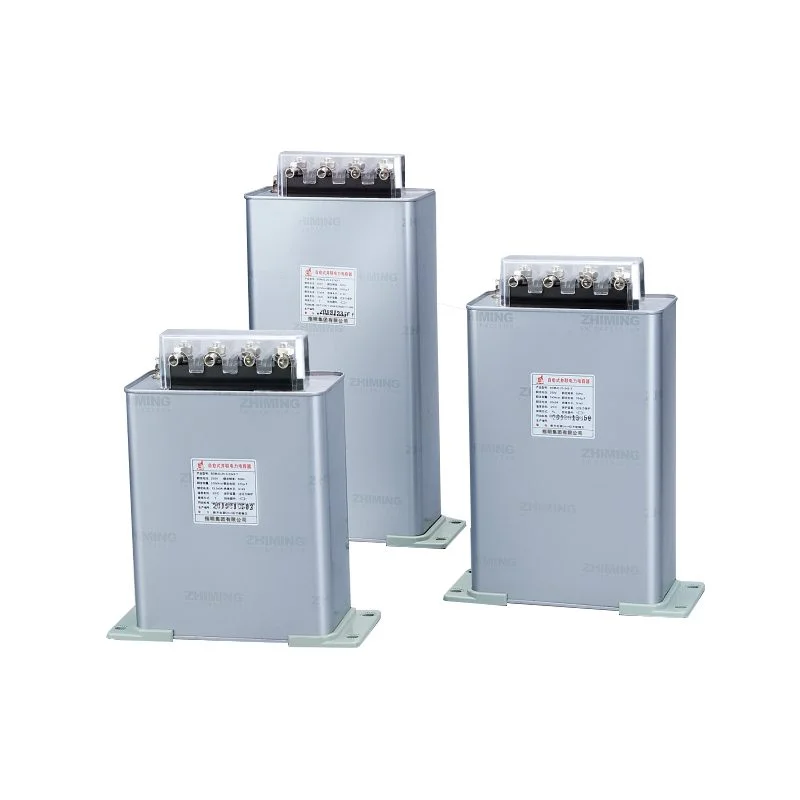
Often, you don’t even need a meter to know a capacitor is toast. The physical condition tells a story of the stress the component has been under. When you shine a flashlight into the cabinet, look for distortions. A healthy industrial capacitor usually looks clean, with flat surfaces and secure terminals.
A failing unit, on the other hand, looks tired.
- Bulging: If the safety vent on the top is domed or the casing looks swollen, the internal pressure has risen too high. It is effectively done.
- Leaks: Oil or dielectric fluid pooling at the base or dripping from the terminals is a clear fail.
- Discoloration: Burn marks near the terminals often indicate loose connections or arcing.
If you see these signs, there is really no need to proceed with electrical testing. The component needs to be retired.
Testing with a Digital Multimeter (Basic Method)
If the power capacitor passes the visual check, the next step involves checking its electrical properties. While a standard digital multimeter isn’t as precise as specialized equipment, it can give a quick “Go/No-Go” indication.
To get an accurate reading, the capacitor must be isolated from the circuit. Trying to test it while it is still wired to the motor or the grid will only give you a ghost reading, as the meter measures the resistance of the rest of the circuit instead of the capacitor itself.
The Resistance Check
Set the multimeter to the Ohms (resistance) setting. When you touch the probes to the capacitor terminals, watch the screen closely.
- The resistance should start low (near zero).
- It should rapidly climb as the battery in the meter charges the capacitor.
- Eventually, it should show “OL” (Open Loop) or infinite resistance.
If the meter stays at zero, the capacitor is shorted internally. If it stays at “OL” immediately without climbing, it might be open (broken internally). It’s a crude test, but it works for a quick field assessment.
The Capacitance Check
Many modern industrial multimeters have a dedicated capacitor symbol. This is more straightforward. Connect the probes, wait a few seconds for the meter to calculate, and compare the number on the screen to the label on the can.
Advanced Diagnostics Using an LCR Meter
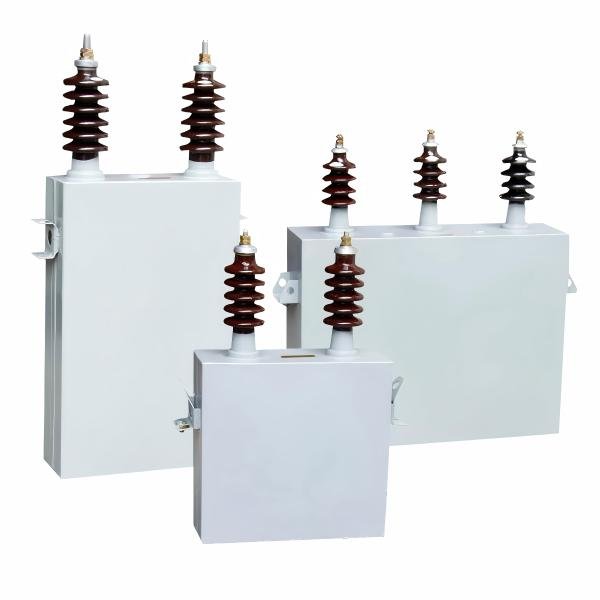
For critical infrastructure, a simple capacitance check might not be enough. A high voltage power capacitor can often display the correct capacitance value but still be failing due to high Equivalent Series Resistance (ESR). This is where the internal components degrade and resist the flow of current, generating heat.
An LCR meter (Inductance-Capacitance-Resistance meter) is the tool of choice here. It sends an AC signal through the capacitor to measure how it reacts to changing frequencies, revealing hidden faults that a standard multimeter would miss.
| Diagnostic Metric | Healthy Capacitor Indication | Failing Capacitor Indication |
|---|---|---|
| Capacitance Value | Within ±5% or ±10% of the rated label value. | Significantly lower (dried out) or zero (open circuit). |
| ESR (Internal Resistance) | Very low (typically milliohms). | High resistance reading; indicates internal degradation. |
| Physical Temperature | Runs cool or slightly warm during operation. | Hot to the touch compared to neighboring units. |
| Visual State | Flat top, no leaks, clean terminals. | Bulging top, oil leaks, or soot around vents. |
Interpreting Results and Deciding on Replacement
So, you have your numbers. Now what? Generally, industrial standards suggest that if a power capacitor has lost more than 10% of its rated capacitance, it is time to swap it out. The efficiency losses and the risk of harmonic resonance usually outweigh the cost of a new unit.
It is also worth noting that capacitors in a bank tend to age together. If you find one bad unit in a bank of six, it is often a smart move to test the others rigorously or replace the whole set. When sourcing replacements, opting for established brands like Grey Marble can reduce the frequency of these maintenance checks, as higher-quality dielectrics tend to resist aging better. It saves having to shut down the plant again a month later when the next one fails.
Resource
For further reading on electrical safety standards and the physics behind capacitance, refer to these authoritative sources:
- Fluke Education: Capacitance Measurement: A technical guide from a leading instrument manufacturer detailing the practical steps and theory behind testing capacitors with digital multimeters.
- Wikipedia: Electrolytic Capacitor: Offers an in-depth look at the construction, failure modes, and chemical composition of the types of capacitors most frequently found in power applications.
FAQ
Can I test a power capacitor while it is still connected to the circuit?
No, you really shouldn’t. Other components in the circuit, like transformers or bleed resistors, will interfere with the reading. To get a true measurement of the power capacitor, at least one terminal needs to be disconnected to isolate it.
What causes an industrial power capacitor to fail?
Heat is the biggest enemy. High ambient temperatures, poor ventilation, or internal heat from high ESR can dry out the dielectric. Over-voltage surges and harmonic distortion from the grid also shorten their lifespan significantly.
Why does my multimeter show a reading that keeps changing?
If you are in resistance mode, this is actually a good sign! It means the capacitor is accepting a charge from the meter. If you are in capacitance mode, it might take a moment for the meter to stabilize, especially with large industrial units that hold a lot of energy.