Removing components just to check them is a risky time-sink that every technician dreads. Naturally, the goal is to test the power capacitor while it is still sitting in the circuit. The short answer is yes, you can—but it’s not a perfect science. While pulling the part is the only way to get a 100% definitive reading, there are several diagnostic tricks that allow you to assess the component’s health without the hassle and risk of de-soldering.
Table of Contents
The Problem With Parallel Circuits
Technicians are taught to remove a power capacitor for testing because of parallel circuits. Since electricity follows the path of least resistance, a standard multimeter’s test signal often wanders off into nearby resistors or motor windings rather than staying in the capacitor. This interference creates confusing, inaccurate readings. However, before getting lost in complex electrical diagnostics, experienced eyes can often spot a failure just by looking at the component’s physical condition.

Visual Clues and Physical Signs
Before worrying about electrical readings, the physical condition of a power capacitor often tells the whole story. These components are under immense stress. Industrial data suggests that for every 10 degrees Celsius rise in operating temperature, the life expectancy of an electrolytic capacitor is cut roughly in half. They run hot, and eventually, they get tired.
If the top of the capacitor looks domed or swollen—often called “bulging”—it is bad. There is no need to test it. It’s done. The pressure inside has built up to the point of deforming the metal or plastic casing. Sometimes, they leak. If there is a crusty, brownish residue at the base or near the terminals, the electrolyte has escaped. It might smell a bit like fish or strong chemicals. These are dead giveaways. A power capacitor in this state has failed or is about to fail catastrophically, and swapping it out is the only logical next step.
Testing a power capacitor with an ESR Meter
If the unit looks fine physically, the best tool for in-circuit testing isn’t a standard multimeter, but an ESR (Equivalent Series Resistance) meter. This is where things get a bit more technical but much easier.
As capacitors age, they don’t always lose their capacitance (the ability to hold a charge); instead, their internal resistance increases. They get “clogged,” so to speak. An ESR meter uses a higher frequency test signal that usually ignores parallel components like resistors and inductors. It cuts through the noise.
You can often probe the terminals of the power capacitor while it is still soldered or bolted in place. If the ESR meter shows a low resistance reading (usually referenced against a chart based on voltage and capacitance rating), the part is likely healthy. If the resistance is high, the capacitor is drying out and failing. This method is incredibly popular because it saves so much time, especially on circuit boards with dozens of caps.
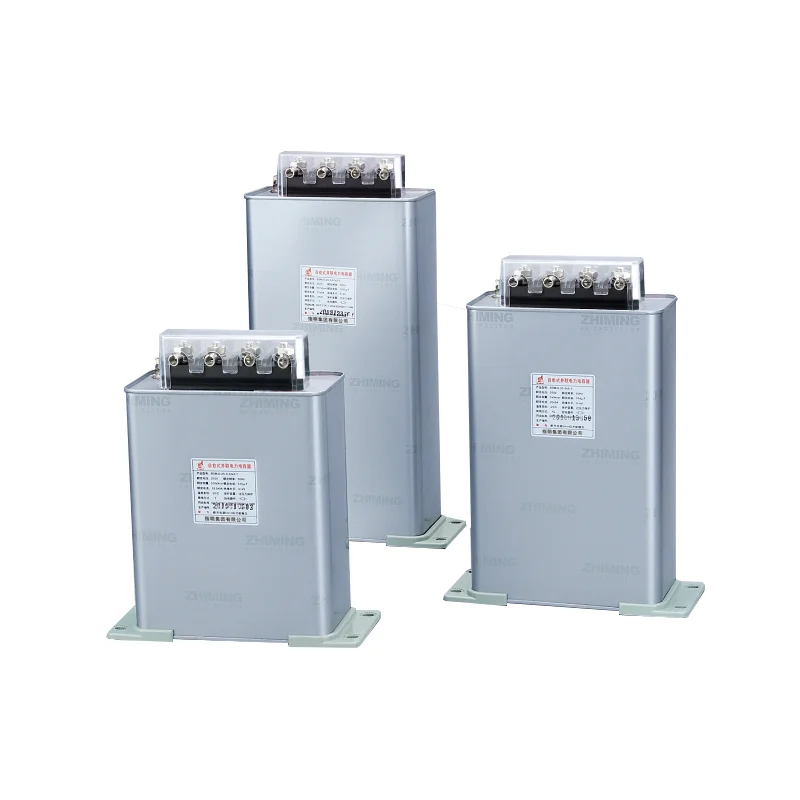
Using a Standard Multimeter to test a power capacitor
If you lack an ESR meter, you can use a standard multimeter to look for the “kick.” After ensuring the power is off and the capacitor is discharged, set the meter to Ohms. As you probe the terminals, a healthy power capacitor should show resistance climbing from low to infinity (or “OL”) as it charges. A steady zero indicates a short, while an immediate “OL” suggests an open circuit. However, parallel components can interfere with the charging curve, making this a useful but sometimes imprecise test.
Safety and Discharge Procedures oef power capacitor
It cannot be stressed enough: testing a power capacitor ,especially high voltage power capacitor, is dangerous. These components store energy — a large run capacitor in an HVAC system or a bus capacitor in a variable‑frequency drive can retain a lethal charge long after power is removed. You must ensure it is discharged, even if you are not removing it.
When You Have to Remove the power capacitor
When in-circuit readings are erratic or borderline, you must isolate the component to get an accurate diagnosis. This doesn’t always require fully extracting the part; often, simply disconnecting the wiring from the capacitor contactor is enough to break the circuit interference and verify the true condition of the capacitor.
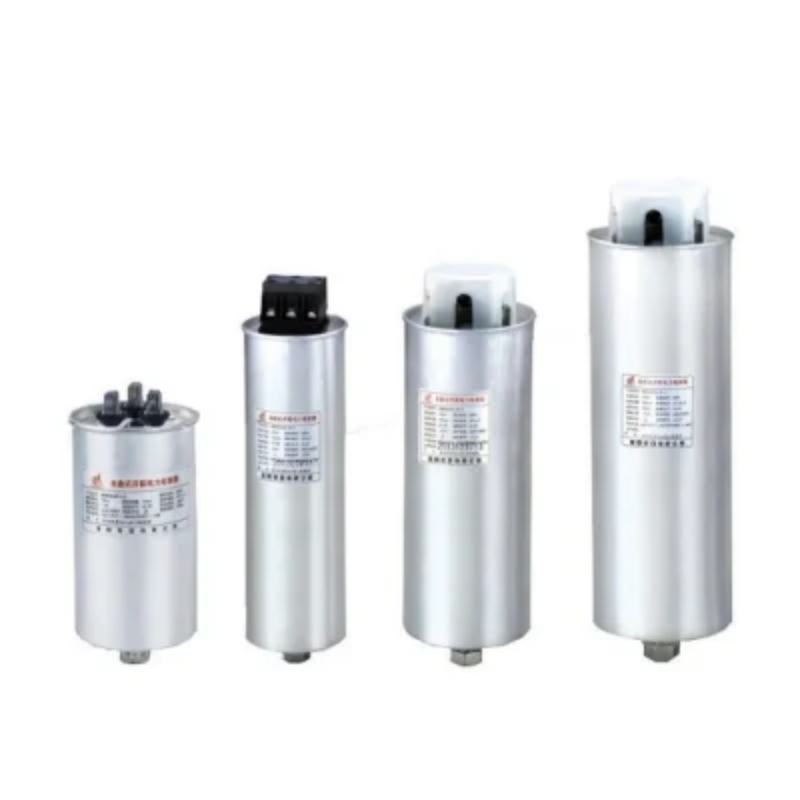
The "One-Leg" Lift Technique
If you are working on a printed circuit board (PCB), completely desoldering a large power capacitor can be a headache. The thermal mass of the leads often requires a lot of heat, and you risk lifting the pads or damaging nearby traces.
A favorite trick among technicians is the “one-leg” lift. You simply desolder and pull just one of the capacitor’s pins out of the board. For components with screw terminals, you just disconnect the wire from one side. By doing this, you break the parallel circuit. The electricity no longer has an alternate path to travel through the motor windings or discharge resistors. The capacitor is technically “out” of the circuit electrically, even if it is still physically sitting there. It saves a bit of time and reduces the risk of dropping the component or losing a screw.
The Tolerance Trap
Once isolated, testing a power capacitor is a strict comparison against its label rating and tolerance. It is not enough to simply see a reading; the value must fall within the specific percentage range (e.g., +/- 5%). A capacitor that reads below this limit causes motors to overheat and fail prematurely. If the number is outside the printed tolerance, the part is defective and must be replaced.
Dielectric Leakage Under Load
Sometimes a power capacitor passes every standard test—capacitance and ESR—yet still causes the system to fail. The culprit is often dielectric leakage, where internal insulation breaks down only under high operating voltage, remaining undetectable to the low voltage of a standard multimeter. When a component tests “good” but the circuit keeps crashing, the only valid solution is to stop measuring and simply swap it with a known good part.
Summary
So, can you test without removing? Actually Yes.
But these are screening methods. They are quick ways to say “this part is probably okay” or “this part is definitely dead.” If the readings are ambiguous, or if the system behavior is still erratic, the only way to be 100% sure is to take the time, pull the lead, and test the power capacitor in isolation. It takes longer, but accuracy is worth the extra five minutes.