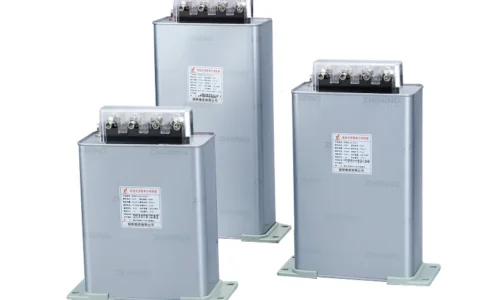
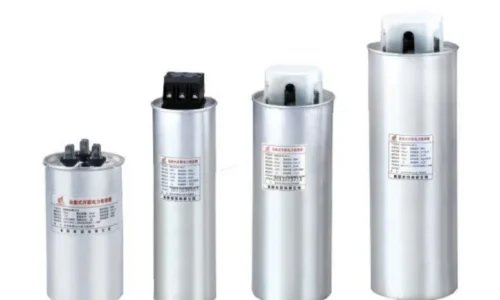
If you have ever spent time staring at the specifications on electrical equipment, you know it can feel a bit like reading a secret code. There are letters, symbols, and numbers everywhere, and sometimes the acronyms overlap. One common point of confusion that tends to pop up is the letters “PF.” If you are looking at a small electronic component, it usually means one thing, but if you are dealing with a large industrial power capacitor, it means something entirely different.
It gets tricky because electrical engineering loves to reuse abbreviations. You might be asking yourself if it stands for a unit of measurement or a performance metric. Well, in the world of heavy-duty electrical systems, understanding this distinction is pretty key to making sure you aren’t just wasting energy—and money.
Table of Contents
Deciphering the Labels on a Power Capacitor
When you see “PF” in the context of a power capacitor, it almost universally refers to Power Factor.
Now, there is a small chance for confusion here. In the world of tiny circuit boards—like the ones inside your remote control—”pF” with a lowercase ‘p’ stands for picofarad, which is a unit of capacitance. But let’s be real, if you are handling a heavy, oil-filled metal can destined for a factory floor, you are not dealing with picofarads. Those units are way too small for industrial work.
On a larger power capacitor, PF refers to the efficiency ratio of the electrical system that the capacitor is designed to fix. It is less of a “rating” of the capacitor itself and more of the “reason for existence” of the device. You might see a label or a manual referencing “PF Correction” or “Target PF,” which tells you that this equipment is there to clean up the power usage.
Occasionally, you might see a technical spec regarding the capacitor’s internal losses, sometimes labeled as dissipation factor, which is related, but for most facility managers and electricians, PF is all about the system efficiency.
The Relationship Between Power Factor and the Power Capacitor
To understand why this matters, you have to look at what’s happening in the wires. Power Factor is basically a score of how effectively your facility uses electricity. It is a scale from 0 to 1. If your PF is 1.0, you are getting every distinct watt you pay for. If it’s 0.70, you are essentially paying for a full glass of beer but getting 30% foam.
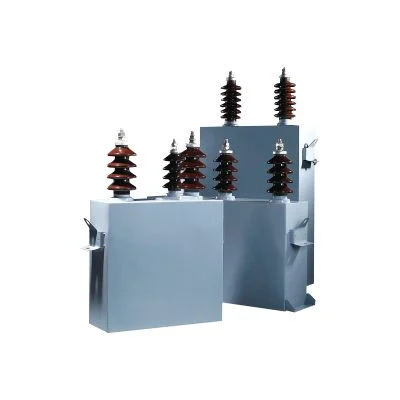
The power capacitor is the tool used to fix this. It acts as a local storage tank for reactive energy (the foam). In larger industrial settings, you might specifically need a high voltage power capacitor to handle the intense loads of heavy machinery. By installing a bank of these capacitors, you provide the necessary magnetic energy to your motors locally, rather than dragging it all the way from the power plant. This raises your PF score.
So, when you see PF discussed in the manual or on the spec sheet of a power capacitor—whether it’s a standard low-voltage unit or a robust high voltage power capacitor—it is describing the relationship between the Real Power (kW) and the Apparent Power (kVA).
- Real Power (kW): The work being done.
- Reactive Power (kVAR): The energy the capacitor provides.
- Apparent Power (kVA): The total power supplied by the utility.
Why You Should Care About the PF Value
It’s easy to ignore these numbers until the utility bill arrives. Most power companies charge a penalty if your Power Factor drops below a certain threshold (usually 0.90 or 0.95). They do this because a low PF strains their grid.
When you install a power capacitor, you are essentially aiming to push that PF value closer to 1. This has a few tangible benefits that you can actually see and feel in the facility:
- Lower Bills: The obvious one. You stop paying penalties.
- Cooler Cables: Because the current is lower, wires don’t heat up as much.
- More Capacity: It frees up space on your transformer, allowing you to add more machines without upgrading the main supply.
It is kind of like tuning a car engine. You aren’t changing the engine itself, but you are making sure it runs as smoothly as possible.
Common Misunderstandings When Selecting a Power Capacitor
There are a few things that tend to trip people up when they start dealing with power factor correction. It is not as simple as “bigger is better.”
First, there is the issue of over-correction. Some people think if a power capacitor brings the PF to 0.95, then adding more must be better to get to 1.0 or beyond. This is risky. If you push the PF past 1.0, it becomes “leading.” This can cause voltage levels to rise dangerously high, potentially damaging the very equipment you are trying to protect.
Second, there is the confusion about “internal” PF. A real-world power capacitor isn’t perfect. It has a tiny bit of internal resistance. This is sometimes referred to as the “loss angle” or “tan delta.” In very technical datasheets, this might be confused with PF, but it’s a measure of how much heat the capacitor generates itself, not the system PF it corrects.
- Don’t confuse pF (size) with PF (efficiency).
- Don’t aim for a perfect 1.0 unless you have automatic controls.
- Don’t ignore harmonic distortion (which can kill a standard capacitor).
FAQ
Is pF the same as PF on a capacitor label?
No, they are different. “pF” stands for picofarad, a very small unit of capacitance measurement used in tiny electronics. In the context of an industrial power capacitor, “PF” refers to Power Factor, which is the efficiency metric the capacitor is designed to improve. You will almost never see a power capacitor rated in picofarads; they are usually in microfarads (µF).
Can a power capacitor fix a low power factor by itself?
Yes, that is its main job. By connecting a power capacitor in parallel with your inductive loads (like motors), it supplies the reactive power locally. This reduces the demand on the utility grid and consequently raises your Power Factor rating. However, it needs to be sized correctly to match the load.
What happens if I choose the wrong size power capacitor?
If the capacitor is too small, your Power Factor won’t improve enough to avoid utility penalties. If it is too big, you risk “over-correction,” leading to a leading power factor. This can cause high voltage surges and instability in your electrical network, potentially tripping breakers or damaging sensitive electronics.