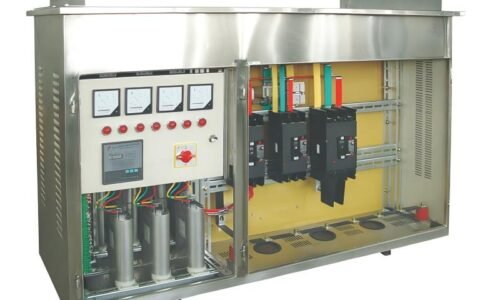
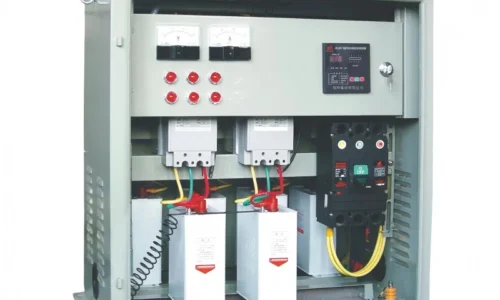
Electrical efficiency isn’t something most people think about daily. Yet behind the scenes, facilities everywhere struggle with a common problem—poor power factor. An APFC bank, which stands for Automatic Power Factor Correction bank, offers a smart solution to this challenge.
Unlike manual correction systems that require constant human adjustment, an APFC bank monitors electrical conditions and responds automatically. When loads change throughout the day (and they always do), the system adapts. It switches capacitor stages on or off as needed, maintaining optimal power factor without anyone lifting a finger.
The technology has been around for quite some time now, but adoption keeps growing. Rising energy costs and stricter utility regulations have pushed more facilities toward automatic solutions. There’s also the matter of convenience—nobody wants to babysit their electrical system around the clock.
Table of Contents
How Does an APFC Bank Function?
The working principle isn’t overly complicated, though the engineering behind it can get quite detailed.
At its core, an APFC bank consists of multiple capacitor stages controlled by an intelligent relay or controller. This controller continuously measures the power factor of the electrical system. When it detects deviation from the target value (usually somewhere between 0.95 and 0.99), it takes action.
The Control Logic
The controller calculates how much reactive power compensation is needed. It then switches in the appropriate number of capacitor stages. If the load decreases later, it switches some stages off. This constant adjustment happens automatically, often multiple times per hour depending on load variations.
Switching Mechanisms
Two main types of switching exist:
- Contactor-based switching—uses electromagnetic contactors, suitable for slower switching applications
- Thyristor-based switching—uses solid-state switches, allows faster response and handles frequent switching better
The choice between them depends on the application. Facilities with rapidly fluctuating loads generally benefit more from thyristor switching, despite the higher cost.
Key Components of an APFC Bank
Component | Function | Typical Lifespan |
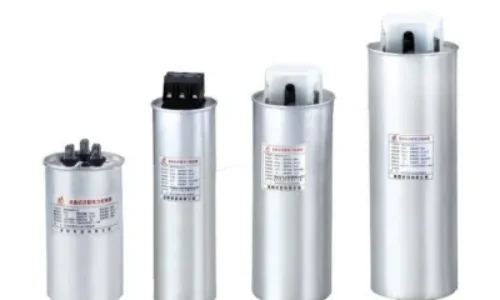
Power Capacitors | Store and release reactive power | 8-15 years |
APFC Relay/Controller | Monitors power factor, controls switching | 10-20 years |
Contactors or Thyristors | Switch capacitor stages on/off | 5-10 years (contactors) |
Detuning Reactors | Protect against harmonic resonance | 15-20 years |
Fuses or MCBs | Provide overcurrent protection | Replace as needed |
Surge Protection | Guards against voltage spikes | 5-10 years |
Some systems also include harmonic filters, especially in environments with significant non-linear loads. Variable frequency drives, LED lighting, and computer equipment all generate harmonics that can cause problems for standard capacitor banks.
Benefits of Installing an APFC Bank
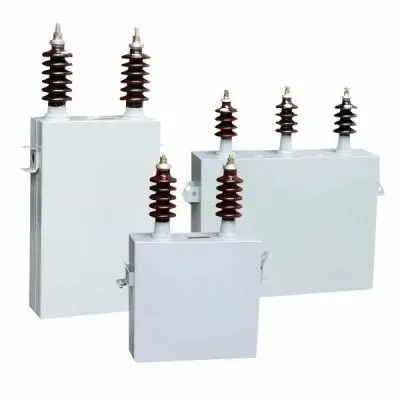
Why invest in a high voltage capacitor bank? The reasons are practical and often financially compelling.
An automatic power factor correction (APFC) system using a high voltage capacitor bank delivers key benefits:
Eliminates or reduces power factor correction penalties from utilities
Decreases current flow through cables and transformers
Frees up capacity in the electrical system
Reduces voltage drops and improves power quality
Lowers energy losses (typically delivering 2–5% savings)
Extends the lifespan of electrical equipment
There’s something satisfying about watching utility bills drop after installation. Payback periods vary, but many facilities see returns within one to three years—after which the savings continue indefinitely.
From an operational standpoint, the automatic nature of an APFC panel means far less maintenance compared to manual systems. Set it up properly once, and it largely takes care of itself.
Where APFC Banks Are Commonly Used
These systems appear across various industries and applications:
- Manufacturing facilities with motor-heavy loads
- Commercial complexes and shopping centers
- Hotels and hospital buildings
- Textile and paper mills
- Water treatment plants
- Food processing facilities
Basically, anywhere drawing significant power from the grid can potentially benefit. Smaller installations might get by with simpler solutions, but medium to large facilities often find automatic correction worth the investment.
nstallation and Sizing Considerations for APFC Bank
Getting the sizing right matters quite a bit. An undersized bank won’t correct adequately. An oversized one wastes money and might even cause leading power factor issues.
Electric Arc Furnaces
Before ordering equipment, a proper load study should happen. This involves measuring actual power consumption patterns, ideally over several days or weeks. Peak loads, minimum loads, and typical operating conditions all factor into sizing calculations.
Harmonic Evaluation
Modern facilities often have harmonic-rich environments. Standard capacitors can resonate with system inductance at harmonic frequencies, amplifying distortion and potentially damaging equipment. Detuned reactors (usually 7% or 14% detuning) help prevent this problem.
Location Selection
The physical placement of an APFC bank matters too:
- Should be installed near the main distribution panel
- Requires adequate ventilation (capacitors generate heat)
- Needs protection from dust, moisture, and extreme temperatures
- Must be accessible for maintenance
Maintenance Requirements
These systems are relatively low-maintenance, but not zero-maintenance.
Regular inspections should check for:
- Swelling or leaking capacitors
- Loose connections or signs of overheating
- Proper operation of contactors
- Controller settings and alarms
- Ventilation and cooling adequacy
Most manufacturers recommend annual inspections at minimum. Facilities with harsh conditions or heavy usage might need more frequent checks.
FAQ
What size APFC bank do facilities typically need?
Sizing depends entirely on the existing reactive power demand. A facility drawing 500 kVAr of reactive power would need a bank rated around that capacity, possibly with some margin. Professional load analysis provides the most accurate sizing.
Can an APFC bank work with solar power systems?
Yes, and it often becomes more important with solar installations. Solar inverters can affect power factor, and the interaction between generation and consumption patterns makes automatic correction particularly valuable.
How much does an APFC bank typically cost?
Prices vary widely based on capacity and features. Small units for light commercial use might cost a few hundred dollars. Large industrial systems can run into tens of thousands. The payback through energy savings and penalty avoidance usually justifies the investment.