Open up almost any electronic device and capacitors appear everywhere. They’re the cylindrical components, the little ceramic discs, the chunky aluminum cans — all serving different purposes depending on where they sit in the circuit. But capacitors inside power supply sections carry particular importance. Without them, the smooth DC voltage that electronics need simply wouldn’t exist.
A power supply capacitor stores and releases electrical energy to maintain stable voltage output. That’s the textbook answer, anyway. The practical reality involves filtering out ripple, handling transient loads, suppressing noise, and generally keeping things running smoothly when conditions try to make them not. Understanding what these components do — and why they sometimes fail — helps in designing, troubleshooting, and repairing electronic systems.
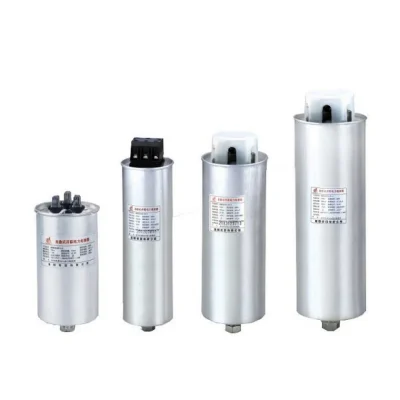
Table of Contents
How a Power Supply Capacitor Actually Works
Capacitors store energy in an electric field between two conductive plates separated by an insulating material (the dielectric). When voltage increases, the capacitor absorbs energy. When voltage drops, it releases that stored energy back into the circuit. This charge-discharge cycle happens continuously and rapidly.
The Filtering Function
In power supply capacitors, this behavior serves a critical purpose. Rectifiers convert AC to pulsating DC — technically direct current, but with significant voltage variations called ripple. A power supply capacitor smooths this pulsating waveform by:
- Charging up during voltage peaks
- Discharging during voltage valleys
- Filling in the gaps to maintain relatively constant output
Without adequate capacitance, the output would pulse at twice the line frequency (100Hz or 120Hz depending on region). Sensitive electronics don’t appreciate that kind of treatment.
Energy Storage and Transient Response
Beyond filtering, power supply capacitors provide energy reserves for sudden load changes. When a circuit suddenly demands more current — a motor starting, a processor waking from sleep, a transmitter keying up — the power supply can’t respond instantly. Capacitors bridge that gap, supplying current until the main regulation catches up.
This transient response capability explains why power supplies often contain far more capacitance than simple ripple calculations would suggest. Real-world loads aren’t static. They jump around constantly.
Types of Power Supply Capacitor Components
Aluminum Electrolytic Capacitors
These remain the workhorse for bulk energy storage in power supplies. High capacitance values in relatively compact packages make them practical for main filtering applications. However, they contain liquid electrolyte that dries out over time — especially at elevated temperatures. This aging represents their primary weakness.
Ceramic Capacitors
Modern multilayer ceramic capacitors handle high-frequency filtering duties exceptionally well. Their low equivalent series resistance (ESR) makes them effective at suppressing switching noise from DC-DC converters. Smaller values appear near integrated circuits for local decoupling. Larger ceramics increasingly replace small electrolytics in some applications.
Film Capacitors
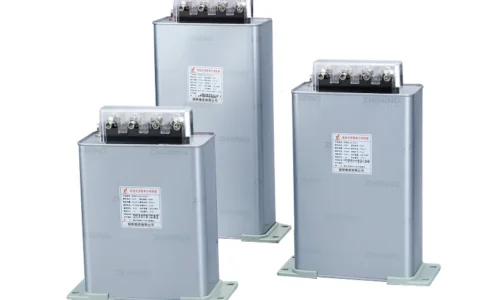
Where reliability matters most in a low voltage power capacitor application — or where AC ripple currents run high — film capacitors often excel. Unlike electrolytics which can wear out, film types offer superior longevity and handle electrical and thermal abuse better. The primary tradeoff is their larger physical size for an equivalent capacitance value. Consequently, high-end audio equipment and robust industrial power supplies, where performance and durability are critical, often favor film low voltage power capacitors despite the size penalty.
Why Power Supply Capacitor Selection Matters
Choosing capacitors involves more than just matching capacitance and voltage ratings. Several parameters influence real-world performance.
Critical Specifications
- Capacitance — how much energy storage capacity exists
- Voltage rating — maximum safe operating voltage (always derate)
- ESR — equivalent series resistance affects ripple current handling and efficiency
- Ripple current rating — how much AC current the capacitor can handle without overheating
- Temperature rating — operating range and how life varies with temperature
- Lifetime — especially important for electrolytics, usually specified at maximum rated temperature
Common Selection Mistakes
Undersizing creates obvious problems — excessive ripple, poor transient response, potential overheating. But oversizing isn’t always harmless either. Very large capacitors can stress rectifier diodes with high inrush currents during power-on. Balance matters.
Ignoring ESR causes issues in switching power supplies where low ESR is essential for proper operation. Ignoring temperature ratings leads to premature failure when capacitors run hot. Every specification exists for a reason, even if that reason isn’t immediately obvious.
Power Supply Capacitor Failure and Symptoms
- Bulging or swollen tops on electrolytic capacitors
- Electrolyte leakage (brown or crusty residue)
- Increased output ripple visible on oscilloscope
- Unstable voltage regulation
- Audible hum or buzz from equipment
- Intermittent operation, especially when warm
- Complete failure to power on
Heat accelerates electrolytic capacitor aging dramatically. The rule of thumb suggests lifespan halves for every 10°C above rated temperature. Cheap power supplies running hot often fail within a few years — almost always the capacitors give out first.
FAQ
How long does a power supply capacitor typically last?
Quality aluminum electrolytic capacitors typically last 5,000 to 10,000 hours at maximum rated temperature. At lower temperatures, life extends significantly — potentially 15 to 20 years in cool environments. Polymer and film capacitors last considerably longer, often exceeding the useful life of the equipment they’re installed in. Operating temperature matters more than almost any other factor for electrolytic longevity.
Can a power supply work without capacitors?
Technically, a basic unregulated supply could produce output without capacitors, but that output would be pulsating DC unsuitable for most electronics. Regulated switching supplies absolutely require capacitors to function — they’re integral to the regulation loop itself. In practical terms, power supplies need capacitors to produce usable, stable output voltage.
What causes power supply capacitors to fail?
Heat represents the primary killer of electrolytic capacitors, accelerating electrolyte evaporation and chemical degradation. Excessive ripple current causes internal heating that compounds the problem. Voltage stress beyond ratings, reverse polarity application, and manufacturing defects also contribute. Poor ventilation in enclosed equipment concentrates heat around capacitors, dramatically shortening their useful life.