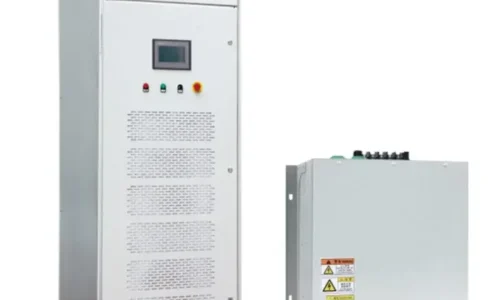
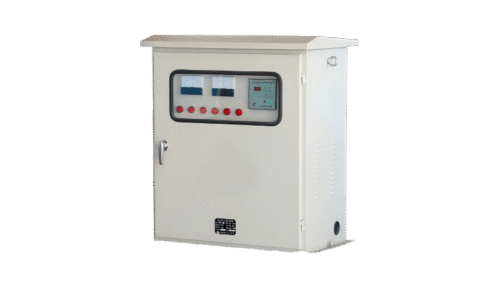
If you spend any time in the electrical room of a large manufacturing plant or a commercial high-rise, you will likely see a large, unassuming metal cabinet standing in the corner. It usually has a digital display on the front with numbers flickering around “0.95” or “0.99.” Occasionally, you might hear a loud metallic “clunk” coming from inside.
That cabinet is the unsung hero of the facility’s energy bill. It is a shunt power capacitor system, often called a capacitor bank.
While a single capacitor is just a component—a silver can that stores energy—a system is a smart, dynamic machine. It monitors the building’s electrical health in real-time and actively intervenes to clean up the power flow. Without these systems, our power grid would be far less efficient, and industrial electricity bills would be significantly higher.
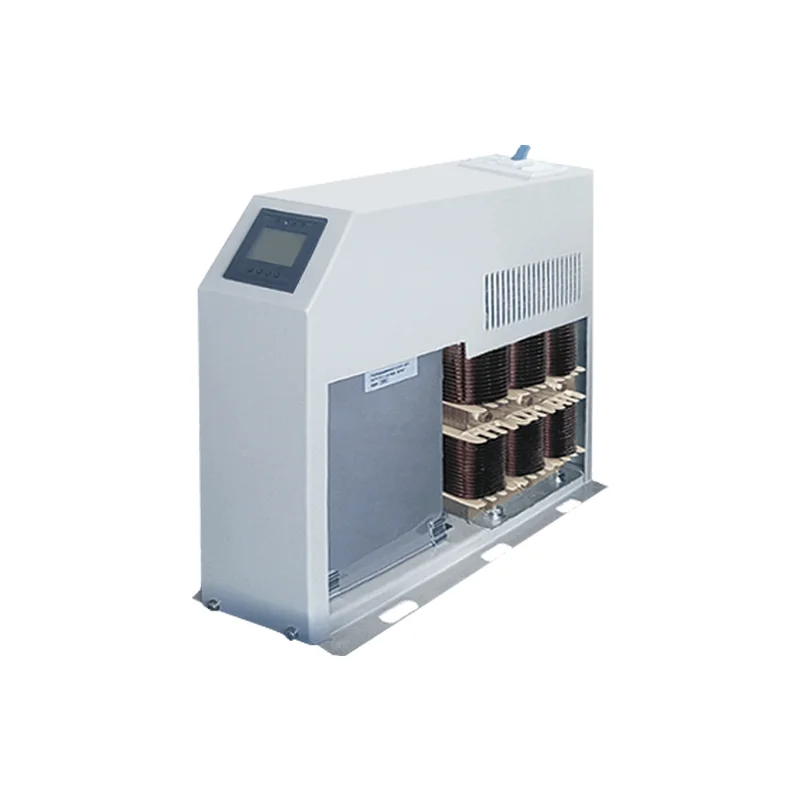
Table of Contents
The Anatomy of a Shunt Power Capacitor System
It helps to look at this not as a single box, but as a team of players working together. If you were to open that cabinet (which you shouldn’t do unless you are a qualified electrician), you wouldn’t just find one giant battery.
Instead, you find a modular setup. It is designed to be flexible.
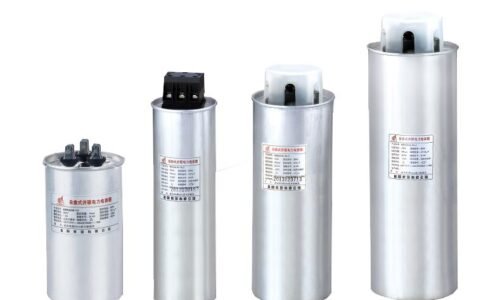
- The Capacitor Units: These are the actual “cans” or cells. They are the workers. They provide the reactive power that motors and transformers crave.
- The Controller: This is the brain. It sits on the door and watches the incoming power lines. It calculates how “dirty” or inefficient the power usage is at that exact second.
- Switching Devices (Contactors): These are the muscles. When the brain says “we need help,” the contactor snaps shut—making that loud clunking sound—and brings a specific shunt power capacitor online.
- Reactors (Optional): Sometimes you see big copper coils. These are there to protect the capacitors from harmful harmonics, which are basically electrical noise that can overheat the system.
Why the "Shunt" Connection Matters
In the world of electrical engineering, words like “series” and “shunt” define how things are wired. “Shunt” basically means “parallel.”
A shunt power capacitor system is wired across the power lines, not in line with them. Think of it like a passing lane on a highway. The main traffic (your electricity) keeps flowing to your lights and machines. The capacitor system sits in the passing lane, injecting energy sideways into the flow whenever it’s needed.
This is important because if the system fails or needs maintenance, you can simply turn it off, and the rest of the building keeps running. It doesn’t block the road; it just stops helping.
How the System Saves Money
You can’t talk about these systems without mentioning Power Factor. It is the metric that facility managers obsess over.
Motors—like those in AC units, elevators, and assembly lines—are greedy. They consume two types of power:
- Real Power: To actually turn the shaft.
- Reactive Power: To create the magnetic field inside the motor.
The utility company has to deliver both. If your facility demands too much Reactive Power, the utility company charges you a penalty fee. It’s often called a “Power Factor Surcharge.”
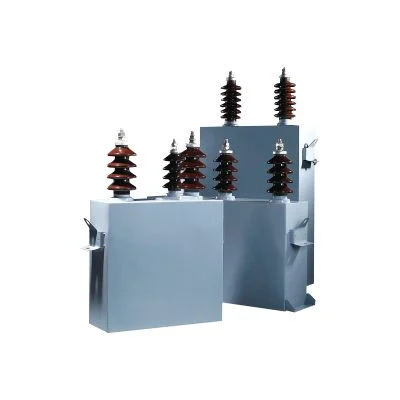
The high voltage shunt power capacitor system eliminates this need. It stores Reactive Power locally. When a big motor turns on, instead of pulling that magnetic energy all the way from the power plant miles away, it pulls it from the high voltage shunt power capacitor bank sitting ten feet away. The utility meter sees less strain, the penalty disappears, and the wiring runs cooler.
Fixed vs. Automatic Systems
Not all systems are created equal. Depending on the complexity of the facility, you might see a “dumb” system or a “smart” system.
A fixed shunt power capacitor is just bolted on. It’s always on. This is fine for a single big motor that runs 24/7, like a massive water pump. But for a factory where machines are turning on and off constantly, a fixed capacitor is bad news. If you have too much capacitance when the machines are off, you get “over-correction,” which can dangerously raise the voltage.
That is why most modern systems are Automatic (APFC).
| Feature | Fixed Capacitor Bank | Automatic (APFC) System |
|---|---|---|
| Operation | Always On (or tied to one motor) | Dynamic (Steps on and off) |
| Cost | Low | High |
| Best For | Stable, constant loads (e.g., Irrigation pumps) | Variable loads (e.g., Factories, Offices) |
| Risk | Can cause over-voltage at light loads | Precise control prevents over-voltage |
| Maintenance | Simple | Complex (requires controller programming) |
Installation and Maintenance Observations
When you walk through a plant, you can usually tell which capacitor banks are being neglected. A healthy shunt power capacitor system needs to breathe. These units generate heat, and if the ventilation fans in the cabinet fail, the life of the capacitors drops drastically.
Another thing to watch for is the “bulge.” The individual capacitor cans have a safety mechanism. If they fail internally, the pressure builds up and the top of the can pops up like a soup can that’s gone bad. A good maintenance team checks for this annually.
It is also worth noting that these systems are hazardous even when off. Because they store energy, a technician has to wait (usually 5 to 10 minutes) after cutting the power for the internal resistors to bleed off the lethal charge before touching anything.
Resource
For a deeper dive into the technical standards and physics behind these systems, consult these authoritative sources:
- Power Factor Correction – Wikipedia: A comprehensive look at the math and theory behind why we correct power factor.
- Capacitor Bank Functionality: An overview of how utility companies and industries utilize capacitor banks for voltage support.
FAQ
Can a shunt power capacitor system reduce my home electric bill?
Generally, no. Residential utility meters usually only charge for “Real Power” (Watts). Industrial meters charge for “Apparent Power” (kVA) or penalize for bad power factor. While a capacitor might make your home slightly more efficient, the financial ROI just isn’t there for a standard house.
How long does a capacitor system last?
The switching equipment and the steel cabinet can last 20+ years. However, the capacitor cells themselves are consumables. Depending on heat and voltage spikes, they typically need replacing every 7 to 10 years.
Does the system save energy or just money?
Ideally, both. The primary goal is financial (avoiding penalties). However, because the shunt power capacitor reduces the current flowing through your internal transformers and cables, you lose less energy to heat (I²R losses). So, you are technically using slightly less electricity overall.