In many industrial environments, High Voltage Power Capacitors are installed as part of the electrical system, yet their actual role is not always clearly understood outside of engineering teams. They are often described in general terms—improving efficiency, stabilizing voltage—but that only explains part of what they do.
In reality, these components are closely tied to how power behaves across the system. When voltage drops slightly under load, or when energy losses seem higher than expected, it is often related to reactive power flow. And this is where High Voltage Power Capacitors start to matter more than they first appear.
Table of Contents
Understanding the Role of High Voltage Power Capacitors
Supplying Reactive Power Where It Is Needed
The primary function of High Voltage Power Capacitors is to provide reactive power locally within an industrial power system.
Most industrial equipment—motors, transformers, compressors—requires reactive power to operate. However, if this reactive power is drawn directly from the grid, it increases current and leads to unnecessary energy loss.
Capacitors change this situation by supplying reactive power closer to the load.
In practical terms, this means:
- Less reactive power flowing through transmission lines
- Lower current in the system
- Reduced energy losses
This function is sometimes explained very simply, but in real systems, its impact is quite noticeable over time.
Improving Power Factor
Another key role of High Voltage Power Capacitors is power factor correction.
When the power factor is low, the system becomes inefficient. More current is required to deliver the same amount of usable power, which increases heat and losses.
Capacitors help offset this imbalance.
Typical results include:
- Reduced electricity penalties
- Better use of existing electrical capacity
- Lower operating costs
It’s worth noting that some facilities only realize the importance of this after seeing repeated inefficiencies in their energy bills.
Supporting Voltage Stability
Voltage fluctuations are common in industrial systems, especially when large equipment starts or stops.
High Voltage Power Capacitors contribute by:
- Supporting voltage during peak demand
- Reducing sudden drops
- Maintaining more consistent operating conditions
This does not always eliminate voltage issues entirely, but it tends to make system behavior more predictable.
How High Voltage Power Capacitors Work
Basic Operating Principle
From a technical standpoint, High Voltage Power Capacitors store energy in an electric field and release it when required. However, in industrial systems, their behavior is more about timing than storage.
Capacitors produce current that leads the voltage, while most industrial loads (which are inductive) cause current to lag.
This difference allows capacitors to balance the system.
A simplified way to understand it:
- Inductive load → pulls reactive power
- Capacitor → supplies reactive power
- System → becomes more balanced
This interaction is continuous and does not require manual intervention in most modern systems.
Integration into Power Systems
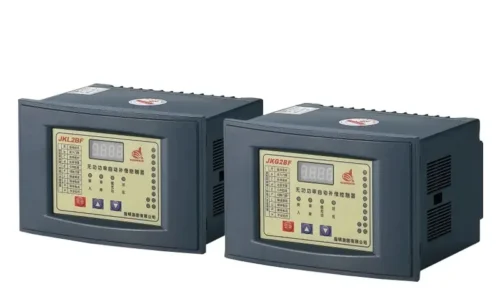
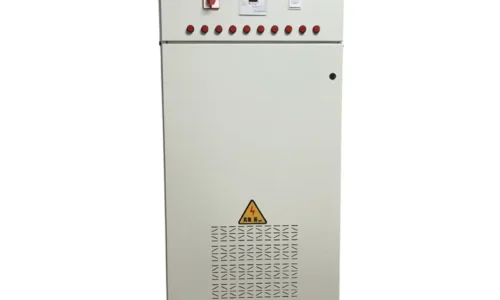
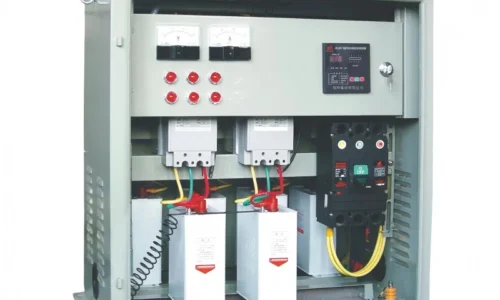
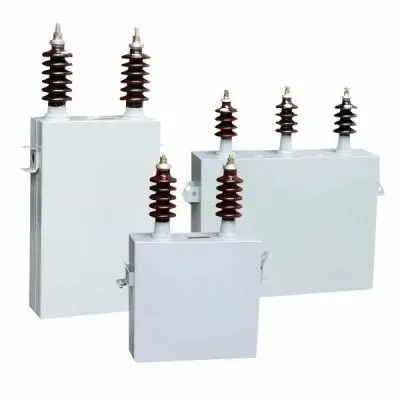
In real applications, High Voltage Power Capacitors are rarely used alone. They are typically installed as part of larger systems such as capacitor banks.
These setups can be:
- Fixed (always active)
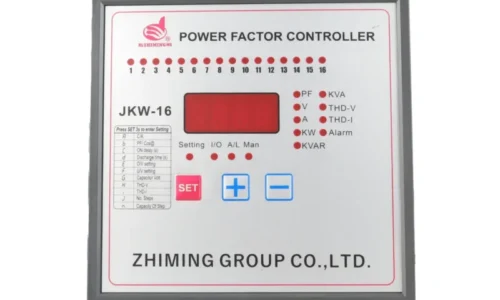
- Automatically switched
- Controlled based on load conditions
Sometimes, the system works very precisely. Other times, there may still be small inefficiencies depending on configuration.
Why High Voltage Power Capacitors Are Used Instead of Low Voltage Power Capacitors
At first glance, both high and low voltage power capacitors seem to serve similar purposes. But in industrial power systems, the difference becomes more practical than theoretical.
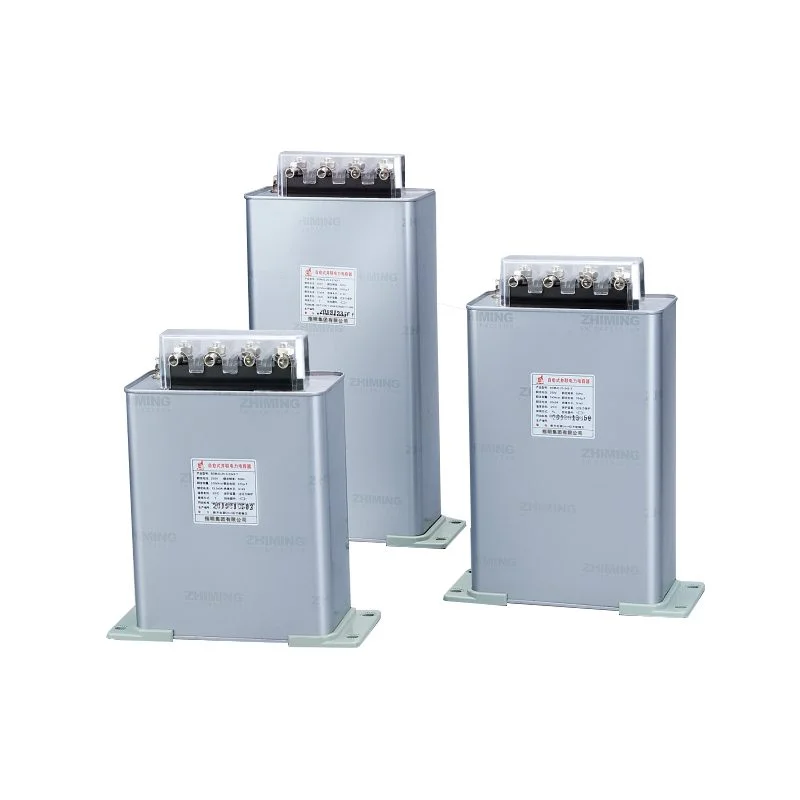
Low voltage power capacitors are usually installed near individual machines or within smaller distribution panels. They work well for localized correction, but their effect is limited to a smaller area.
High Voltage Power Capacitors, on the other hand, operate at system level.
This leads to several differences:
- They compensate reactive power before it spreads across the network
- They reduce losses across the entire system, not just one machine
- They support voltage at a broader scale
| Aspect | Low Voltage Power Capacitors | High Voltage Power Capacitors |
|---|---|---|
| Installation | Near equipment | Substation / system level |
| Coverage | Local | System-wide |
| Typical use | Commercial setups | Industrial power systems |
So in large industrial environments, relying only on low voltage power capacitors would not be sufficient. High Voltage Power Capacitors are needed to manage power at a higher level.
Typical Applications in Industrial Power Systems of High Voltage Power Capacitor
Common Use Cases
High Voltage Power Capacitors are widely used in different sectors:
- Manufacturing plants
- Mining operations
- Oil and gas facilities
- Renewable energy systems
- Power transmission networks
In some cases, they are included during system design. In others, they are added later when inefficiencies become difficult to ignore.
Capacitor Configurations
Different system requirements lead to different capacitor types.
For example:
- High Voltage Power Capacitor is commonly used for general industrial compensation
- Single Phase Power Capacitor is suitable for specific or uneven load conditions
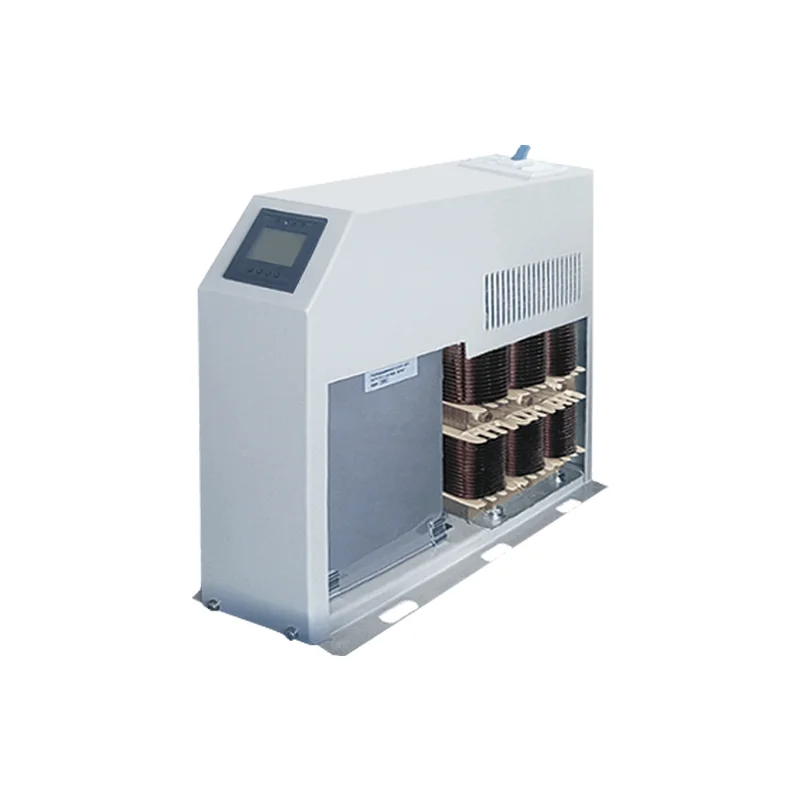
- Three Phase Power Capacitor is preferred in balanced industrial systems
The choice is not always purely technical—sometimes it depends on existing infrastructure or operational habits.
Practical Benefits That Are Often Noticed Later
Efficiency Improvements Over Time
The impact of High Voltage Power Capacitors is not always immediate, which can make them easy to underestimate.
Over time, however, systems tend to show:
- Lower transmission losses
- Reduced energy costs
- More efficient power usage
These changes are sometimes gradual, but they accumulate.
More Stable System Behavior
Another benefit is improved reliability.
With better reactive power control:
- Equipment operates more consistently
- Voltage fluctuations are reduced
- System stress decreases
That said, capacitors are only one part of the overall solution. Poor system design cannot be fully corrected by adding them alone.
Conclusion
In industrial power systems, High Voltage Power Capacitors are essential for managing how electricity behaves, not just how it is delivered. They supply reactive power, improve power factor, and help stabilize voltage across the system.
While they may not always be the most visible components, their role becomes clear when systems operate more efficiently and predictably. Whether through High Voltage Power Capacitor solutions or more specific options like Single Phase Power Capacitor and Three Phase Power Capacitor, they remain a key part of modern industrial power management.
FAQ
Do High Voltage Power Capacitors need to be adjusted regularly?
Not always. Many systems are automated, but periodic inspection is still recommended to ensure proper performance.
Can High Voltage Power Capacitors help with equipment lifespan?
Indirectly, yes. By improving voltage stability and reducing system stress, they can contribute to longer equipment life.
Are High Voltage Power Capacitors used in renewable energy systems?
Yes, they are often used to stabilize output and manage reactive power in wind and solar power systems.