Table of Contents
The Constant Battle for Grid Stability and the Static Var Compensator
Power grids are, in many ways, living things. They breathe and pulse with the rhythm of millions of consumers switching loads on and off throughout the day. Factories fire up massive arc furnaces in the morning. Air conditioners across entire cities kick on during a heat wave. And every single one of these events sends a ripple through the electrical network, causing voltage levels to sag or surge in ways that can be genuinely problematic.
Maintaining a stable voltage across hundreds or thousands of miles of transmission lines is far more difficult than most people realize. The challenge isn’t just about having enough raw power; it’s about managing the flow of reactive power, that invisible, oscillating energy needed to sustain the magnetic and electric fields in AC systems. When reactive power gets out of balance, voltage goes haywire. This is precisely the problem a static var compensator is designed to solve, acting as a sort of giant, ultra-fast stabilizer for the entire grid.

Defining What a Static Var Compensator Actually Is
A static var compensator, often just called an SVC, is a sophisticated piece of power electronics equipment. It’s typically installed at key substations along a high-voltage transmission network. The word “static” in the name is important. It means the device has no large rotating parts, unlike older synchronous condenser machines that spun like giant motors to achieve a similar effect.
The core job of the equipment is to dynamically inject or absorb reactive power (measured in VARs, or Volt-Ampere Reactive) almost instantaneously. When the grid voltage starts to dip, the static var compensator pumps reactive power into the line to prop the voltage back up. Conversely, when voltage climbs too high, it absorbs the excess reactive power to bring things back down. It’s a continuous, automated balancing act that happens in milliseconds.
How a Static Var Compensator Works Under the Hood
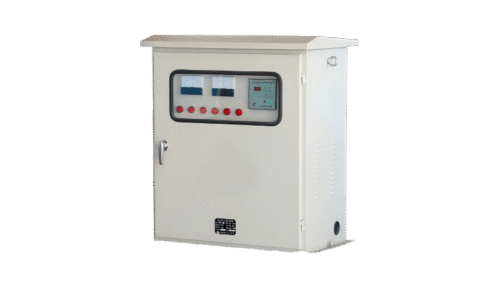
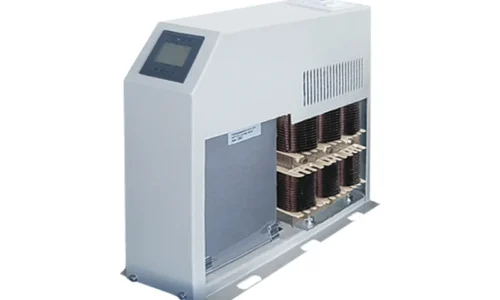
Peering inside the fence line of a substation that houses a static var compensator, the equipment looks impressively complex. There are usually large banks of capacitors, massive air-core reactors, and heavily cooled cabinets full of power electronics. Everything is connected by thick aluminum busbars.
The magic happens through the coordination of a few key building blocks:
Thyristor-Controlled Reactors (TCR): These are large inductors connected to the grid through high-power thyristor valves. By adjusting the firing angle of the thyristors, the controller can smoothly vary how much reactive power the reactor absorbs.
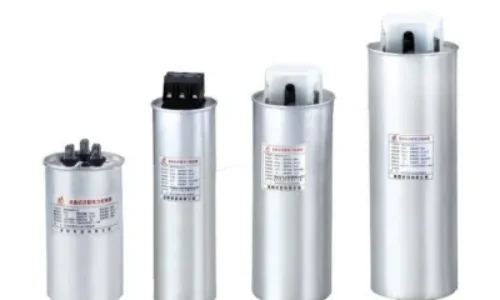
Thyristor-Switched Capacitors (TSC): These are banks of capacitors that can be switched on or off very quickly. They provide discrete steps of reactive power injection.
Harmonic Filters: The switching action of the thyristors creates electrical noise. Tuned filter circuits are essential to clean up these harmonics and prevent them from polluting the grid.
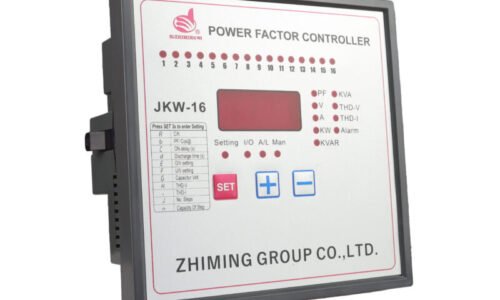
Control System: A highly advanced processor constantly monitors the grid voltage (sometimes dozens of times per electrical cycle) and calculates exactly how much compensation is needed, then fires the thyristors accordingly.
The combination of TCRs and TSCs allows for incredibly smooth and precise control over a wide operating range.
Comparing the Core Components of a Static Var Compensator
Understanding the difference between the two main reactive power elements is key to grasping how the whole system achieves its flexibility. They serve opposite functions but work together seamlessly.。
Component | Primary Function | Response Type | Effect on Grid |
Thyristor-Controlled Reactor (TCR) | Absorbs reactive power from the grid. | Continuously variable (smooth adjustment). | Lowers voltage when it’s too high. |
Thyristor-Switched Capacitor (TSC) | Injects reactive power into the grid. | Discrete steps (on or off). | Raises voltage when it’s too low. |
By blending the smooth absorption of the TCR with the stepped injection of the TSC, a static var compensator can achieve a net output that ranges from fully capacitive to fully inductive, all within a fraction of a second.
Where the Static Var Compensator Makes the Biggest Impact
FAQ
What is the main difference between an SVC and a STATCOM?
Both devices perform similar functions, but they use different technology. A static var compensator relies on thyristor-switched capacitors and reactors. A STATCOM (Static Synchronous Compensator) uses voltage-source converters with IGBTs. STATCOMs are generally faster, more compact, and perform better at low voltage, but they tend to be more expensive for the same VAR capacity.
How fast can a static var compensator respond to grid changes?
The response time is remarkably quick, typically in the range of one to three electrical cycles. On a 60 Hz system, that translates to roughly 15 to 50 milliseconds. This speed is essential for catching and correcting voltage flickers before they become noticeable or cause equipment to trip offline.
Does a static var compensator consume real power?
In a strict sense, it primarily deals with reactive power, not real (active) power. However, it is not perfectly lossless. The thyristors, reactors, and cooling systems all have some inherent losses. So, a static var compensator does consume a small amount of real power just to operate, but this is typically a minor fraction of its total VAR rating.