Table of Contents
What Causes a Power Capacitor to Catch Fire?
A power capacitor is a deceptively simple component that can, under certain conditions, become a real hazard. It may be surprising (and a little unnerving) how a lump of metal and dielectric turns into smoke and flame. The usual chain of events starts with electrical stress or physical damage, then escalates—sometimes quickly—into thermal runaway or an internal short. Often it’s not one single cause but several problems piling up (age, poor ventilation, a surge, bad installation).
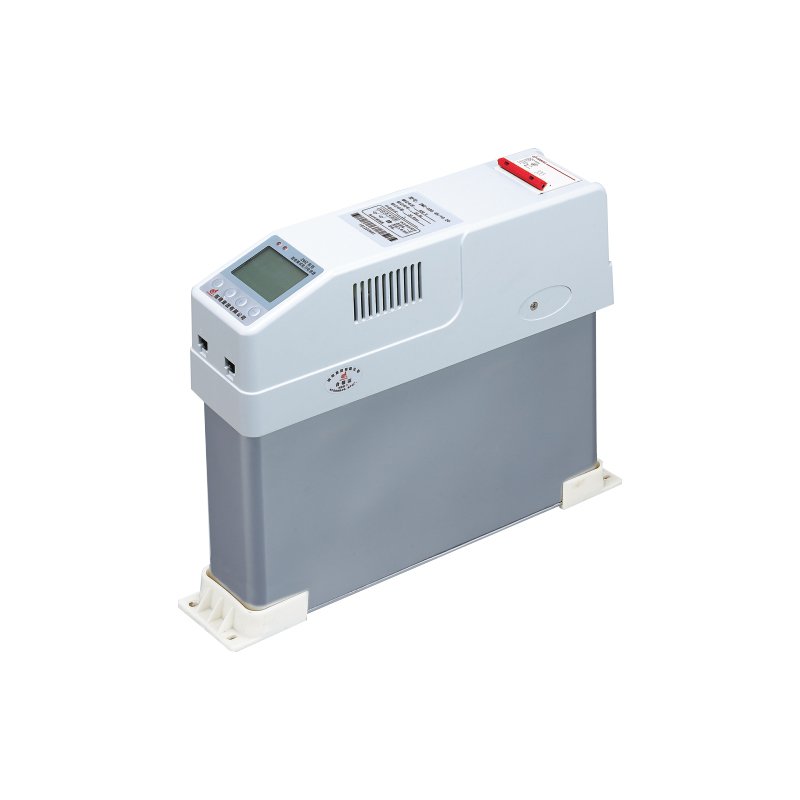
Common electrical triggers
- Overvoltage events, such as lightning strikes or switching transients, can puncture the dielectric.
- Prolonged ripple current that exceeds the capacitor’s rating leads to heating.
- Reverse polarity on polarized power capacitors (electrolytics) causes gas generation and pressure build-up.
Mechanical and environmental contributors
- Physical damage (drops, dents) can compromise seals.
- Excessive ambient temperature or poor airflow traps heat.
- Chemical contamination or moisture ingress accelerates failure.
Power Capacitor Failure Modes and How They Lead to Fire
There are a few recognizable failure modes that tend to precede combustion. Each one behaves differently, but all can produce heat, gas, and pressure—ingredients for a fire.
Thermal runaway
When a power capacitor—especially a high voltage capacitor—heats more than it can dissipate, self-heating speeds up its degradation. Heat causes the dielectric to break down, which increases leakage current, which causes more heat—round and round. In compact assemblies, especially where ventilation is poor, things can escalate surprisingly fast.
Internal short / dielectric puncture
A tiny puncture or conductive particle inside can create a low-resistance path. The result is localized heating and sometimes arcing. That arcing can ignite flammable electrolyte or nearby insulation.
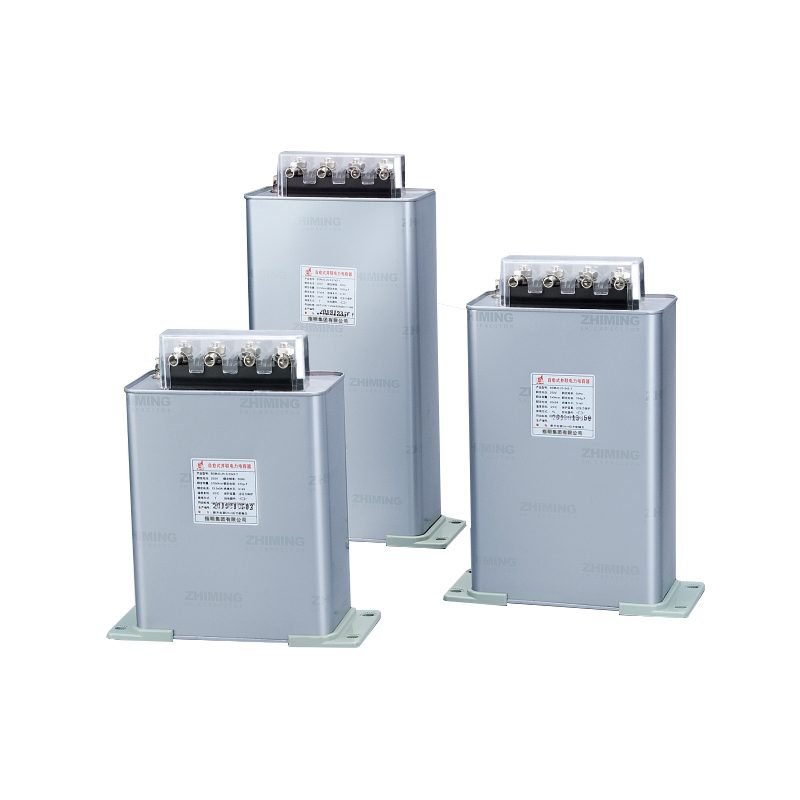
Signs a Power Capacitor Might Be Failing
Spotting trouble early is often the difference between a component replacement and a small fire (yes, that often means checking the obvious stuff).
- Visual inspection (bulging, leaks)
- Measure ESR or leakage current
- Check for abnormal heating with an IR thermometer
- Replace if values exceed manufacturer limits
Comparison Table: Causes, Signs, and Immediate Actions
| Cause | Visible Signs | Immediate Action |
| Overvoltage / surge | Burn marks, blown fuses, punctured case | Power down, isolate circuit, inspect surrounding components |
| Excessive ripple/current | Heat, bulging, high ESR | Replace capacitor, check filtering and load conditions |
| Mechanical damage | Cracks, dents, electrolyte leak | Remove part, assess board damage, replace |
| Aging / degraded electrolyte | Gradual bulging, higher temp | Scheduled replacement, verify lifespan |
Preventing Fires from a Power Capacitor
Prevention mixes design choices with maintenance habits. It isn’t glamorous. It’s basic, and it works.
Design and selection tips
- Choose a power capacitor with adequate voltage and ripple ratings (derate where possible).
- Use non-flammable or flame-retardant materials in enclosures.
- Ensure sufficient cooling and ventilation around high-power parts.
Installation and maintenance
- Proper torque on terminals and correct polarity checks.
- Routine inspection schedules (visual and electrical).
- Replace electrolytic capacitors near or beyond their expected life (they age).
Real-world Observations and Practical Notes
Field experience repeatedly shows the same avoidable mistakes: corners are cut on cheaper parts, enclosures are squeezed too tight, and surge protection is skipped because “it hasn’t happened yet.” That complacent attitude predictably increases the risk of overheating, electrical overstress and premature component failure. A modest upfront investment in higher-quality power capacitors with appropriate voltage, temperature ratings and low ESR can significantly reduce stress and extend service life. Adding a snubber circuit or soft-start network helps limit voltage spikes and di/dt that otherwise damage dielectric and solder joints. Simple mechanical measures—provide ventilation, pressure-relief paths and avoid cramping components—lower operating temperature and slow electrolyte degradation. Taken together, these small, inexpensive design changes remove most common failure paths and save substantial time and money over the product lifecycle.
Frequent Asked Questions
1: Can a power capacitor explode or just catch fire?
Both. Electrolytic capacitors can rupture violently (pressure build-up) and spray hot electrolyte. That can ignite, especially near flammable materials.
2. Are some capacitor types safer than others?
Yes. Film capacitors typically handle heat and surge better than electrolytics and are less prone to leaking flammable electrolyte. Solid-state (e.g., polymer) capacitors also show improved safety in many cases.
3. Is it possible to prevent all capacitor fires?
No. Risk can be reduced substantially but not eliminated. Proper design, good maintenance, and surge protection cut down incidents dramatically.