Table of Contents
The Purpose Behind Fixed Capacitor Bank Applications
Electrical systems rarely operate at peak efficiency on their own. Motors, transformers, and various industrial equipment all demand reactive power—power that does no useful work but must still flow through the system. This is where a fixed capacitor bank comes into play.
These installations serve multiple purposes in power systems. Power factor correction gets the most attention, and rightfully so. But that’s not the whole story. Voltage regulation, system capacity optimization, and loss reduction all factor into why facilities install these systems.
The “fixed” part means the compensation stays constant. Unlike automatic systems that adjust based on conditions, a fixed capacitor bank provides the same reactive power support continuously. Simple approach, but effective for the right situations.
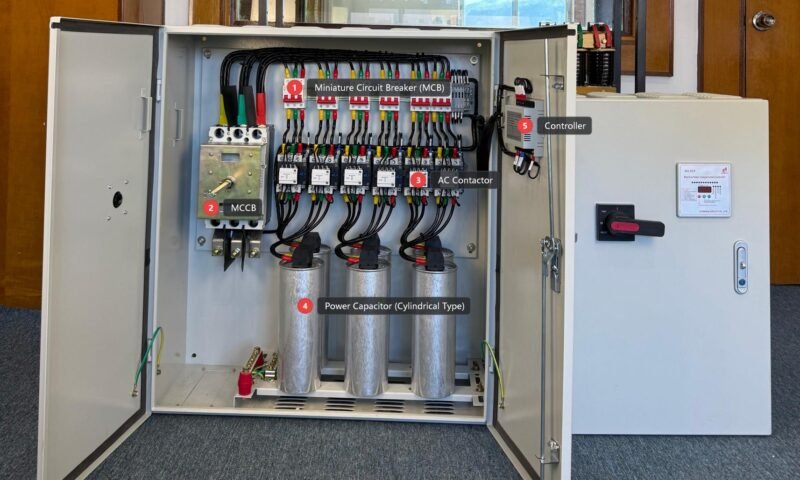
Power Factor Correction With a Fixed Capacitor Bank
Why Power Factor Matters
Industrial and commercial facilities with motors, compressors, and other inductive loads develop poor power factor. The electrical current lags behind voltage, creating inefficiencies. Utilities measure this and often impose penalties when power factor drops below certain thresholds—typically 0.90 or 0.95.
A fixed capacitor bank counteracts the lagging current from inductive loads. Capacitors produce leading reactive current that cancels out the lagging portion. The net effect? Better power factor, lower bills.
Typical Correction Targets
Most facilities aim for a power factor somewhere between 0.92 and 0.98. Going too high risks overcorrection, which creates its own problems. The sweet spot depends on:
- Utility penalty structures
- Load characteristics
- System voltage sensitivity
- Cost-benefit considerations
Target Power Factor | Typical Application | Risk Level |
0.90 – 0.92 | Basic penalty avoidance | Low |
0.93 – 0.95 | Standard industrial practice | Low |
0.96 – 0.98 | Optimized efficiency | Moderate |
0.99+ | Maximum correction | Higher overcorrection risk |
Voltage Support and Regulation Applications
How Capacitors Affect Voltage
Reactive power flow causes voltage drops across cables, transformers, and other equipment. When a capacitor bank supplies reactive power locally, less reactive current flows through the system. Reduced current means reduced voltage drop.
The practical result? Voltage at the load stays closer to nominal. Equipment operates more efficiently. Motors run cooler. Lights don’t dim during heavy load periods.
Utility Distribution Applications
Power utilities install massive fixed capacitor banks on distribution feeders specifically for voltage regulation. Rural lines stretching many miles particularly benefit. Without compensation, voltage at the end of long feeders sags below acceptable levels.
These utility installations might be:
- Pole-mounted units on overhead lines
- Pad-mounted installations for underground systems
- Substation banks for bulk compensation
Releasing System Capacity
The Capacity Connection
Transformers, cables, and switchgear all have current ratings. Reactive current counts against those ratings just like useful current does. When a capacitor bank reduces reactive current flow, it frees up capacity for additional real power.
Consider a transformer running at full capacity with a 0.80 power factor. Installing capacitors to bring power factor to 0.95 might free up 15-20% of the transformer’s capacity—without replacing any equipment.
Deferring Expensive Upgrades
This capacity release often allows facilities to defer costly infrastructure upgrades. Adding a $15,000 capacitor bank might postpone a $150,000 transformer upgrade for several years. The economics work out favorably in many cases.
Reducing Electrical Losses
Where Losses Occur
Losses happen throughout the power system:
- Transformer core and winding losses
- Cable and conductor resistance losses
- Switchgear and connection losses
All of these are affected by current flow. And since reactive current contributes to total current, reducing reactive current reduces losses.
Quantifying the Savings
Loss reduction typically ranges from 2% to 5% of total energy consumption after proper power factor correction. For facilities with substantial electric bills, even 3% savings adds up quickly. A manufacturing plant spending $500,000 annually on electricity might save $15,000 or more just from reduced losses.
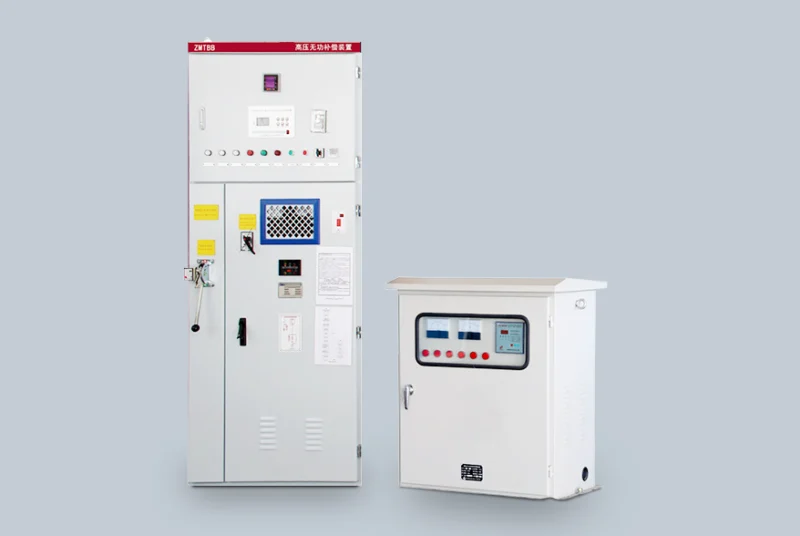
Motor and Equipment Protection
Voltage Stability Benefits
Motors perform best at rated voltage. When voltage sags during heavy load periods, motors draw more current to compensate. This extra current causes heating, reduces efficiency, and shortens motor life.
A fixed capacitor bank helps maintain voltage stability, keeping motors operating within their design parameters. The motors last longer. They run more efficiently. Maintenance costs drop.
Individual Motor Correction
Sometimes capacitors get installed right at motor terminals rather than at a central location. This provides maximum benefit for that specific motor and reduces current through all upstream wiring. Fixed correction at the motor level makes particular sense for:
- Large motors with consistent loads
- Motors at the end of long cable runs
- Critical equipment requiring stable voltage
Utility System Applications
Beyond individual facilities, utilities themselves use fixed capacitor banks extensively.
Their purposes include:
- Voltage regulation on distribution feeders
- Loss reduction in transmission and distribution
- Increasing transfer capacity of power lines
- Supporting voltage during peak demand periods
- Reducing reactive power generation requirements
Utility capacitor banks range from small pole-mounted units (50-300 kVAr) to large substation installations (several MVAr). Some get switched seasonally or based on time of day, though many remain fixed during their operating period.
Advantages of Fixed Over Automatic Systems
Why choose fixed compensation when automatic options exist?
The reasons often come down to:
- Lower initial investment
- Simpler installation and commissioning
- Reduced maintenance needs
- No controller to fail or require programming
- Better reliability for stable loads
- Faster project implementation
Automatic systems offer more flexibility, certainly. But for applications with consistent loads, that flexibility isn’t always necessary. The simpler fixed approach gets the job done at lower cost. If you want to know more about fixed capacitor bank, please read What is a fixed capacitor bank.
FAQ
Can a fixed capacitor bank eliminate power factor penalties entirely?
A properly sized fixed capacitor bank can eliminate power factor penalties for facilities with steady loads. However, if loads vary significantly throughout the day, fixed correction might overcorrect during light periods or undercorrect during peak demand. Facilities with highly variable loads often need automatic systems for complete penalty elimination.
What size fixed capacitor bank does a typical facility need?
Sizing depends entirely on the facility’s reactive power demand. A small commercial building might need 25-50 kVAr, while industrial plants often require hundreds or thousands of kVAr. Proper sizing requires measuring actual electrical characteristics—there’s no universal formula that works for everyone.
Are there situations where a fixed capacitor bank shouldn't be used?
Yes. Facilities with widely varying loads risk overcorrection during light periods if using fixed compensation. Environments with significant harmonic distortion require special detuned configurations. Operations that frequently start and stop large motors may stress fixed banks excessively. In these cases, automatic systems or specialized designs work better.