A capacitor bank that isn’t working properly does more than just waste money. It leaves power factor uncorrected, allows utility penalties to accumulate, and potentially creates safety hazards. Yet many installations run for years without anyone actually verifying proper operation.
The question of how to check if a capacitor bank is working seems straightforward. In practice, it involves several different approaches — from simple visual observation to detailed electrical measurements. Some checks take minutes with basic tools. Others require specialized equipment and expertise.
Knowing what to look for, and when to call in professional help, keeps capacitor bank installations performing as intended.
Table of Contents
Visual Inspection of a Capacitor Bank
What to Look For Externally
Visual inspection catches surprisingly many problems — if someone actually performs it regularly. The physical condition of capacitor units tells a story about their internal health.
Warning signs visible from outside include:
- Bulging or swelling of capacitor cases
- Oil leakage around seals or case joints
- Burn marks or discoloration on cases
- Corrosion on terminals and connections
- Damaged or deteriorated wiring insulation
Environmental and Mounting Conditions
Beyond the capacitor units themselves, overall installation condition matters. Dust accumulation reduces cooling efficiency. Blocked ventilation openings cause overheating. Loose mounting allows vibration damage over time.
A quick environmental assessment includes checking:
- Ventilation paths remain clear and unobstructed
- Ambient temperature stays within rated limits
- No water intrusion or excessive humidity present
- Connections remain tight without signs of heating
- Protection devices appear intact and properly set
Electrical Testing Methods for Capacitor Bank Verification
Basic Current Measurements
Test Result | Possible Interpretation |
Current at expected level | Capacitor bank likely functioning normally |
Current significantly low | Some elements have failed open |
Current higher than expected | Possible harmonic issues or measurement error |
No current draw | Complete failure, blown fuse, or open contactor |
Unbalanced phase currents | Internal element failures in one or more phases |
A clamp-on ammeter makes this check quick and non-intrusive. Compare measured values against nameplate ratings adjusted for actual voltage. Current should be proportional — lower voltage means lower current, higher voltage means higher current.
Capacitance and Power Factor Testing
More detailed assessment requires measuring actual capacitance values and comparing against nameplate specifications. Capacitance testing identifies degraded units before complete failure occurs.
Power factor testing — specifically measuring dissipation factor or tan delta — reveals dielectric condition. Healthy capacitors show very low dissipation factor. Rising values indicate aging or contamination that eventually leads to failure.
These tests typically require:
- The capacitor bank to be de-energized and isolated
- Proper discharge procedures completed
- Specialized test equipment (capacitance meter, power factor test set)
- Technical knowledge to interpret results correctly
Most facilities lack equipment for capacitance testing on-site. Periodic testing by qualified contractors makes more sense than purchasing specialized instruments used only occasionally.
Thermal Imaging Assessment
Infrared thermal imaging has become invaluable for capacitor bank assessment. Hot spots reveal problems invisible to the naked eye — loose connections, overloaded elements, internal faults generating heat.
Thermal scanning works best during normal operation under typical load conditions. Comparing temperatures across similar components identifies outliers. A capacitor unit running significantly hotter than its neighbors warrants investigation, even without other obvious symptoms.
Monitoring Capacitor Bank Performance Over Time
Tracking Power Factor Trends
Perhaps the most practical ongoing check involves simply monitoring power factor at the utility meter or main switchboard. If power factor remains at target levels, the capacitor bank is presumably doing its job. If power factor drifts lower over time, something has changed.
Utility bills often provide power factor data monthly. Tracking this information reveals gradual degradation that might otherwise go unnoticed. Sudden changes prompt immediate investigation.
Automatic System Diagnostics
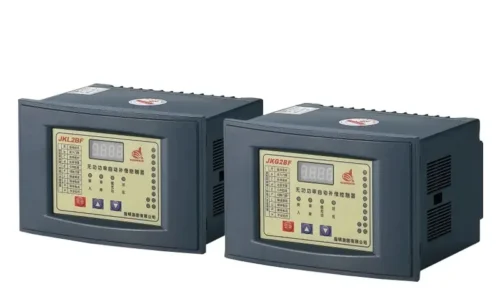
Modern automatic capacitor banks include controllers that monitor their own operation. Alarm outputs indicate fault conditions. Operating logs record switching activity and measured parameters. Communication interfaces allow remote monitoring.
Taking advantage of these built-in diagnostics — actually reviewing the data rather than ignoring it — catches problems early. Many failures give warning signs visible in operating trends long before obvious symptoms appear. If you want to know more about capacitor bank, please read What is the lifespan of a capacitor bank.
FAQ
How often should a capacitor bank be inspected?
Inspection frequency depends on operating environment and criticality of the installation. Most industrial facilities benefit from visual inspection quarterly with more detailed electrical assessment annually. Harsh environments — high temperature, dusty conditions, heavy harmonic loading — warrant more frequent attention, perhaps monthly visual checks. Utility installations often follow maintenance schedules specified by reliability standards. The key is consistency rather than occasional random attention.
Can a capacitor bank be tested while energized?
Some tests can safely be performed on energized equipment while others absolutely require de-energization. Current measurement using clamp-on ammeters works safely with proper technique and appropriate personal protective equipment. Thermal imaging specifically requires the equipment to be energized and under load. However, capacitance testing and internal inspection require complete de-energization, proper lockout/tagout procedures, and verified discharge of stored energy. Capacitors retain charge even after disconnection — they must be discharged through appropriate resistors before any hands-on work.
What indicates a capacitor bank needs replacement rather than repair?
Several factors push the decision toward replacement. When multiple capacitor units have failed within a short period, remaining units of similar age likely face imminent failure — continuing to replace individual units becomes impractical. If the capacitor bank uses obsolete dielectric materials or contains PCBs, replacement is mandatory regardless of operational condition. When repair costs approach 50-60% of replacement cost, investing in new equipment with fresh warranty and modern design makes better economic sense.