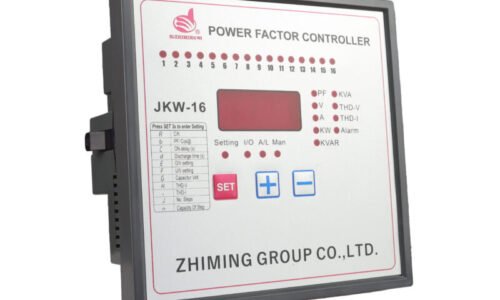
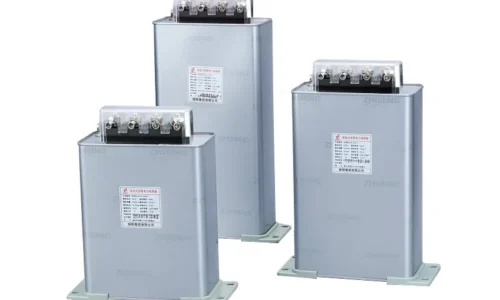
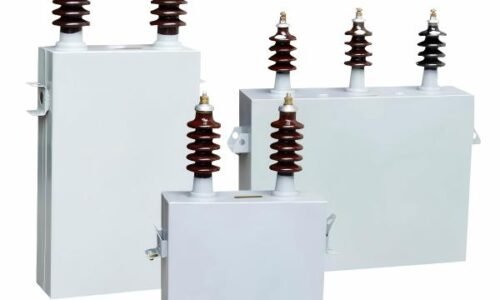
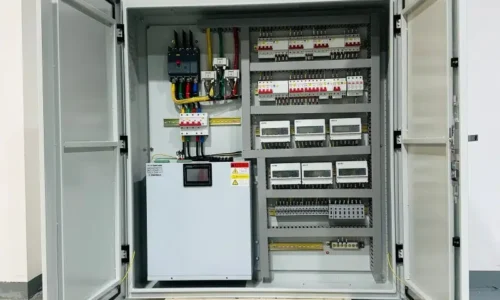
Industrial facilities and commercial buildings often overlook one of the simplest ways to reduce electrical costs and improve system performance. A capacitor bank installation delivers benefits that compound over time — lower utility bills, better equipment operation, and increased electrical system capacity.
The technology isn’t new or exotic. Capacitor banks have been correcting power factor and improving electrical efficiency for decades. Yet many facilities operate without them, paying penalties and suffering inefficiencies that proper reactive power compensation would eliminate.
What makes a capacitor bank worthwhile comes down to understanding the specific advantages it brings. Some benefits show up immediately on utility bills. Others accumulate gradually through reduced maintenance and extended equipment life.
Table of Contents
Financial Benefits of a Capacitor Bank Installation
Eliminating Power Factor Penalties
This is usually the most compelling reason to install a capacitor bank. Utilities charge commercial and industrial customers for poor power factor — typically when it falls below 0.90 or 0.95 depending on the rate structure.
These penalties add up surprisingly fast. A manufacturing facility with 0.75 power factor might see penalty charges representing 10-20% of their total electricity bill. Month after month, year after year.
A properly sized capacitor bank eliminates these penalties entirely in most cases. The installation pays for itself through avoided penalties, often within 12-24 months. Everything after that is pure savings.
Reduced Demand Charges
Demand charges are based on the highest power draw during a billing period — measured in kVA (kilovolt-amperes) rather than kW in many rate structures. Poor power factor inflates kVA demand even when real power consumption (kW) stays constant.
The relationship works like this:
Power Factor | kW Demand | kVA Demand | Apparent Increase |
1.00 | 500 | 500 | Baseline |
0.90 | 500 | 556 | +11% |
0.80 | 500 | 625 | +25% |
0.70 | 500 | 714 | +43% |
Technical Advantages of Capacitor Bank Systems
Improved Voltage Regulation
Voltage drop across distribution systems worsens with reactive current flow. Motors, lighting, and sensitive equipment all perform better with stable voltage. A capacitor bank supplies reactive power locally, reducing the reactive current flowing through transformers and cables.
The result is measurably better voltage at load points:
- Motor starting voltage improves
- Lighting output stabilizes
- Sensitive electronics experience fewer voltage-related issues
- Overall facility voltage profile flattens
Facilities with long cable runs or heavily loaded transformers notice the most dramatic improvement. The voltage support alone sometimes justifies capacitor bank installation even before considering financial benefits.
Released System Capacity
Every electrical component — transformers, cables, switchgear, circuit breakers — has limited current-carrying capacity. Reactive current consumes some of that capacity without performing useful work.
By supplying reactive power locally, a capacitor bank frees up system capacity for additional productive loads. A facility might avoid expensive transformer upgrades or cable replacements simply by installing capacitor bank compensation.
This benefit matters especially for growing operations. Rather than immediately investing in infrastructure upgrades when adding new equipment, proper power factor correction might release enough existing capacity to accommodate expansion.
Reduced System Losses
Current flowing through conductors generates heat — I²R losses that waste energy and require cooling. Because reactive current flows without doing useful work, it represents pure loss in the distribution system.
Reducing reactive current through capacitor bank compensation cuts these losses proportionally. The savings might seem modest as a percentage, but they’re continuous. Every hour of operation, less energy is wasted as heat in cables and transformer windings.

Equipment and Maintenance Benefits from a Capacitor Bank
Extended Equipment Lifespan
Electrical equipment running at lower current levels experiences less thermal stress. Motors, transformers, and cables all last longer when they’re not working harder than necessary to deliver required power.
Key equipment benefits include:
- Transformers operate cooler with reduced hot-spot temperatures
- Motor windings experience less thermal aging
- Cable insulation degrades more slowly
- Switchgear contacts face reduced current stress
- Overall system reliability improves
These benefits don’t show up on monthly bills but accumulate over years of operation. Avoided equipment replacements and reduced maintenance eventually represent significant value.
Reduced Maintenance Requirements
Cooler-running equipment requires less maintenance attention. Transformer oil lasts longer. Motor bearings face reduced thermal stress. Connections stay tighter when thermal cycling decreases.
The maintenance department may not immediately connect improved conditions to capacitor bank installation. But over time, fewer emergency repairs, extended service intervals, and reduced replacement frequency all trace back to the reduced electrical stress that proper power factor correction provides.
Environmental and Sustainability Considerations
Lower Carbon Footprint
Reducing system losses means generating less electricity to accomplish the same work. For facilities with sustainability goals or carbon reduction commitments, a capacitor bank contributes measurable emissions reduction.
The generation efficiency benefit extends beyond the facility itself:
- Less reactive power transmitted through the grid
- Reduced losses in utility distribution systems
- Lower generation requirements at power plants
- Decreased overall system carbon intensity
While the individual facility impact might be modest, widespread power factor correction across industrial and commercial sectors represents meaningful efficiency improvement at the grid level. If you want to know more about capacitor bank, please read How does a capacitor bank correct power factor.
FAQ
How quickly does a capacitor bank pay for itself?
Payback period varies depending on utility rate structure, existing power factor, and installation costs. Facilities with significant power factor penalties often see payback within 12-18 months. Those with moderate penalties might require 24-36 months. Even without direct penalties, benefits from reduced demand charges and system losses typically deliver payback within 3-5 years. Larger installations with automatic switching cost more initially but often achieve faster payback by optimizing correction across varying load conditions. A thorough analysis of utility bills and load characteristics before installation provides realistic payback estimates for specific situations.
Does a capacitor bank require regular maintenance?
Capacitor bank maintenance requirements are relatively minimal compared to other electrical equipment. Periodic inspection — typically annually — should check for physical damage, connection tightness, and signs of overheating. Capacitance testing every few years identifies degradation before it affects performance significantly. Automatic switching systems require attention to controller calibration and contactor condition. Overall, maintenance burden is modest, which contributes to favorable total cost of ownership. Harsh environments with high temperatures, harmonics, or contamination may require more frequent inspection and potentially shorter replacement cycles.
Can a capacitor bank be installed on any electrical system?
Most commercial and industrial systems benefit from capacitor bank installation, but proper engineering is essential. Systems with significant harmonic distortion require analysis to avoid resonance problems. Very small facilities may not generate enough reactive power demand to justify installation costs. Some utility rate structures don’t include power factor penalties, reducing financial motivation. Additionally, capacitor bank sizing must match actual load characteristics — oversized banks create leading power factor with its own technical and billing issues. Professional assessment before installation ensures the capacitor bank configuration suits the specific system and delivers expected benefits.