In the world of industrial power, there is often a hidden struggle going on inside the wires. It isn’t visible to the naked eye, but it shows up on the electricity bill and in the heat generated by equipment. This is where the capacitor bank comes into play. It is essentially the unsung hero of the electrical grid, sitting quietly in a substation or a factory basement, making sure everything runs smoothly. Without these banks, the efficiency of modern electrical systems would likely plummet, leading to wasted energy and unstable voltage levels.
Table of Contents
The Core Function of a Capacitor Bank in Power Systems
When walking through a manufacturing plant, one might hear the hum of heavy motors. These inductive loads are necessary for production, but they are terrible for power quality. They draw current that doesn’t actually do any work—this is what engineers call reactive power. It clogs up the system.
A capacitor bank acts as a buffer. It stores electrical energy and releases it when needed to counteract the drag caused by these motors. It’s sort of like a shock absorber for electricity. Instead of the utility company having to send extra current all the way from the power plant to magnetize the motor coils, the capacitor bank provides it right there on the spot. This relieves stress on the transmission lines and transformers.
It is fascinating to see how installing one of these units can suddenly make a transformer feel “larger.” Because the bank is handling the reactive power, the transformer has more room to handle “real” power. This is what is meant by system capacity enhancement. It allows a facility to add more machines without having to pay for a massive infrastructure upgrade.

Power Factor Correction and Economic Benefits
The most common reason a facility manager looks into buying a capacitor bank is usually financial. Utility companies tend to penalize users who have a poor power factor. If the efficiency drops below a certain point—say, 0.95—the surcharge can be hefty.
By correcting the power factor, the system becomes more efficient. The math is simple, even if the physics is complex. By reducing the reactive power demand, the current flowing through the system drops. Less current means less heat loss in the cables. This energy usage optimization directly translates to lower electricity bills.
However, it is not just about the monthly bill. It is also about the lifespan of the equipment. When equipment runs cooler and the voltage is stable, things just last longer. It’s an investment that pays off in ways that aren’t always immediately obvious on a spreadsheet.
Voltage Regulation Challenges and Solutions
Voltage stability is another massive area where these devices shine. In large-scale electric systems or even at the end of long rural transmission lines, voltage drop is a real problem. When the load is heavy, the voltage sags. This can cause lights to dim and motors to stall or overheat.
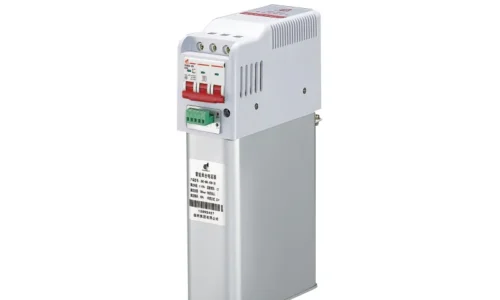
A low voltage power capacitor is often employed to help prop up the voltage closer to the equipment. By injecting reactive power, it boosts the voltage level back to where it should be. This concept is just as critical in utility substations and renewable energy systems. Solar and wind power can be fluctuating and unpredictable. Having a bank ready to smooth out these variations ensures the grid remains stable.
Handling Harmonics and Modern Tech
Things get a bit tricky when we talk about “dirty” power. In modern factories full of variable frequency drives (VFDs) and computers, the power isn’t a clean wave; it’s jagged. These distortions are called harmonics.
If one simply slaps a standard capacitor bank into a harmonic-rich environment, it might actually make things worse. It can create resonance, where the distortion gets amplified, potentially blowing fuses or damaging the capacitors themselves. That is why specialized banks often come with reactors—iron cores that act as a filter. They detune the circuit to prevent resonance while still providing the necessary power factor correction.
Technology has also improved the hardware itself. We are seeing more advanced switching technologies, like the Zcs single-phase Capacitor Switch. These devices minimize the electrical “spark” or transient that happens when the bank is turned on. It makes the switching process much smoother, which is less stressful for the grid. For outdoor installations, open air capacitor banks are popular because they are durable and easier to visually inspect and maintain.

Applications Across Different Sectors
It is interesting to note that these devices aren’t limited to heavy industry. While industrial facilities use them to manage large inductive loads, commercial buildings use them to lower operational costs. Office towers with huge HVAC systems have similar power profiles to factories, just on a different scale.
In the renewable sector, the role is even more critical. A wind farm, for instance, needs to comply with strict grid codes. They have to provide a stable voltage at the connection point. A capacitor bank is often the tool of choice to ensure that when the wind blows hard (or stops), the voltage output remains within the safe limits required by the grid operator.
FAQ
How long does a capacitor bank typically last?
These units are generally robust, but the capacitors themselves are consumable components. Depending on the operating environment—heat is the biggest killer—and the quality of the power (harmonics), a typical unit might last 10 to 15 years. However, the individual capacitor cans inside might need swapping out sooner if they degrade. Regular maintenance is key to hitting that 15-year mark.
Can a capacitor bank reduce my home electricity bill?
This is a common misconception. For a typical residential home, the main charges are for active power (kWh), not reactive power. While a small capacitor bank might technically reduce current slightly, residential meters generally don’t penalize for poor power factor like commercial meters do. So, the savings for a homeowner would be negligible, if any at all.
Is it dangerous to maintain these systems?
Yes, absolutely. Capacitors store energy even after the power is turned off. It is like a battery that can dump all its charge in a split second. Maintenance personnel must always wait for the discharge period (usually a few minutes) and ensure the unit is grounded before touching anything. It isn’t something a novice should tamper with.