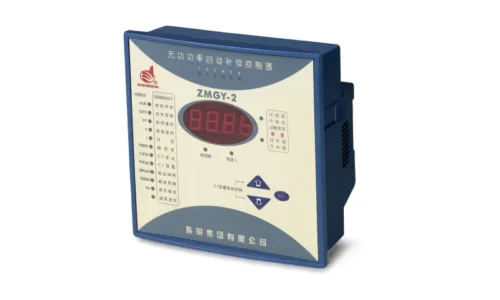
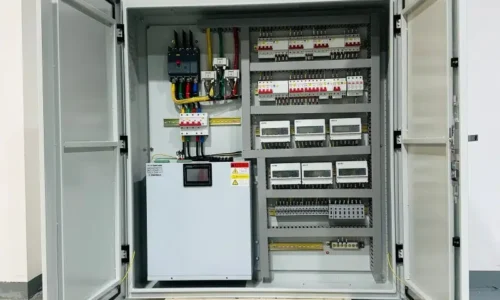
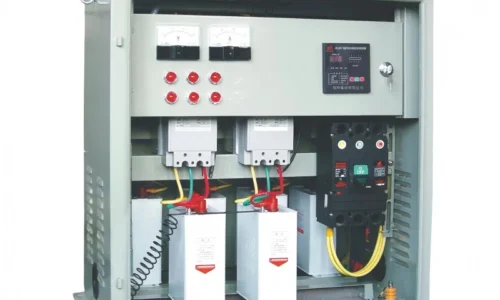
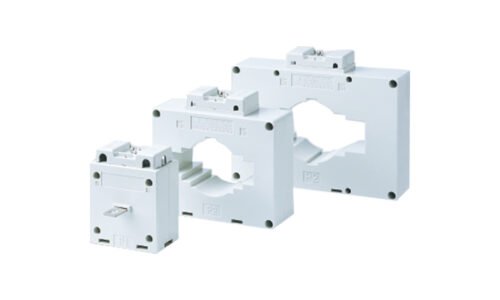
Electrical systems don’t just need power — they need power delivered efficiently and with the right characteristics. That’s where capacitor banks come into the picture. These assemblies of grouped capacitors serve several critical functions that keep industrial facilities running smoothly and utility grids operating efficiently.
The purpose of a capacitor bank goes beyond a single function. Depending on the application and system requirements, these installations might correct power factor, stabilize voltage, filter harmonics, or store energy for specific applications. Sometimes all of these at once.
Understanding why facilities and utilities invest in capacitor bank systems requires looking at what problems they solve and what benefits they deliver.
Table of Contents
Primary Purpose of a Capacitor Bank — Power Factor Correction
Addressing Reactive Power Demand
The most common reason for installing a capacitor bank is power factor correction. This purpose drives the majority of industrial capacitor bank installations worldwide.
Motors, transformers, and other inductive equipment require reactive power to create magnetic fields necessary for operation. This reactive power doesn’t perform useful work — it just flows back and forth between source and load. But it still consumes system capacity and creates losses.
A capacitor bank generates reactive power locally. This offsets the reactive demand from inductive loads, meaning less reactive current flows through upstream equipment. The practical benefits are significant:
- Reduced current flow in cables and transformers
- Lower electrical losses throughout the facility
- Improved voltage conditions at load points
- Eliminated utility power factor penalties
- Released system capacity for additional loads
Most industrial facilities operate with power factors below 0.90 without correction. Adding appropriately sized capacitor bank systems typically brings power factor above 0.95, satisfying utility requirements and capturing efficiency benefits.
Financial Justification
The economic case for power factor correction through capacitor bank installation is usually compelling. Utility penalties for poor power factor can run thousands of dollars monthly for larger facilities. The capacitor bank investment typically pays back within one to three years — sometimes faster.
Facility Size | Typical PF Penalty | Capacitor Bank Cost | Payback Period |
Small commercial | $200-500/month | $3,000-8,000 | 8-16 months |
Medium industrial | $1,000-3,000/month | $15,000-40,000 | 10-18 months |
Large industrial | $5,000-15,000/month | $50,000-150,000 | 10-24 months |
Voltage Regulation Purpose of Capacitor Bank Systems
How Capacitors Support Voltage
Capacitor banks serve voltage regulation purposes throughout utility transmission and distribution systems. This application differs from industrial power factor correction in scale and control approach, though the underlying physics remains similar.
When loads increase on electrical circuits, voltage tends to drop. The reactive current flowing through system impedances creates voltage drops proportional to current magnitude. This becomes particularly noticeable on long distribution feeders serving variable loads.
Capacitor bank installations at strategic points along distribution circuits provide reactive power locally. This reduces reactive current flow through line impedances, which reduces voltage drop. The effect is noticeable — voltage at load points becomes more stable despite varying demand.
Utilities deploy capacitor banks for voltage support in several ways:
- Fixed capacitor banks at substations for base compensation
- Switched capacitor banks that respond to load changes
- Pole-mounted capacitor banks along distribution feeders
- Automatic capacitor bank systems with voltage-based control
Grid Stability Contribution
Beyond steady-state voltage regulation, capacitor bank installations contribute to grid stability during disturbances. The reactive power reserve from capacitor banks helps maintain voltage during system events that would otherwise cause problematic voltage depression.
This stability function becomes increasingly important as power systems operate closer to their limits. Capacitor banks represent a relatively inexpensive way to improve grid robustness compared to alternatives like adding transmission capacity.
Additional Purposes of Capacitor Bank Installations
Harmonic Filtering
Some capacitor bank installations serve harmonic filtering purposes. When combined with reactors in specific tuned configurations, capacitor banks form filter circuits that absorb harmonic currents at particular frequencies.
Power electronics — variable frequency drives, rectifiers, and similar equipment — generate harmonic currents that distort voltage waveforms. This distortion causes:
- Overheating in transformers and motors
- Interference with sensitive equipment
- Premature capacitor bank failures
- Nuisance tripping of protective devices
Harmonic filter capacitor bank installations address these problems by providing low-impedance paths for harmonic currents, keeping them from circulating through the broader system.
Energy Storage Applications
In certain specialized applications, capacitor bank systems serve energy storage purposes. Unlike batteries, capacitors store energy electrostatically and can release it extremely quickly.
Applications include:
- Pulsed power systems requiring rapid discharge
- Welding equipment energy storage
- Power supply filtering and smoothing
- Brief backup power for critical loads
- Electric vehicle rapid charging stations
These energy storage applications represent a smaller market than power factor correction but demonstrate the versatility of capacitor bank technology.

Selecting a Capacitor Bank for Specific Purposes
Matching Application Requirements
Different purposes require different capacitor bank configurations. Power factor correction needs adequate kVAR capacity and appropriate voltage ratings. Voltage regulation applications might require automatic switching controls. Harmonic filtering demands precisely tuned filter circuits.
Proper selection considers:
- Primary purpose — what problem needs solving
- System voltage and frequency characteristics
- Load profile and variation patterns
- Harmonic environment and concerns
- Control requirements and integration needs
- Physical space and installation constraints
Engineering analysis before purchase prevents misapplication. A capacitor bank installed without considering harmonic conditions might fail prematurely or even amplify distortion through resonance. Proper engineering avoids these problems.
Single Versus Multiple Purposes
Some installations serve multiple purposes simultaneously. An industrial capacitor bank might provide power factor correction as its primary function while also improving voltage at motor terminals and providing some harmonic filtering through detuning reactors.
The challenge lies in balancing sometimes conflicting requirements. Optimizing for one purpose might compromise another. Experienced engineers navigate these tradeoffs to deliver installations that serve facility needs effectively across multiple dimensions. If you want to know more about capacitor bank, please read What is a capacitor bank.
FAQ
What happens if a capacitor bank fails?
Capacitor bank failure consequences depend on failure mode and protection system response. Individual capacitor unit failures typically trigger protective fuses that isolate the failed unit while allowing the remaining bank to continue operating at reduced capacity. More severe failures involving multiple units or catastrophic breakdown should trigger main protective devices that de-energize the entire bank. Without proper protection, capacitor failures can result in fires, explosions, or cascading equipment damage. Well-designed capacitor bank installations include comprehensive protection coordination that contains failures safely. Regular maintenance and testing identifies degrading units before they fail catastrophically.
Can a capacitor bank work with solar power systems?
Yes, capacitor bank technology integrates with solar power systems in several ways. Solar inverters sometimes require power factor correction capacitor banks to meet utility interconnection requirements. Additionally, capacitor banks help stabilize voltage on distribution circuits with high solar penetration where voltage fluctuations occur as cloud cover varies. Some solar installations include capacitor bank systems specifically to provide reactive power support for the local grid. The technical requirements differ somewhat from traditional industrial power factor correction, but the underlying capacitor bank technology applies effectively to solar integration challenges.
How often does a capacitor bank need maintenance?
Capacitor bank maintenance requirements are relatively modest compared to other electrical equipment. Annual inspections typically suffice for most installations, covering visual examination, thermal scanning, capacitance measurement, and connection tightness verification. Automatic switched banks require more frequent attention — perhaps quarterly — to verify switching device operation and control system function. Capacitor units themselves have no moving parts and generally operate maintenance-free between inspections.