Every piece of electrical equipment has a lifespan. Capacitor banks are no exception — though the range of possible lifespans is surprisingly wide. Some capacitor bank installations run for decades with minimal issues. Others fail within a few years, sometimes spectacularly.
So what determines whether a capacitor bank lasts five years or twenty-five? The answer involves a mix of design quality, operating conditions, installation choices, and maintenance practices. None of these factors operate in isolation, which makes predicting exact lifespan tricky. Still, understanding what shortens or extends capacitor bank life helps in making better procurement decisions and catching problems before they become expensive failures.
The industry commonly quotes 10 to 15 years as typical life expectancy for a well-designed capacitor bank operating under reasonable conditions. But that number hides considerable variation.

Table of Contents
Factors That Affect Capacitor Bank Life Expectancy
Voltage Stress and Overvoltage Exposure
Voltage is probably the single biggest factor affecting how long a capacitor bank survives. Capacitor dielectrics degrade over time, and higher voltage accelerates this degradation dramatically — the relationship isn’t linear but rather exponential in nature.
A capacitor bank operating continuously at rated voltage experiences more stress than one operating at 90% of rating. Push that to 110% of rated voltage, and lifespan drops significantly. Some estimates suggest that every 10% increase in applied voltage cuts life expectancy roughly in half, though actual figures depend on dielectric type and construction.
Overvoltage events don’t need to be continuous to cause damage. Transient overvoltages from switching operations, capacitor energization, or system faults stress the dielectric even during brief exposure. Repeated transients accumulate damage that doesn’t heal.
Harmonic Currents and Distortion
Modern electrical systems carry more harmonic distortion than ever before — thanks to variable frequency drives, LED lighting, switching power supplies, and countless other nonlinear loads. A capacitor bank installed decades ago when harmonics were minimal might struggle in today’s environment.
Harmonics increase current flow through capacitors beyond what fundamental-frequency analysis would predict. This excess current causes heating, and heat accelerates dielectric aging. Worse, harmonics can excite resonance between the capacitor bank and system inductance, creating amplified voltages and currents that neither was designed to handle.
Signs that harmonics might be shortening capacitor bank life include:
- Audible buzzing or humming from capacitor units
- Elevated operating temperatures compared to historical norms
- Fuse operations or protection trips without obvious cause
- Premature failure of individual capacitor elements
Switching Frequency and Operations
Every time a capacitor bank energizes, it experiences inrush current that stresses both the capacitor elements and switching contacts. A bank that switches once daily accumulates far less stress than one that switches dozens of times per day in an automatic power factor correction system.
Manufacturers typically rate capacitor banks for a specific number of switching operations — maybe 5,000 or 10,000 over the product’s intended life. Exceeding this limit doesn’t guarantee immediate failure, but it does increase risk and shorten remaining service life.
Switching Frequency | Annual Operations | Approximate Impact on Life |
Once daily | ~365 | Minimal impact |
3-4 times daily | ~1,200 | Moderate stress accumulation |
10+ times daily | ~3,650 | Significant wear acceleration |
Continuous cycling | 10,000+ | Major life reduction likely |
Temperature and Environmental Conditions
Heat is relentless in its effects on capacitor banks. Internal temperatures depend on ambient conditions, current loading, ventilation, and enclosure design. A capacitor bank in an air-conditioned electrical room faces different challenges than one mounted outdoors in direct sunlight or in an unventilated enclosure near other heat-producing equipment.
Most capacitor manufacturers specify maximum operating temperatures — commonly 40°C or 45°C ambient, with internal temperatures reaching perhaps 55°C or higher under load. Operating within these limits is essential. Exceeding them, even occasionally, adds up.
Environmental factors beyond temperature also matter:
- Humidity accelerates corrosion of terminals and internal connections
- Dust and contamination reduce cooling efficiency
- Vibration from nearby equipment can loosen connections
- Altitude affects cooling capacity and dielectric strength
- Chemical exposure in industrial environments attacks materials
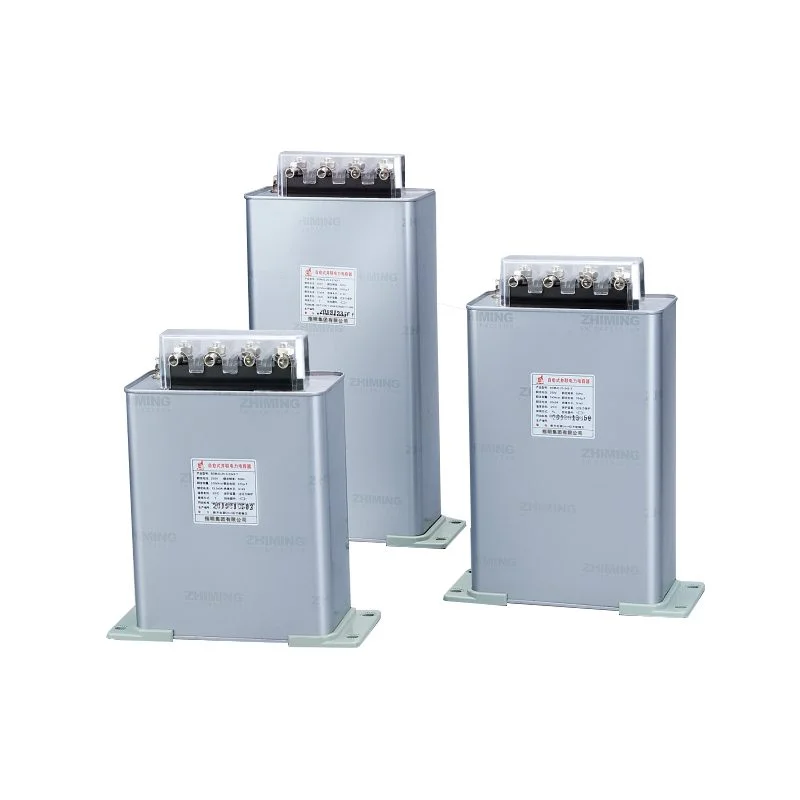
Signs That a Capacitor Bank Is Reaching End of Life
Observable Warning Indicators
Capacitor banks rarely fail without warning — though the warnings are easy to miss if nobody is looking for them. Regular inspection catches problems while solutions remain straightforward.
Physical signs worth noting during inspection include:
- Swelling or bulging of capacitor cases
- Oil leakage from seals or case joints
- Discoloration suggesting overheating
- Corrosion on terminals or mounting hardware
- Burn marks or evidence of arcing
- Unusual odors during operation
Electrical indicators are equally important. Rising current draw without corresponding load increase suggests internal changes. Decreased reactive power output means some elements have failed open. Nuisance tripping of protection indicates stress that the protection system is catching — which is good, since that’s its job, but also signals something is wrong.
Extending Capacitor Bank Service Life
Design and Installation Choices
Decisions made before a capacitor bank ever energizes influence its eventual lifespan more than most people realize. Choosing quality equipment from reputable manufacturers costs more initially but typically delivers better long-term value.
Installation practices matter too. Adequate ventilation around the bank allows heat dissipation. Proper torque on terminal connections prevents hot spots from developing over time. Correct sizing for actual — not theoretical — harmonic exposure prevents unexpected overloading.
Maintenance Practices
Routine maintenance doesn’t need to be elaborate to be effective. A basic program might include:
- Annual visual inspection for physical deterioration
- Thermal scanning of connections and units
- Verification of protection device settings
- Current and voltage measurements compared to baseline
- Cleaning of accumulated dust and contamination
- Tightening of electrical connections
If you want to know more about capacitor bank, please read What is a capacitor bank.
FAQ
When should a capacitor bank be replaced even if it still works?
Functionality alone doesn’t guarantee a capacitor bank remains worth keeping. If the installation contains older dielectric materials like PCB-impregnated capacitors, replacement becomes necessary regardless of operating condition due to environmental regulations. Similarly, capacitors that no longer meet current safety or efficiency standards may warrant proactive replacement during facility upgrades.
Can individual capacitor units in a bank be replaced separately?
Generally yes, though with important caveats. Replacing failed individual units within a capacitor bank is common practice and usually preferable to replacing the entire bank when only one or two elements have failed. However, mixing significantly different ages or manufacturers within a bank can create problems. Newer units with different characteristics may not share load equally with aged units, potentially stressing some elements disproportionately. Replacement units should match voltage rating, kVAr output, and connection type of the originals.
Do capacitor banks require any special disposal procedures?
Yes — capacitor banks cannot simply be discarded as ordinary waste. Even modern capacitors contain materials requiring proper handling, and older capacitors may contain hazardous substances including PCBs, which require specialized disposal under environmental regulations. Dielectric fluids, even when not PCB-based, typically require management as industrial waste. Many capacitor manufacturers offer take-back programs or can recommend disposal contractors experienced with capacitor bank decommissioning.