Anyone who has dealt with industrial electricity bills has probably encountered power factor penalties at some point. Those extra charges show up because the facility draws more current than necessary to perform the actual work — and utilities don’t appreciate that. A power factor capacitor bank exists specifically to solve this problem.
But what exactly is it, how does it work, and why do so many facilities rely on one? These questions come up often, and the answers reveal why capacitor bank technology remains one of the most cost-effective investments in electrical infrastructure.
Table of Contents
Understanding a Power Factor Capacitor Bank
The Basics of Power Factor
Before getting into the equipment itself, the concept of power factor needs some explanation. Power factor measures how effectively electrical power converts into useful work output. A power factor of 1.0 means perfect efficiency — all supplied current does productive work. A power factor of 0.7 means only 70% of the current is performing useful work.
The remaining portion is reactive current. It doesn’t do productive work but is still required by inductive equipment — motors, transformers, fluorescent ballasts, and similar loads — to create magnetic fields. The reactive current flows back and forth between source and load without accomplishing anything useful, yet it loads cables, transformers, and switchgear just the same.
A power factor capacitor bank generates leading reactive current that offsets the lagging reactive current drawn by inductive loads. The result is less total reactive current flowing from the supply, which improves the power factor measured at the utility meter.
What Makes It a "Bank"
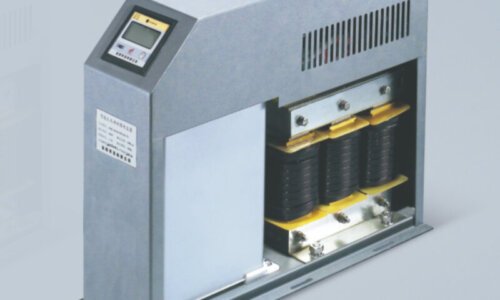
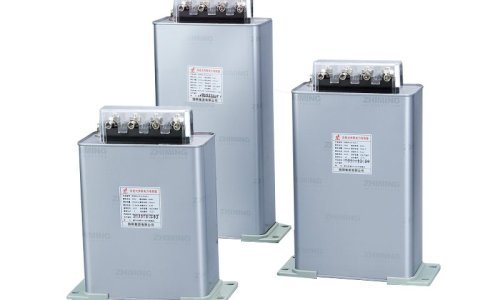
A single capacitor unit provides limited reactive power. Grouping multiple units together into an organized assembly creates a capacitor bank with sufficient capacity to meaningfully correct facility power factor. The word “bank” simply refers to this grouping — similar to a battery bank or transformer bank.
Most power factor capacitor bank installations include:
- Multiple capacitor units arranged in series-parallel configurations
- Switching devices — contactors or thyristors — for step control
- Protective fuses for individual units or groups
How a Capacitor Bank Corrects Power Factor
The Correction Mechanism
The physics behind power factor correction through a capacitor bank is surprisingly elegant. Inductive loads cause current to lag behind voltage. Capacitors cause current to lead voltage. Combining both in the same system means the leading and lagging components partially cancel each other out.
From the utility meter’s perspective, the facility appears to draw much less reactive current. The power factor improves, penalties disappear, and the electrical system operates more efficiently. The actual inductive loads haven’t changed at all — they still consume the same reactive power internally. But the capacitor bank supplies that reactive power locally rather than pulling it through the entire upstream system.
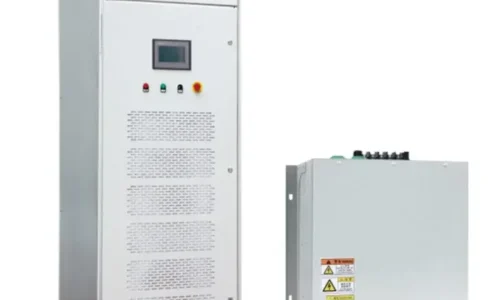
Fixed Versus Automatic Systems
Feature | Fixed Capacitor Bank | Automatic Capacitor Bank |
Control method | Always on when energized | Steps switch based on demand |
Best for | Constant, predictable loads | Variable, fluctuating loads |
Cost | Lower initial investment | Higher but more versatile |
Risk of overcorrection | Higher with varying loads | Minimal with proper setup |
Typical steps | Single block | 4 to 12 adjustable steps |
Maintenance needs | Minimal | Moderate — contactors wear |
Benefits of Installing a Capacitor Bank for Power Factor Correction
Financial Returns
The most immediate and tangible benefit hits the electricity bill. Utility power factor penalties vary by provider but commonly range from 1% to 15% of demand charges for every 0.01 below the required threshold. For a facility spending $50,000 monthly on electricity, penalties can add up to thousands of dollars.
A properly sized capacitor bank eliminates these penalties. Beyond penalty avoidance, improved power factor reduces current flow, which lowers resistive losses in wiring and transformers. These efficiency gains provide ongoing savings that compound over the equipment’s service life.
System Capacity and Performance Gains
Reducing reactive current through capacitor bank installation frees up electrical system capacity. Transformers, cables, and switchgear carry less total current, which means:
- Existing transformers can support additional productive loads
- Cable heating decreases, extending insulation life
- Voltage at load terminals improves
- System losses reduce throughout the distribution network
- Equipment operates cooler and potentially lasts longer
Some facilities discover that installing a capacitor bank defers expensive transformer upgrades they thought were necessary. The freed capacity from power factor correction accommodates new loads without infrastructure expansion. That’s a significant hidden benefit that doesn’t always show up in simple payback calculations.
Sizing and Selecting a Capacitor Bank for Power Factor
Getting the Size Right
Proper sizing of a power factor capacitor bank starts with measurement. Facilities need data on actual reactive power demand across typical operating conditions — not just nameplate ratings of installed equipment. There’s often a surprising gap between theoretical and measured values.
Key sizing steps include:
- Measuring existing power factor and kVAR demand over representative periods
- Determining target power factor based on utility requirements
- Calculating required capacitor bank kVAR capacity
- Selecting appropriate voltage rating with adequate margin
- Evaluating harmonic conditions to determine if detuning reactors are needed
- Choosing between fixed and automatic configurations
Harmonic assessment deserves special attention. Installing a capacitor bank without considering harmonics risks creating resonance conditions that amplify distortion and damage equipment. Facilities with variable frequency drives or other nonlinear loads almost always need detuned capacitor bank systems with series reactors. If you want to know more about capacitor bank, please read What is a capacitor bank.
FAQ
What power factor level should a capacitor bank target?
Most utilities require a minimum power factor between 0.90 and 0.95, though specific thresholds vary by provider and rate structure. Targeting 0.95 to 0.98 with a capacitor bank generally provides the best balance between cost and benefit. Correcting beyond 0.99 becomes increasingly expensive for diminishing returns, and pushing to unity or leading power factor creates voltage rise issues and potential utility concerns. The optimal target depends on the specific penalty structure — some utilities penalize any power factor below 0.95 while others use sliding scales. Reviewing the utility rate tariff carefully before sizing a capacitor bank helps establish the most economically rational correction target.
Can a capacitor bank damage equipment if improperly sized?
An oversized capacitor bank can indeed cause problems. Overcorrection creates leading power factor, which elevates system voltage and may exceed equipment ratings. More concerning is the potential for harmonic resonance — a capacitor bank that shifts the system’s natural resonant frequency to coincide with a prominent harmonic order amplifies that harmonic dramatically. The resulting overcurrent damages the capacitor bank itself and can overheat transformers, blow fuses, and disrupt sensitive electronics.
How long does it take for a power factor capacitor bank to pay for itself?
Payback periods typically range from 6 months to 3 years depending on facility size, current power factor, utility penalty structure, and installation costs. Larger facilities with poor existing power factor and aggressive utility penalties see the fastest returns — sometimes recovering the full capacitor bank investment within six to eight months. Smaller facilities or those with moderate penalties might take two to three years. Beyond direct penalty elimination, secondary savings from reduced losses and deferred infrastructure upgrades improve the overall economics further, though these benefits are harder to quantify precisely.