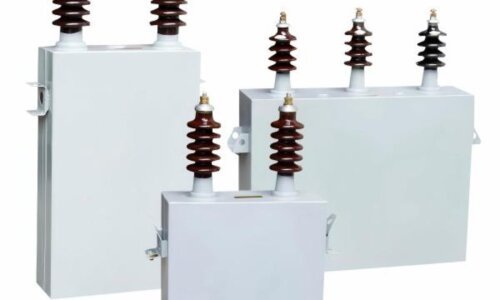
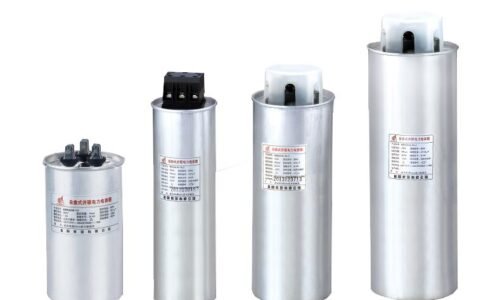
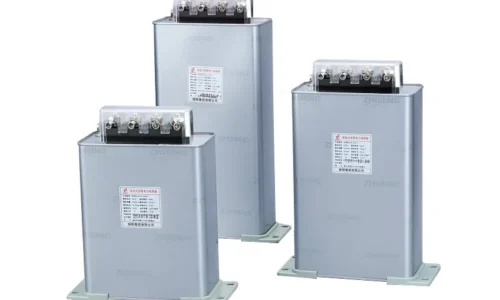
Capacitor banks represent significant investments in electrical infrastructure. They improve power factor, reduce utility costs, and enhance system efficiency. But these benefits only materialize when the equipment remains healthy and operational.
Without proper protection, a capacitor bank faces numerous threats. Overcurrents, voltage transients, harmonic distortion, and internal faults can all cause damage—sometimes catastrophic damage. Failed capacitors don’t just stop working. They can rupture, leak dielectric fluid, or even catch fire in severe cases.
The good news? Well-established protection methods exist. Implementing them properly keeps equipment running safely for years.
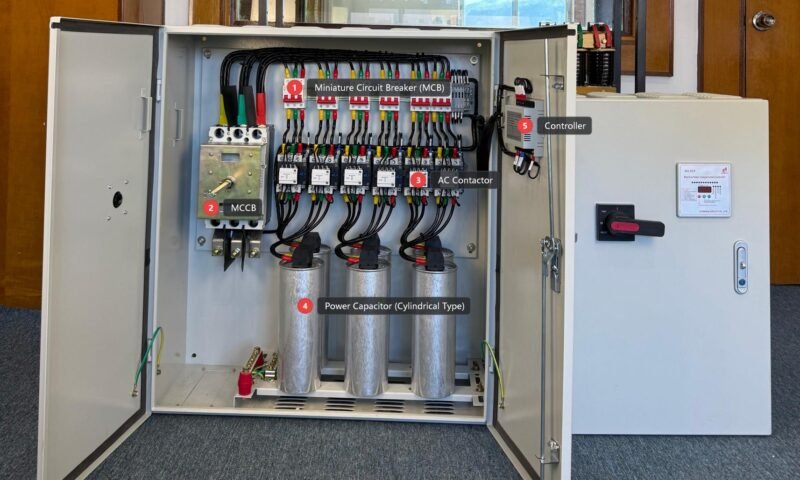
Table of Contents
Common Threats to Capacitor Bank Installations
Overcurrent Conditions
Capacitors naturally draw higher current than their kVAR rating might suggest. During energization, inrush current can reach 20-100 times normal operating current—briefly, but intensely. System voltage rises also increase current proportionally.
Overvoltage Events
Voltage spikes and sustained overvoltage stress capacitor dielectrics. Lightning, switching transients, and utility voltage variations all contribute. Capacitors are surprisingly sensitive to voltage—a 10% overvoltage can reduce lifespan dramatically.
Harmonic Distortion
Modern facilities often contain variable frequency drives, LED lighting, and other nonlinear loads. These generate harmonic currents that flow preferentially through capacitors. The heating effect accelerates aging and can cause premature failure.
Internal Faults
Capacitor elements occasionally fail internally. Dielectric breakdown, foil damage, or manufacturing defects create internal shorts. Without detection, one failed element stresses others, leading to cascading failures.
Essential Protection Devices for Any Capacitor Bank
Protection Device | Primary Function | Threats Addressed |
HRC Fuses | Overcurrent isolation | Short circuits, failed units |
Circuit Breakers | Switching and overcurrent | Overloads, system faults |
Surge Arresters | Voltage transient limiting | Lightning, switching surges |
Unbalance Relays | Internal fault detection | Failed capacitor elements |
Thermal Protection | Overtemperature shutdown | Harmonic heating, ventilation failure |
Fuse Protection for Capacitor Bank Circuits
Fuse Selection Criteria
Capacitor bank fuses must handle several challenging requirements:
- Withstand continuous current at rated voltage
- Tolerate brief inrush currents during energization
- Interrupt quickly when faults occur
- Coordinate with upstream protection
High rupturing capacity (HRC) fuses designed specifically for capacitor applications meet these needs. General-purpose fuses often fail—either nuisance tripping during inrush or failing to clear faults properly.
Individual Versus Group Fusing
Larger installations often fuse individual capacitor units separately. This approach isolates failed units without disabling the entire bank. Smaller installations might use group fusing for economy, though this provides less selectivity.
The tradeoff involves cost versus protection granularity. Individual fusing costs more but minimizes operational impact from single-unit failures.
Relay Protection Schemes for Capacitor Bank Safety
Unbalance Detection
When capacitor elements fail internally, current distribution across phases becomes unequal. Unbalance relays detect this condition—often before complete failure occurs.
Detection methods include:
- Neutral current monitoring
- Voltage differential measurement
- Phase current comparison
- Capacitance change detection
Sensitivity settings require careful calibration. Too sensitive causes nuisance trips. Too insensitive misses developing faults.
Overcurrent and Overvoltage Relays
Standard overcurrent relays protect against sustained overloads. Instantaneous elements respond to severe faults. Time-delayed elements handle moderate overcurrents.
Overvoltage relays trigger when supply voltage exceeds safe limits. Some installations use undervoltage relays too—preventing energization during voltage sags that could cause problematic inrush.
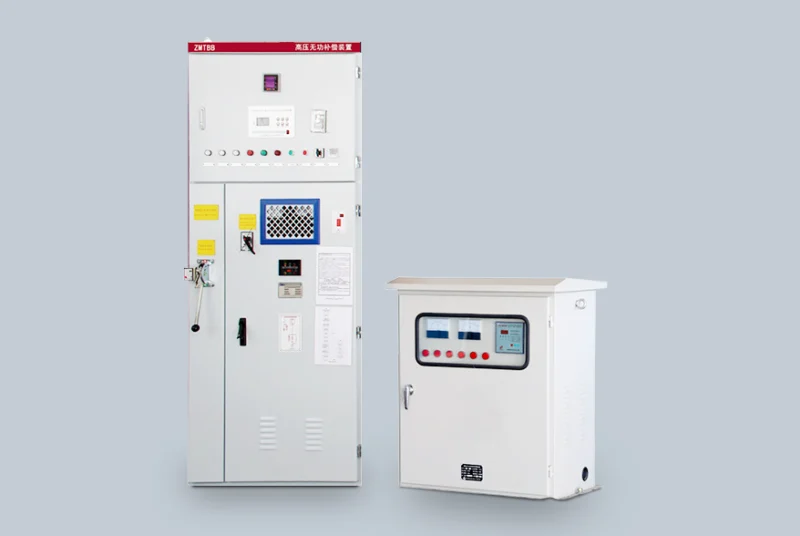
Harmonic Overload Protection
Where harmonic distortion exists, thermal overload relays help protect against cumulative heating. These devices monitor current magnitude and duration, tripping when thermal limits approach.
Detuned capacitor banks include series reactors that reduce harmonic current flow. This represents protection through design rather than protective devices.
Physical and Environmental Protection Measures
Enclosure Requirements
A capacitor bank needs proper housing. Requirements vary by installation environment:
- Indoor installations need adequate ventilation
- Outdoor installations require weatherproof enclosures
- Dusty environments demand sealed or filtered cabinets
- Corrosive atmospheres need special materials
Temperature significantly affects capacitor lifespan. Enclosures should maintain operating temperature below manufacturer limits—typically 40-55°C ambient maximum.
Physical Spacing
Capacitor units need breathing room. Crowded installations trap heat and complicate maintenance. Manufacturer spacing recommendations exist for good reasons.
Maintenance Practices That Extend Capacitor Bank Life
Protection extends beyond installed devices. Ongoing maintenance matters considerably.
Regular inspection should include:
- Visual checks for bulging, leaking, or discoloration
- Thermal scanning for hot spots
- Capacitance measurement trends
- Connection tightness verification
- Ventilation system function
- Protection device testing
Many facilities neglect capacitor bank maintenance until failures occur. Proactive inspection catches developing problems early—when intervention costs less and risks remain lower. If you want to know more about capacitor bank, please read What is a capacitor bank.
FAQ
How often should capacitor bank protection devices be tested?
Testing frequency depends on installation criticality and operating environment. Generally, annual testing of relay functions and trip circuits makes sense for most industrial installations. Fuses should be visually inspected more frequently—perhaps quarterly. Critical facilities or harsh environments may warrant more frequent attention. Following manufacturer recommendations and industry standards like NFPA 70B provides reasonable guidance.
Can a capacitor bank be protected against all harmonic damage?
Complete protection against harmonics requires addressing the source—either filtering harmonics before they reach capacitors or using detuned designs that resist harmonic current flow. Standard protective devices respond after damage begins occurring. The most effective approach combines detuned capacitor bank design with harmonic monitoring and thermal protection. This multi-layered strategy handles harmonic threats comprehensively.
What happens when capacitor bank protection fails to operate?
Consequences range from minor to severe. Uncleared faults can cause capacitor ruptures, dielectric fluid leaks, fires, or explosions in extreme cases. Adjacent equipment may suffer collateral damage. System-wide disturbances sometimes result. This possibility reinforces the importance of proper protection design, regular testing, and maintenance. Backup protection layers provide defense when primary protection fails.