Table of Contents
The Chaotic Energy of Industrial Plants and the APFC Panel
Standing near the main electrical switchgear of a bustling manufacturing plant, there is usually a very distinct, heavy vibration in the concrete floor. Massive induction motors, stamping presses, and giant ventilation fans are constantly firing up and shutting down throughout the day. Every single time one of those heavy pieces of machinery kicks on, it demands a massive, sudden gulp of reactive power just to magnetize its internal coils and actually get moving. This creates a highly erratic and somewhat chaotic electrical environment. The power demand isn’t smooth at all; it violently spikes and dips depending on the production schedule.
When a facility pulls wildly fluctuating amounts of this reactive energy from the grid, the overall electrical efficiency of the entire building sort of just tanks. Utility companies absolutely hate this (which makes sense, given the massive strain it puts on their transformers), and they actively penalize facilities for running at poor efficiency. To stop those painful, almost unavoidable fines, a smart intervention is required. This is exactly where an APFC panel enters the picture, stepping in to act as a dynamic, highly responsive energy buffer for the whole building.
Breaking Down the Core Purpose of an APFC Panel
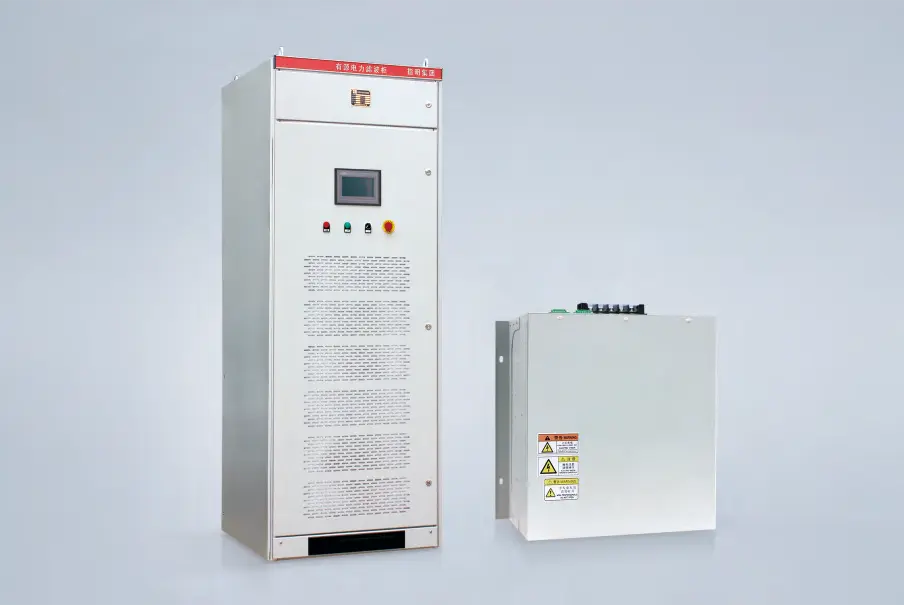
Looking at it from the outside, an APFC panel typically just looks like a tall, unremarkable grey metal cabinet sitting in a dusty corner of an electrical room. There are no spinning gears or flashy moving parts. But inside, it is constantly thinking, measuring, and reacting. The main purpose of the equipment is to automatically monitor the lagging power factor and inject exactly the right amount of capacitance to stabilize the grid.
Instead of forcing heavy machinery to drag non-working magnetic energy miles down the transmission lines from a distant power plant, the panel provides that reactive energy locally. Inside that metal enclosure, a few critical components work quietly together to make this happen:
An intelligent microprocessor controller that constantly watches the facility’s shifting electrical draw in real-time.
Heavy-duty magnetic contactors that physically snap open and shut (often making a loud clacking noise) to trigger different circuits.
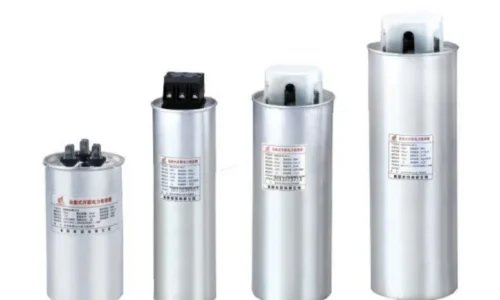
Multiple individual stages of capacitors that act as short-term localized storage tanks for reactive energy.
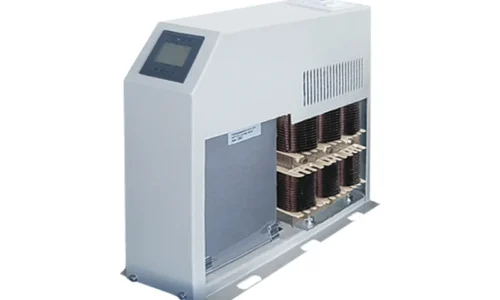
Cooling fans and detuning reactors to filter out messy electrical noise and keep the internal components from overheating.
Because it operates in these incremental stages, an APFC panel only deploys the exact amount of compensation needed at any given second, preventing dangerous overcorrection.
How an APFC Panel Compares to Fixed Capacitor Systems
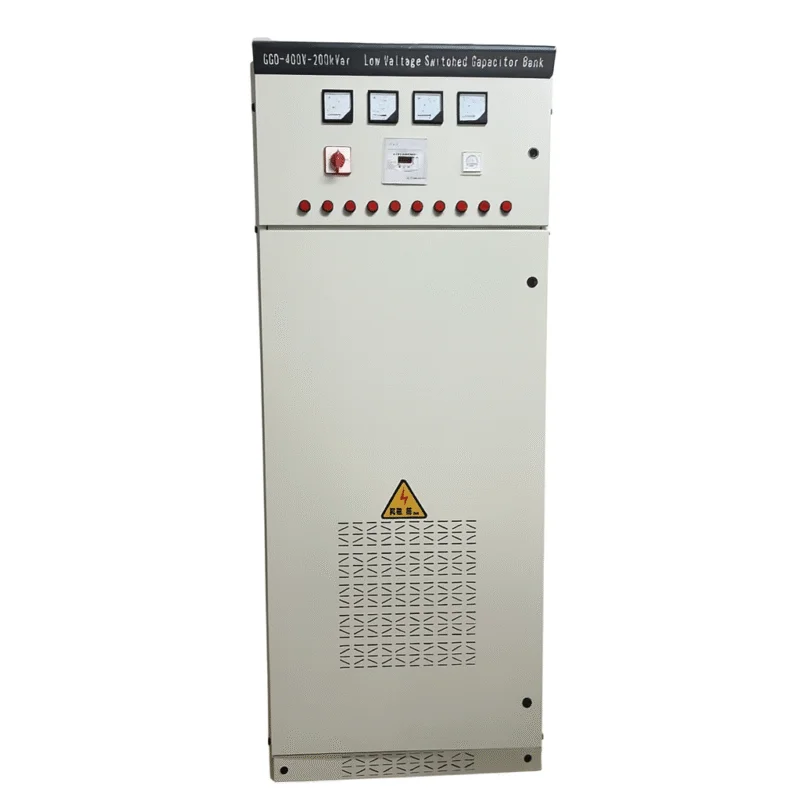
It is quite common to wonder why a factory wouldn’t just install a giant, cheap block of fixed capacitors to solve the problem and call it a day. The issue with fixed, static systems is that they are basically blind. If a facility shuts down half of its heavy motors for the night shift, a fixed low voltage reactive power compensation cabinet stays online and pushes way too much reactive power into the grid. Overcorrecting is sometimes just as dangerous as undercorrecting, leading to weird voltage spikes that can easily fry sensitive circuit boards.
The Real-World Financial Impact of an APFC Panel
Industrial utility bills are notoriously dense and complex. They are filled with obscure line items, weird peak demand charges, and multipliers that seem almost designed to be confusing. But the penalty for poor reactive power is usually painfully obvious right at the bottom of the page.
When a facility delays installing an APFC panel to handle their lagging loads, the financial and physical damage usually stacks up in a frustrating, highly predictable sequence:
The facility draws excessive reactive power to keep the erratic motors spinning, causing the utility meter to log extreme inefficiencies.
The massive amount of unnecessary current flowing through the plant’s internal copper wiring generates excess heat, slowly degrading cable insulation over time.
Voltage drops inevitably occur at the furthest ends of the factory floor, causing sensitive automated machines to randomly reset or glitch out.
The monthly power invoice arrives with thousands of dollars in low power factor penalty fees attached to it.
By letting an intelligent, automated controller handle the load, those penalties pretty much disappear overnight. It is somewhat satisfying to see the equipment pay for itself in utility savings within just a couple of years.
FAQ
Does an APFC panel actually reduce the real energy consumed by heavy machinery?
Not exactly. It doesn’t lower the actual mechanical energy (measured in kilowatts) required to run a massive conveyor belt or stamp a piece of metal. What it actually does is reduce the total apparent power drawn from the utility provider, which cleans up the electrical lines, reduces wasted internal heat, and entirely eliminates those frustrating low-efficiency fines.
What happens if an APFC panel is installed improperly?
Things can go sideways rather quickly if the engineering isn’t right. If the unit is placed too far from the loads, or if the controller is calibrated incorrectly, the system might wildly overcorrect. This can send dangerous voltage spikes through the building, potentially damaging the very machinery it was supposed to protect.
How much routine maintenance does this equipment usually need?
Even though it is mostly automated and self-sufficient, it isn’t entirely maintenance-free. Extreme heat and factory dust are its main enemies. It is generally recommended to have a qualified technician visually inspect the internal capacitors for signs of bulging at least once a year, blow out any accumulated grime, and ensure the cooling fans are still spinning freely.