Electrical systems deal with currents that are often far too large to measure directly — sometimes thousands of amperes running through industrial equipment or utility lines. Imagine trying to connect a standard ammeter to a 2000-amp busbar feeding a factory floor. The instrument would be destroyed instantly, and the risk to personnel would be unacceptable.
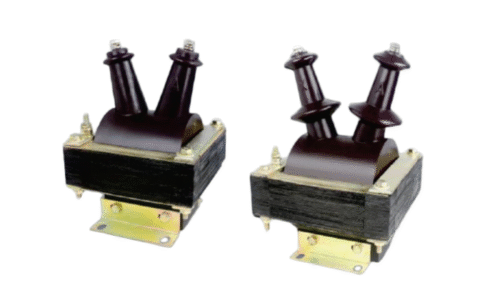
That’s where a current transformer, commonly called a CT, comes in. It steps down high current to a manageable level so that measuring instruments and protective relays can do their job safely and accurately. The CT acts as an intermediary, transforming dangerous high-current signals into proportional low-current outputs that standard equipment can handle — typically 1A or 5A, regardless of what’s actually flowing through the primary conductor.
It’s one of those components that doesn’t get much attention, but quietly keeps a lot of infrastructure running. Power plants, substations, manufacturing facilities, commercial buildings — they all rely on current transformers working reliably in the background. Most people never see them, yet they’re fundamental to how modern electrical distribution and monitoring systems operate. Without CTs, utilities couldn’t bill accurately, protection systems couldn’t respond to faults, and engineers would have no practical way to monitor what’s happening in high-power circuits. The technology itself isn’t particularly new or flashy, but its role is absolutely essential.
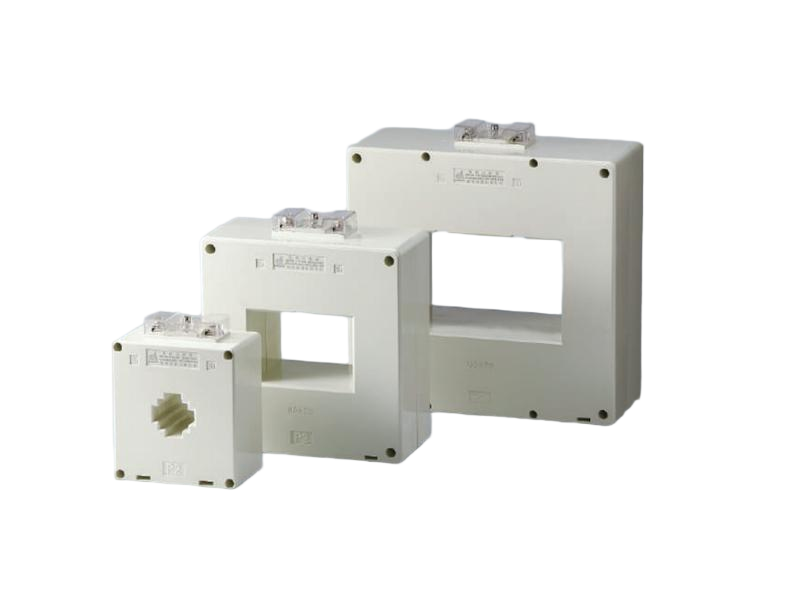
Table of Contents
How a Current Transformer Works
A current transformer operates on the same basic principle as any transformer — electromagnetic induction. The primary conductor (sometimes just a single wire passing through the core) carries the high current, and the secondary winding produces a proportional, much smaller current. Standard output is typically 1A or 5A, regardless of what’s flowing on the primary side.
The ratio between primary and secondary current is called the transformation ratio, and it’s what makes the CT useful. A 1000:5 CT, for example, reduces 1000A down to 5A — something an ordinary ammeter can handle without issue.
One thing worth noting: the secondary of a current transformer should never be left open-circuited while the primary is energized. The voltage can spike dangerously. It’s a basic safety rule, but one that’s easy to overlook during maintenance.
Main Uses of a Current Transformer
Metering and Energy Measurement
The most common application is probably revenue-grade metering. Utilities and large commercial facilities use current transformers to feed accurate current signals into energy meters. Without them, connecting a meter directly to a high-voltage, high-current line would be impractical — and dangerous.
In industrial settings, CT-based metering helps track energy consumption across different departments or machines, which feeds into cost allocation and efficiency monitoring.
Protective Relaying
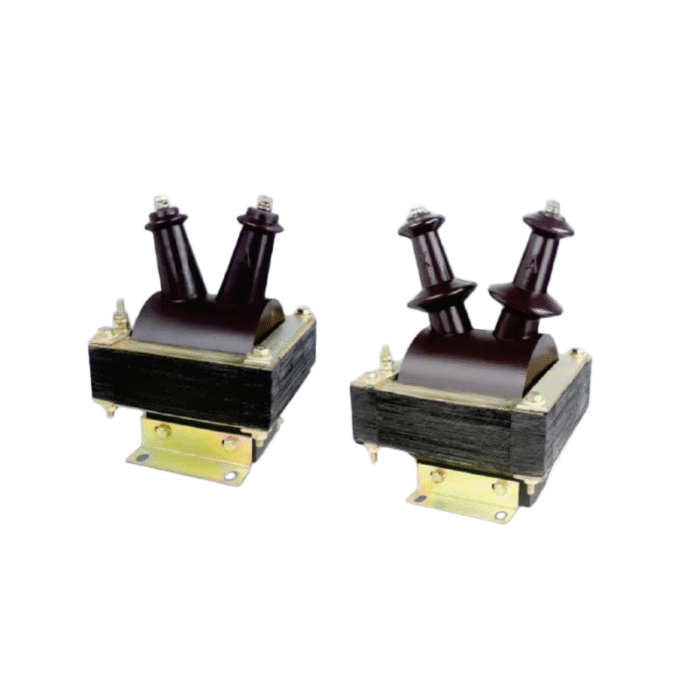
Current transformers are essential in protection systems. Relays that detect overcurrent, differential faults, or earth faults all depend on CT inputs to sense abnormal conditions and trip circuit breakers before damage occurs.
The accuracy class here matters quite a bit. Protection CTs are rated differently from metering CTs — they’re designed to remain accurate even during fault conditions when current can surge to many times the normal level.
Power Quality Monitoring
Beyond basic measurement, CTs are used in power quality analyzers to detect harmonics, imbalances, and transient events. This kind of monitoring has become more relevant as facilities add variable frequency drives, UPS systems, and other non-linear loads that distort the current waveform.
Accuracy Classes Explained
Current transformers are assigned accuracy classes that indicate how much error is acceptable:
Class 0.1, 0.2, 0.5 — used for precision and revenue metering
Class 1, 3 — general industrial metering
Class 5P, 10P — protection applications
Class X — differential protection, where linearity under fault conditions is critical
Choosing the wrong class is a surprisingly common mistake, especially when someone swaps a metering CT into a protection circuit without checking the specs. If you want to know more about current transformer, please read What is the current transformer.
FAQ
Can a current transformer be used for DC current?
A standard current transformer only works with alternating current. DC doesn’t produce the changing magnetic flux needed for induction. For DC measurement, Hall-effect sensors or other technologies are used instead.
What happens if a CT secondary is left open?
The magnetic flux in the core has nowhere to go, which causes the secondary voltage to rise to potentially dangerous levels. It can damage the CT, nearby equipment, and pose a serious shock hazard. Always short the secondary terminals before disconnecting any burden.
How do you size a current transformer correctly?
The primary rating should match or slightly exceed the maximum expected current. The burden (the load on the secondary, measured in VA) must stay within the CT’s rated burden, otherwise accuracy degrades. The accuracy class should match the application — metering or protection.