Capacitors appear throughout electrical systems in various forms and functions. Among the most commonly encountered — yet frequently misunderstood — is the single-phase capacitor. These components show up in everything from air conditioning units to industrial pumps, workshop equipment to agricultural motors.
Understanding what a single-phase capacitor does, and why it matters, helps with troubleshooting equipment problems and making informed purchasing decisions. The technology itself isn’t complicated, but the applications vary considerably.
A single-phase capacitor stores electrical energy temporarily and releases it in ways that make motors start, run more efficiently, or correct power factor problems. Simple concept, wide-ranging applications.
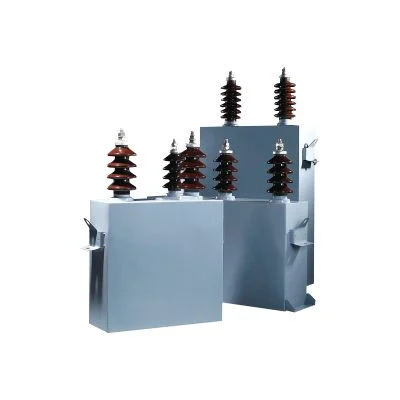
Table of Contents
Understanding Single-phase Capacitor Basics
What Makes It "Single-phase"
The term single-phase capacitor refers to capacitors designed for use in single-phase electrical systems — the type of power supply found in most homes, small businesses, and light commercial applications. Unlike three-phase industrial power, single-phase systems use two conductors to deliver alternating current.
Single-phase power has an inherent limitation. It cannot easily start rotating magnetic fields needed to run certain motor types. A single-phase capacitor creates the phase shift necessary to generate starting torque in induction motors designed for single-phase operation.
Key characteristics include:
- Voltage ratings matching single-phase supply levels (120V, 240V, etc.)
- Capacitance values suited to specific motor sizes
- Construction tolerating AC voltage stress
- Terminals configured for simple two-wire connection
How Energy Storage Creates Phase Shift
Capacitors store energy in electric fields between conductive plates separated by insulating material. When connected to AC circuits, capacitors cause current to lead voltage — meaning current flow peaks before voltage does.
This leading current characteristic proves essential for motor starting. By feeding a separate winding through a single-phase capacitor, current in that winding leads current in the main winding. The resulting phase difference creates a rotating magnetic field approximation — enough to start the motor spinning.
Without this phase shift, single-phase induction motors would simply hum and overheat rather than rotating. The capacitor provides what the single-phase supply inherently lacks.
Types and Applications of Single-phase Capacitor
Motor Start Capacitors
Characteristic | Start Capacitor | Run Capacitor |
Capacitance range | 70-800 µF typical | 5-80 µF typical |
Duty cycle | Intermittent (seconds) | Continuous |
Construction | Electrolytic usually | Film/oil typically |
Failure mode | Often short circuit | Often open circuit |
Voltage rating | 125V, 250V, 330V common | 370V, 440V common |
Start capacitors connect through a centrifugal switch or electronic relay that disconnects them once the motor reaches running speed. Leaving a start capacitor connected continuously causes rapid overheating and failure.
Run Capacitors
Run capacitors remain connected during motor operation. They improve running efficiency, reduce current draw, and provide smoother operation. Capacitance values are lower than start capacitors, but continuous duty requires more robust construction.
Common run capacitor applications include:
- Air conditioning compressors and fan motors
- Refrigeration equipment
- Pump motors in residential systems
- Ceiling fans and ventilation equipment
- Small workshop machinery
A failed run capacitor often allows the motor to continue operating — just poorly. Symptoms include reduced power, overheating, higher energy consumption, and difficulty starting under load.
Power Factor Correction Applications
Beyond motor applications, a single-phase capacitor serves power factor correction in residential and light commercial settings. Poor power factor means current and voltage get out of sync, forcing the system to carry more current than actually needed for useful work.
Single-phase capacitor installations for power factor correction typically involve:
Fixed capacitors connected at the main panel
Automatic switching based on load conditions
Coordination with utility metering requirements
Proper sizing to avoid overcorrection
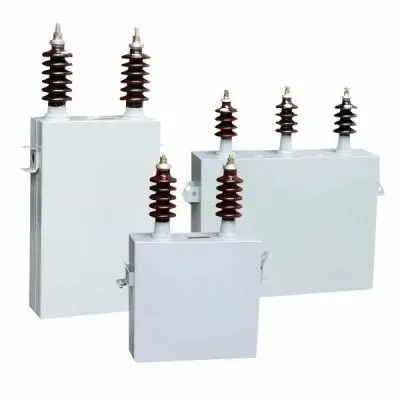
While these are common at distribution voltages, the fundamental principle scales significantly. For large industrial plants or utility substations, a high voltage power capacitor bank performs an analogous but far more powerful function—correcting lagging power factor across an entire facility or section of the grid to enhance efficiency and stabilize system voltage at a much greater scale.
Selecting and Maintaining Single-phase Capacitor Units
Proper Sizing Considerations
Selecting the correct single-phase capacitor requires matching several parameters to the application. Undersized capacitors fail to provide adequate phase shift or power factor correction. Oversized capacitors cause overcorrection, voltage problems, and wasted money.
Critical selection factors include:
- Voltage rating must exceed system voltage with margin
- Capacitance value matching motor nameplate or calculated requirement
- Frequency rating appropriate for local supply (50Hz or 60Hz)
- Temperature rating suitable for installation environment
- Physical size fitting available mounting space
Motor nameplates typically specify required capacitor values. When nameplates are missing or illegible — common on older equipment — capacitor sizing becomes more challenging and may require measurement or calculation.
Signs of Capacitor Failure
Single-phase capacitor failure happens eventually in any installation. Recognizing symptoms early prevents secondary damage to motors and other equipment.
Warning signs include:
- Motor struggles to start or won’t start at all
- Humming sound without rotation
- Motor runs hot during normal operation
- Visible bulging or leakage on capacitor case
- Burnt smell from the capacitor or motor
- Intermittent starting problems
FAQ
How long does a single-phase capacitor typically last?
Lifespan varies considerably based on capacitor type, operating conditions, and quality. Run capacitors in air conditioning applications commonly last 10-20 years under normal conditions, though harsh environments with temperature extremes or voltage fluctuations shorten this considerably. Start capacitors experience more stress during each operation but work only briefly — they typically survive 10-15 years in residential service with moderate starting frequency. Electrolytic start capacitors tend toward shorter lives than film-type run capacitors. Environmental factors matter enormously.
Can a single-phase capacitor be tested without specialized equipment?
Basic testing is possible with a standard multimeter having capacitance measurement function — many modern multimeters include this capability. The capacitor should be disconnected and fully discharged before testing. Measured capacitance within 5-10% of rated value suggests acceptable condition, while significant deviation indicates replacement needed. However, capacitance measurement alone doesn’t reveal all problems. Intermittent failures, breakdown under voltage stress, or excessive internal resistance require more sophisticated testing to detect.
What happens if the wrong size single-phase capacitor is installed?
Installing incorrect capacitance values creates various problems depending on whether the capacitor is oversized or undersized and the specific application. An undersized start capacitor results in weak starting torque — the motor struggles to start, especially under load, and may fail to start entirely. An undersized run capacitor reduces motor efficiency and power output while increasing operating temperature. Oversized capacitors cause different issues. Too much capacitance on a start winding can damage motor windings through excessive current. An oversized run capacitor causes overcorrection, potentially leading to leading power factor, voltage elevation, and increased energy consumption rather than savings.