Power factor is one of those electrical concepts that sounds intimidating until someone explains it in plain terms. And once it clicks, you realize it affects energy bills, equipment efficiency, and even the lifespan of motors and transformers. Businesses with poor power factor often pay penalties without fully understanding why. The fix, in most cases, involves something deceptively simple: a power capacitor.
The idea behind power factor correction has been around for decades. It is not cutting-edge technology. But it remains one of the most cost-effective ways to improve electrical system performance. Factories, commercial buildings, hospitals, and even some larger residential setups benefit from it. The problem is that many facility managers either ignore it or overcomplicate the solution. Really, though, the fundamentals are straightforward once you break them down.
Table of Contents
Understanding Why Power Factor Matters
Before discussing how a power capacitor fixes the issue, it helps to understand what power factor actually means. In simplest terms, power factor measures how effectively electrical power is being used. It is expressed as a number between 0 and 1, or sometimes as a percentage.
When power factor is 1.0 (or 100%), all the power drawn from the utility is being converted into useful work. When it drops—say to 0.7 or 0.8—a portion of the power is essentially wasted, circulating back and forth between the source and the load without doing anything productive. This wasted component is called reactive power.
Inductive loads cause most power factor problems. These include:
- Electric motors (by far the biggest culprit)
- Transformers
- Fluorescent lighting ballasts
- Induction furnaces
- Welding machines
All of these devices need magnetic fields to operate. Creating those magnetic fields requires reactive power. The utility still has to supply it, even though it does not register as useful consumption on most meters. And here is the kicker—utilities often penalize customers for low power factor because it strains their distribution infrastructure.
How a Power Capacitor Corrects the Problem
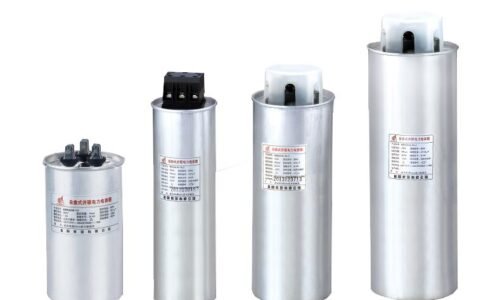
This is where the elegance of capacitor-based correction becomes apparent, particularly when utilizing a low voltage power capacitor. Capacitors store energy in an electric field, while inductors (like motors) store energy in a magnetic field. These two are essentially opposites in terms of how they interact with alternating current.
When you install a power capacitor in parallel with an inductive load, the reactive power demanded by the motor gets supplied locally by the capacitor instead of being drawn from the utility. The capacitor “injects” leading reactive power that cancels out the lagging reactive power from the inductor.
The result? The utility sees a load that appears much closer to unity power factor. Less reactive current flows through the cables, transformers, and switchgear. Losses decrease. Voltage stability improves. And the electricity bill often drops noticeably.
The basic correction process works like this:
- Measure the existing power factor at the main electrical panel or at individual loads.
- Calculate the reactive power (in kVAR) needed to bring the power factor up to the target, typically 0.95 or higher.
- Select a power capacitor or capacitor bank rated for that kVAR value.
- Install the capacitor either at the main distribution board (centralized correction) or directly at the load (local correction).
- Verify the improved power factor using a power quality meter.
It sounds almost too easy, and in many installations, it really is that straightforward. The math is well-established, and capacitor sizing charts exist for common scenarios.
Types of Power Capacitor Installations
Not every facility corrects power factor the same way. The approach depends on the nature of the loads, the size of the installation, and budget considerations.
Fixed Capacitor Banks
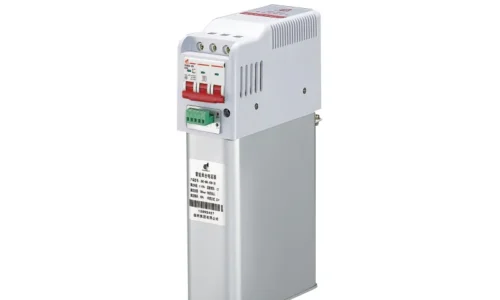
A fixed capacitor bank is simply a set of capacitors wired permanently into the system. They provide a constant amount of reactive power compensation. This works well when the load is stable and predictable—a motor that runs continuously at the same speed, for instance. Simple, cheap, and reliable.
Automatic Capacitor Banks
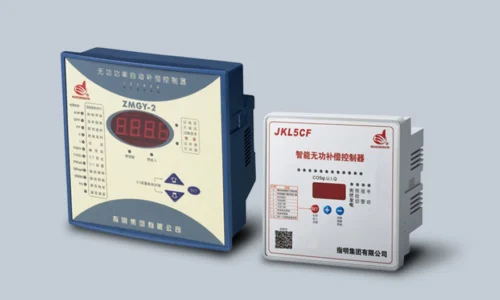
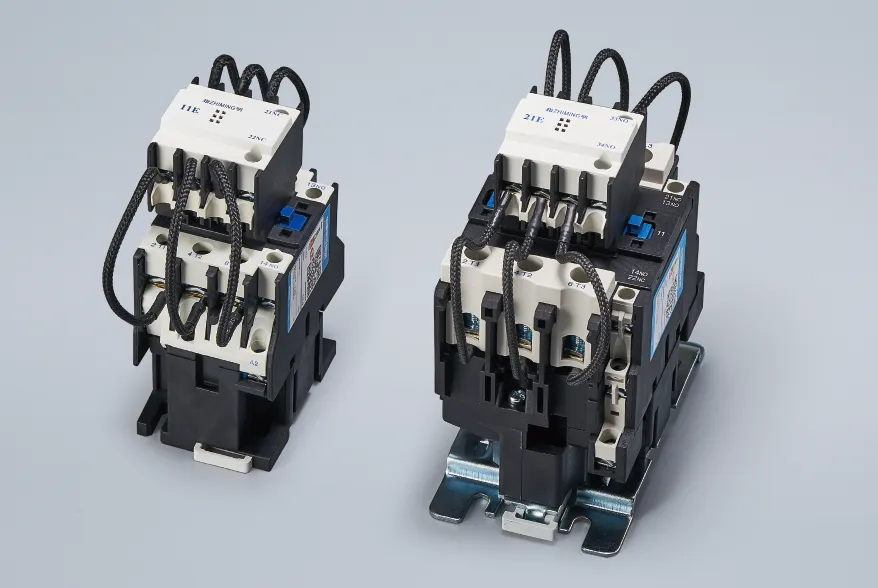
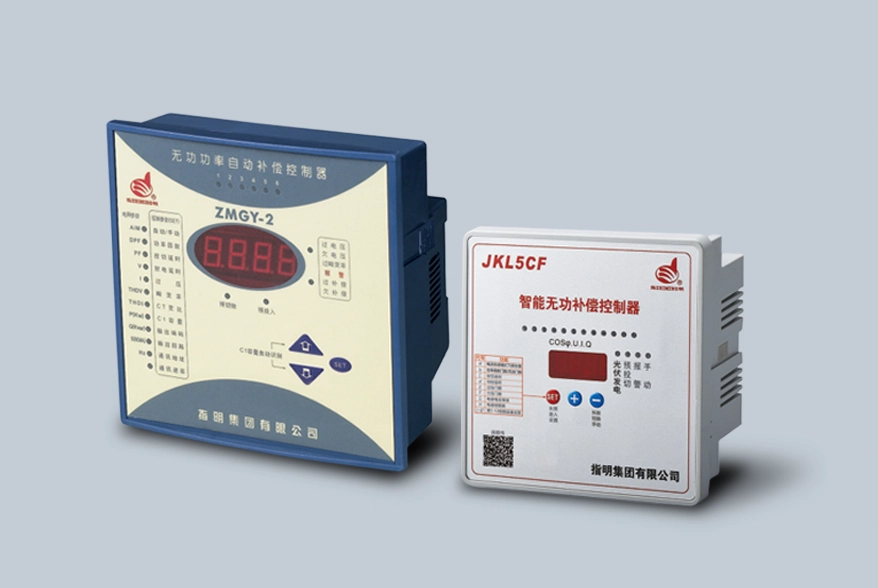
When loads vary throughout the day, fixed capacitors can overcorrect during light-load periods. Overcorrection (leading power factor) can be just as problematic as undercorrection. Automatic banks solve this by using a controller that monitors power factor in real time and switches capacitor stages on or off as needed. More expensive, but far more precise.
Individual Capacitor Correction
For large motors or critical equipment, installing a dedicated power capacitor right at the load terminals offers the best performance. The reactive current never even travels through the facility’s internal wiring. This reduces losses in cables and improves voltage at the motor itself. Many industrial plants use a hybrid approach—individual correction for big loads, automatic banks for the rest.
Benefits Beyond the Electricity Bill
Yes, power factor correction reduces utility penalties. That is usually the primary motivation. But the secondary benefits are often just as valuable.
Additional advantages include:
- Reduced current flow through cables, allowing existing wiring to handle more real load
- Improved voltage regulation, especially at the end of long feeders
- Lower transformer loading, potentially deferring expensive upgrades
- Decreased I²R losses (the heat generated in conductors), improving overall efficiency
- Extended lifespan for motors and other equipment due to more stable supply
A facility running at 0.75 power factor might find that correcting to 0.95 frees up 20% or more of the apparent capacity in their electrical system. That can mean avoiding a costly service upgrade when adding new equipment.
FAQ
Can power capacitors be installed without an electrician?
Technically, small capacitors for individual motors sometimes come as plug-and-play units. However, for any significant installation—especially automatic banks or connections to main panels—a licensed electrician or electrical engineer should handle the work. Improper installation creates serious safety risks, including shock hazards, capacitor rupture, and fire.
How long does a power capacitor last?
Under normal conditions, a quality power capacitor lasts anywhere from 10 to 20 years. High ambient temperatures, voltage spikes, and harmonic distortion shorten that lifespan considerably. Regular inspection and thermal imaging can catch degradation before a capacitor fails outright.
What happens if the power factor is corrected too much?
Overcorrection results in a leading power factor, where the system supplies reactive power back to the grid. Some utilities penalize this just like lagging power factor. It can also cause voltage rise on lightly loaded circuits and interfere with certain types of equipment. Automatic capacitor banks with proper controllers prevent overcorrection by adjusting compensation dynamically.