Table of Contents
Why Improving Power Factor Matters
Before diving into specific devices, understanding why power factor correction matters helps frame the discussion. When electrical systems operate with low power factor, they draw more current than necessary to deliver useful work. This excess current generates heat, stresses equipment, and often triggers penalty charges from utility companies.
Industrial facilities tend to feel this most acutely. Motors, transformers, and other inductive loads naturally create lagging power factor—sometimes dropping below 0.8 in heavy manufacturing environments. That’s not great, and utilities notice.
The good news is that several proven devices exist to address the problem. Each has its place depending on the application, budget, and specific requirements of the installation.
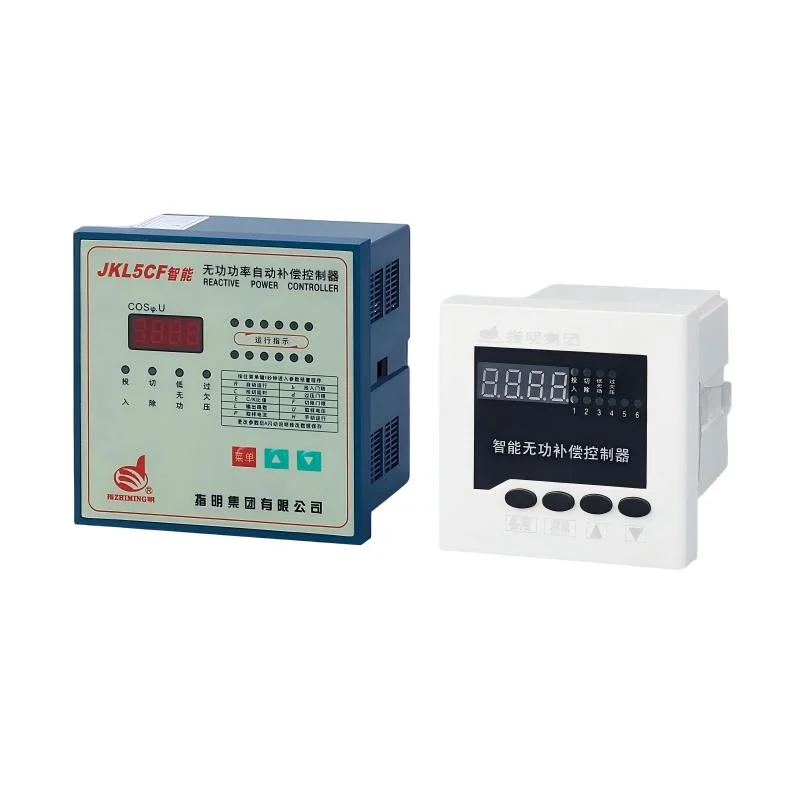
Capacitor Banks for Power Factor Correction
How Capacitors Improve Power Factor
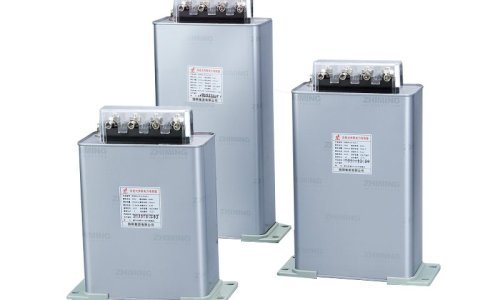
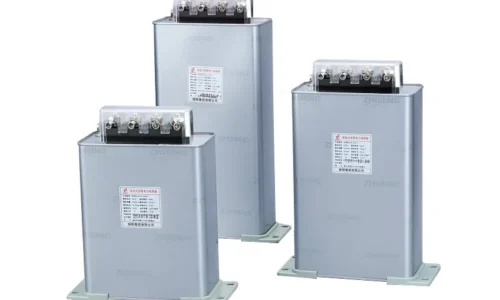
Capacitors remain the most widely used device for power factor improvement. They work by supplying reactive power locally, which offsets the reactive power demanded by inductive loads. The result is a higher power factor as seen from the utility meter.
The physics here is fairly straightforward. Inductive loads cause current to lag behind voltage. Capacitors cause current to lead voltage. Combine them properly, and the effects cancel out—at least partially.
Types of Capacitor Installations
There are essentially three ways to deploy capacitors for correction:
Fixed capacitor banks installed at the main distribution panel
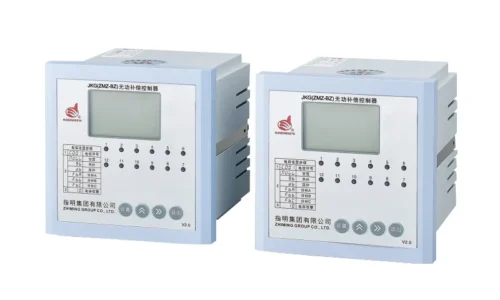
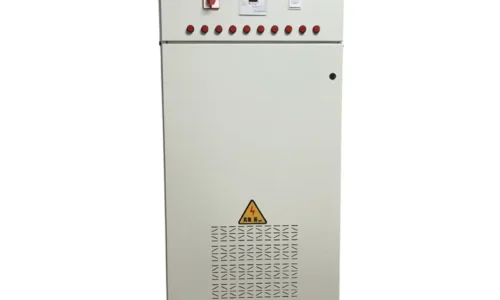
Automatic switching systems that adjust capacity based on demand
Individual capacitors mounted directly at motors or other loads
Fixed installations work well for facilities with steady, predictable loads. Automatic systems suit operations where demand fluctuates throughout the day. Individual correction provides the best results but costs more to implement across multiple loads.
Advantages and Limitations
Capacitors offer several benefits:
Relatively low initial cost
Minimal maintenance requirements
No moving parts in the capacitors themselves
Quick response to load changes (for automatic systems)
However, they’re not perfect. Capacitors can amplify harmonic distortion if the system already has significant harmonic content. They also don’t provide dynamic compensation—once sized, fixed banks deliver a set amount of reactive power regardless of actual need.
Synchronous Condensers and Power Factor
Synchronous condensers are essentially synchronous motors running without mechanical load. By adjusting the field excitation, they can either absorb or generate reactive power, making them quite versatile for power factor correction.
These machines were more common decades ago before power electronics became sophisticated. They’re still found in certain applications, particularly:
Large industrial plants with variable reactive power needs
Utility substations requiring voltage support
Facilities where harmonic distortion rules out capacitor solutions
The downside is cost and complexity. Synchronous condensers require regular maintenance, consume some real power for losses, and need skilled personnel to operate properly. For most commercial and light industrial applications, they’re overkill.

Static VAR Compensators for Power Factor Control
Static VAR compensators (SVCs) use power electronics to provide fast, dynamic reactive power compensation. They combine thyristor-controlled reactors with fixed or switched capacitor banks to achieve precise control over power factor.
SVCs respond much faster than mechanical switching systems—often within a few electrical cycles. This makes them suitable for applications with rapidly changing loads or where voltage stability is critical.
The technology shows up primarily in:
Steel mills and arc furnace operations
Large HVAC systems with variable loads
Renewable energy installations (wind and solar farms)
Utility transmission systems
Cost remains the main barrier for smaller installations. SVCs involve sophisticated control systems and power electronics that don’t make economic sense below certain power levels.
Comparing Devices for Power Factor Improvement
Device | Response Time | Cost | Maintenance | Best Application | |
Fixed Capacitors | Instant (always on) | Low | Minimal | Steady loads | |
Automatic Capacitor Banks | Seconds | Medium | Low | Variable loads | |
Synchronous Condensers | Continuous | High | Moderate-High | Large plants, voltage support | |
Static VAR Compensators | Milliseconds | Very High | Moderate | Rapidly varying loads | |
Active Filters | Milliseconds | High | Low | Harmonic-rich environments |
Active Harmonic Filters and Power Factor
Addressing Harmonics and Power Factor Together
Active harmonic filters deserve mention because they tackle two problems simultaneously. These devices inject currents that cancel out harmonic distortion while also providing reactive power compensation.
In facilities with significant non-linear loads—variable frequency drives, rectifiers, LED lighting systems—traditional capacitors can actually make things worse by resonating with system inductance. Active filters avoid this issue entirely.
When Active Filters Make Sense
The decision to use active filters typically comes down to:
Existing harmonic distortion levels exceeding acceptable limits
Sensitivity of other equipment to power quality issues
Failure of capacitor-based solutions due to resonance
Requirements for very precise power factor control
They’re expensive compared to simple capacitor banks, but sometimes there’s no practical alternative.
Choosing the Right Device for Your Application
Selecting the appropriate power factor correction device involves weighing several factors:
Current power factor and target improvement level
Load characteristics—steady or variable, linear or non-linear
Available budget for equipment and installation
Space constraints at the installation location
Existing harmonic distortion in the electrical system
Utility rate structure and penalty thresholds
For most commercial buildings and light industrial facilities, automatic capacitor banks provide the best balance of cost and performance. Heavier industrial operations might need synchronous condensers or SVCs. Facilities with significant harmonic content should consider active filters or at least detuned capacitor systems. If you want to know more about power factor device, please read What is a power factor correction device.
FAQ
What is the most common device used to improve power factor?
Capacitor banks are by far the most common solution. They’re cost-effective, reliable, and suitable for the majority of commercial and industrial applications. Automatic switching systems add flexibility for variable loads.
Can one device fix power factor for an entire facility?
A centralized correction system can improve the overall power factor seen by the utility meter. However, it won’t reduce losses in internal wiring between the correction equipment and individual loads. Distributed correction at each load provides better efficiency but costs more.
How do you know which device is right for a specific application?
A power quality audit should come first. Measuring existing power factor, harmonic content, and load profiles helps determine the appropriate solution. Oversizing or undersizing correction equipment creates its own problems, so proper assessment matters.