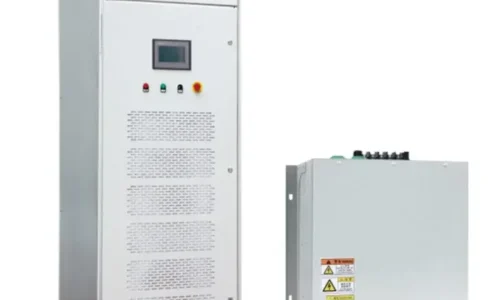
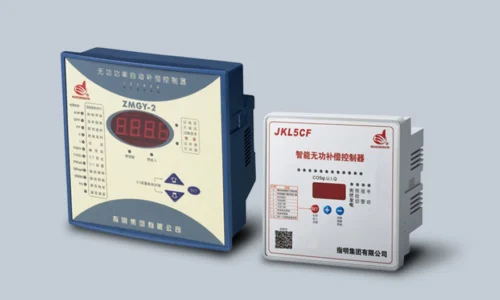
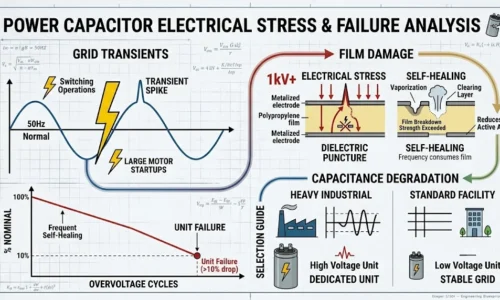
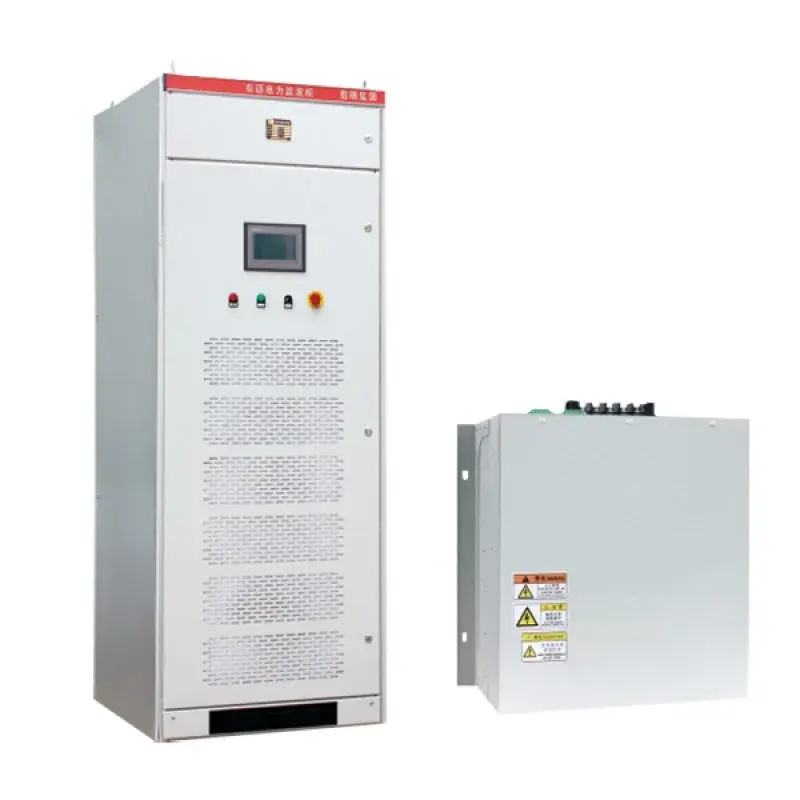
Stand in front of an electrical panel that has an APFC – an Active Power Filter Cabinet – and the first question usually is: what’s this thing actually trying to do? It’s not a capacitor bank. It’s not a voltage regulator. So what’s its job?
From what’s been observed in factories and commercial buildings, the purpose of an APFC is surprisingly simple once you get past the technical terms. It cleans up the garbage on the power lines. That garbage is called harmonics. And harmonics cause all sorts of annoying problems – overheating, tripping, buzzing, even communication errors.
Table of Contents
The Core Purpose of an APFC – Canceling Harmonics Dynamically
If there’s one sentence to describe the purpose of an APFC, it’s this: to inject an opposite current that cancels harmonic currents in real time. The cabinet constantly monitors the load, figures out what harmonics are present, and generates a mirror image of those harmonics. When the two meet, they cancel each other out. What’s left is a clean sine wave.
That’s the theory. In practice, the APFC does this hundreds or thousands of times per second. It never stops. Even when the load changes – a motor starts, a welder fires, a bank of LED lights turns on – the cabinet adjusts within milliseconds. That’s the key difference between an active filter and a passive one. Passive filters are fixed. They can’t follow a moving target.
What Harmonics Actually Look Like
A normal AC power waveform is a smooth sine wave. Harmonics are higher-frequency ripples stacked on top of that wave. They come from non-linear loads – variable frequency drives, computers, LED drivers, battery chargers, basically anything with a switching power supply.
Without an APFC, those ripples add up. The waveform gets distorted. And distortion leads to:
Extra heating in transformers and cables
Nuisance tripping of circuit breakers
Capacitor failure (swollen, leaking, or even exploding)
Overloaded neutral conductors in three-phase systems
So the purpose of the APFC is to prevent all that from happening. It’s not about saving energy directly. It’s about reliability and longevity.
The Practical Purposes – What Maintenance Staff Actually Notice
Walk up to someone who works with an APFC every day, and they’ll list purposes that aren’t in the glossy brochures. Here are a few, in no particular order:
Stopping random breaker trips. Harmonics heat up thermal-magnetic breakers. Less harmonic means fewer unexplained shutdowns. Seen that in a food processing plant – they went from weekly trips to zero after installing the cabinet.
Making transformers quieter. That humming sound? Harmonics vibrating the core. An APFC reduces that hum noticeably. It’s not silent, but it’s much less annoying.
Extending capacitor life. Old capacitor banks failed every 18 months in a harmonic-rich environment. With the active filter cabinet in front of them, they lasted over five years.
Fixing mysterious communication issues. Some power line carrier systems (for lighting control or remote metering) get jammed by harmonic noise. Clean power means clean data.
One more purpose that doesn’t get enough attention: allowing the facility to add more non-linear loads without upgrading the entire electrical system. A factory can install more VFDs or more servers, and the APFC just handles the extra harmonics. That’s a hidden capacity unlock.
Where the Purpose of APFC Really Shines
Based on site visits, the purpose of an APFC is most valuable in these situations:
Facilities with mixed loads that change frequently – like a stamping press running alongside a bank of computers
Sites with existing capacitor failures – that’s usually a sign that harmonics are already damaging things
Anywhere with sensitive electronic equipment – medical imaging, testing labs, data centers
Buildings with large LED lighting retrofits – LEDs are surprisingly harmonic-heavy
But there are places where an APFC might not make sense. If the only problem is low power factor (and no harmonics), a simple capacitor bank is cheaper. If the load is a single large motor running steadily, a passive filter tuned to the 5th and 7th harmonics might be enough. The active filter cabinet is overkill for simple, stable situations. If you want to know more about APFC, please read What are the benefits of APFC.
FAQ
Does an APFC save electricity?
Not directly. The APFC doesn’t reduce the kilowatt-hours drawn by motors or lights. What it does is reduce losses from harmonic heating – so there’s a small saving, maybe 1-3% in heavy harmonic environments. The real value is avoiding downtime, equipment replacement, and utility penalties. Saving money? Yes. Saving kWh? Only a little.
Can an APFC replace a capacitor bank completely?
Sometimes yes, sometimes no. Many APFC cabinets include reactive power compensation, so they can handle both harmonics and power factor correction in one unit. That said, if the power factor is extremely low (say 0.6), a dedicated capacitor bank might still be needed alongside the active filter. It depends on the specific site conditions. A power quality study usually answers this question.
What happens if the APFC is sized too small?
If the APFC is undersized, it will try its best but won’t cancel all the harmonics. The leftover harmonics will still cause problems – just less severe than before. Sometimes that’s acceptable. Other times it’s not. From experience, it’s better to oversize by 20-30% if the budget allows, because loads tend to increase over time. Adding more non-linear loads later means more harmonic current, and a cabinet that was just barely enough becomes insufficient.