Table of Contents
The Invisible Energy Problem That Reactive Compensation Equipment Solves
There is a peculiar type of energy flowing through almost every industrial electrical system that doesn’t actually do any useful work. It doesn’t spin motors. It doesn’t generate heat. It just sort of sloshes back and forth between the power source and the load, occupying valuable space on the wires. This is reactive power, and dealing with it is one of the most overlooked challenges in electrical engineering.
The problem is that electrical equipment like motors, transformers, and even fluorescent lighting needs this non-working energy to create the magnetic fields required for their operation. The grid has to supply it, even though it produces no tangible output. The result is that cables get loaded down, transformers run hotter than they should, and utility companies get frustrated. They often respond by slapping hefty penalty fees onto the monthly bill.
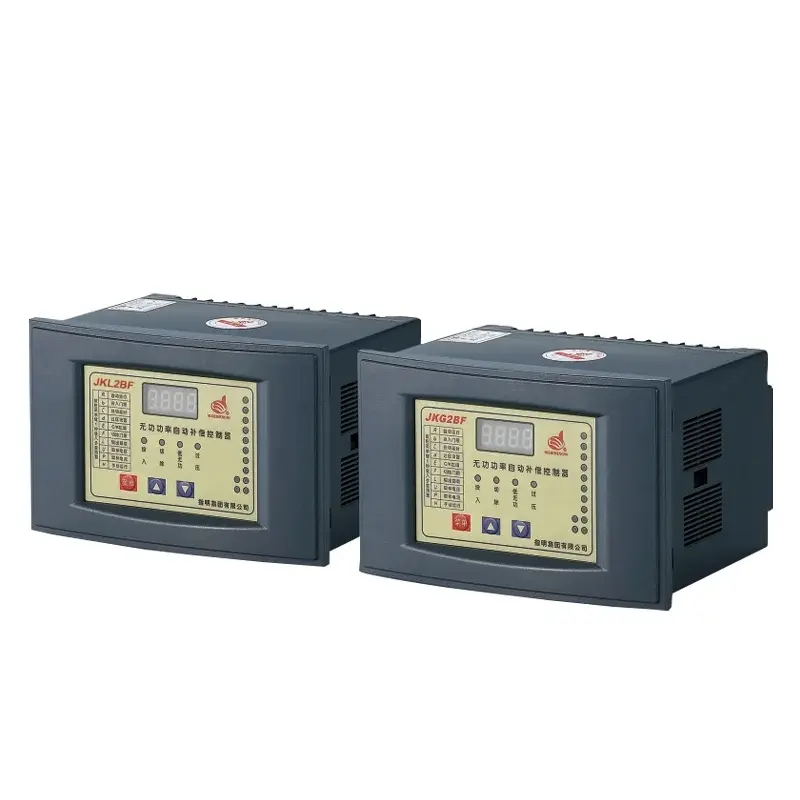
This is the core issue that reactive compensation equipment is designed to address. It’s a broad category of devices engineered specifically to manage and balance the flow of reactive power within an electrical network, improving efficiency and keeping everything stable.
What Reactive Compensation Equipment Actually Does in Practice
At its heart, reactive compensation equipment works by either generating or absorbing reactive power locally. Instead of forcing the utility grid to deliver all that oscillating, non-working energy over long distances (which is inefficient and causes voltage drops), the compensation device provides it right at the point of use.
Think of it a bit like this. If a factory floor is thirsty for reactive power, the equipment acts like a local water tank, supplying the demand instantly without having to wait for a delivery truck from miles away. The main grid is then relieved of the burden, the cables carry mostly “real” working power, and voltage levels throughout the facility tend to stabilize noticeably.
The net effect is a cleaner, more efficient electrical system. Power factor improves, sometimes dramatically. Voltage fluctuations get smoothed out. And those penalty charges on the utility bill often shrink or disappear entirely.
The Main Categories of Reactive Compensation Equipment
The term reactive compensation equipment is actually an umbrella that covers several different technologies. Some are incredibly simple and have been around for decades. Others are highly sophisticated, relying on modern power electronics to achieve precise, millisecond-level control.
The most commonly encountered types include:
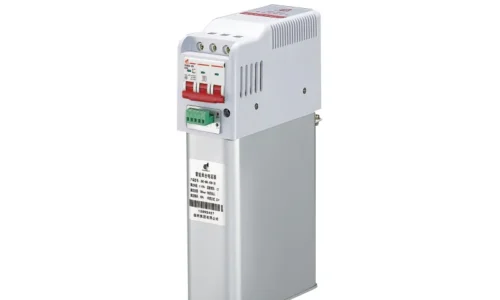
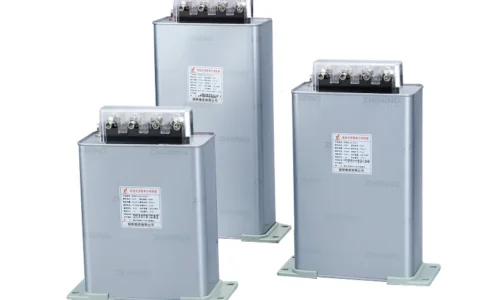
Fixed Capacitor Banks: The simplest and cheapest option. A fixed block of capacitors is permanently connected to the system. It provides a constant amount of reactive power injection, which works well for stable, unchanging loads but offers no flexibility.
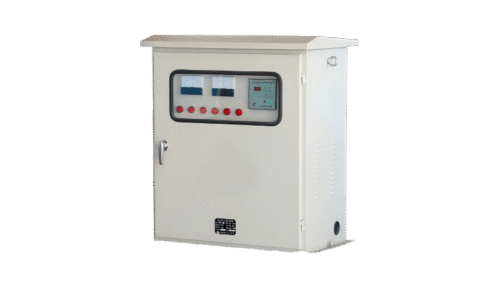
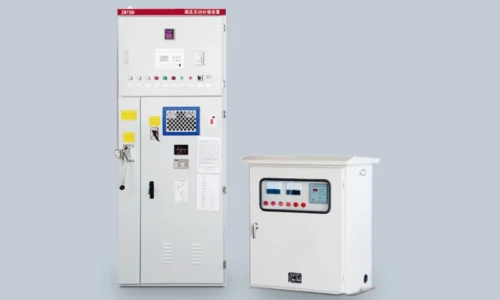
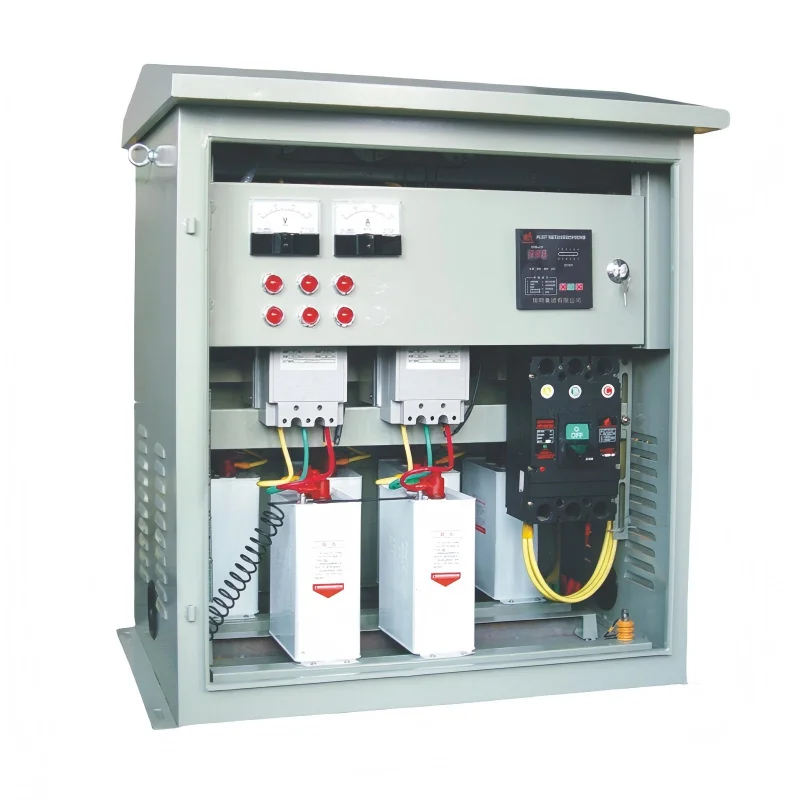
Automatic Power Factor Correction (APFC) Panels: A smarter evolution. These panels contain multiple capacitor stages that an intelligent controller switches on and off automatically based on real-time measurements of the facility’s power factor.
Synchronous Condensers: An older, electromechanical technology. Essentially a large synchronous motor running without a mechanical load, it can be adjusted to either generate or absorb reactive power smoothly.
Static Var Compensators (SVC): A heavy-duty solution for transmission-level applications. SVCs use thyristor-controlled reactors and capacitors to provide very fast, dynamic reactive power control.
STATCOMs: The most advanced option, using voltage-source converters. They offer the fastest response times and the best performance, particularly when voltage is already depressed.
Where Reactive Compensation Equipment Gets Installed
The placement of reactive compensation equipment matters quite a bit. Installing it in the wrong location can reduce its effectiveness or, in some cases, cause new problems. Generally, the closer the device is to the source of the reactive power demand, the more benefit it provides to the local wiring and infrastructure.
The typical installation scenarios usually follow this kind of logic:
At the Main Incoming Switchboard: This is the most common location for commercial and industrial buildings. It corrects the power factor as seen by the utility meter, eliminating penalty fees. The equipment can be seen sitting right next to the main breaker panels.
At Major Load Centers: In larger facilities, dedicated units might be installed near clusters of heavy machinery (like a bank of CNC machines or large HVAC chillers) to provide localized support.
On Individual Large Loads: Sometimes, a single enormous motor or piece of equipment is the primary culprit. Installing a dedicated fixed capacitor right at the motor terminals is a simple and effective solution.
At Utility Substations: For grid-scale voltage stability, utilities install large SVCs or STATCOMs at strategic substations to manage power flow across entire regions.
If you want to know more about reactive power compensation equipment, please read What are the reactive power compensation devices.
FAQ
Is reactive compensation equipment the same as a surge protector?
Not at all. These are two completely different categories of devices solving different problems. A surge protector defends sensitive electronics against brief, high-voltage spikes (like from a lightning strike). Reactive compensation equipment manages the continuous flow of reactive power to improve efficiency and voltage stability. They serve entirely separate purposes.
Can installing this equipment actually reduce electricity bills?
Absolutely, and often significantly. Many utility companies charge penalties for customers who operate with a low power factor (typically below 0.90 or 0.95). Properly sized reactive compensation equipment can bring the power factor close to unity, eliminating these charges. Additionally, reduced current flow means less energy lost as heat in cables, which can lower overall consumption slightly.
Does reactive compensation equipment require a lot of maintenance?
It depends heavily on the type. Fixed capacitor banks and APFC panels are relatively low-maintenance; an annual inspection to check for swollen capacitors, loose connections, and dust buildup is usually sufficient. More complex equipment like SVCs and STATCOMs, with their power electronics and cooling systems, require more rigorous and specialized maintenance schedules.