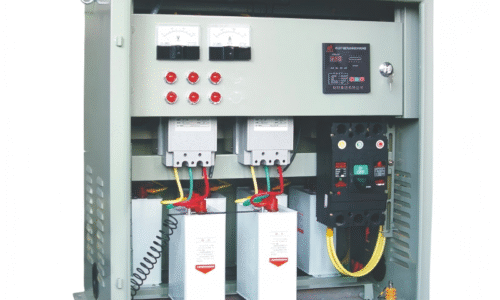
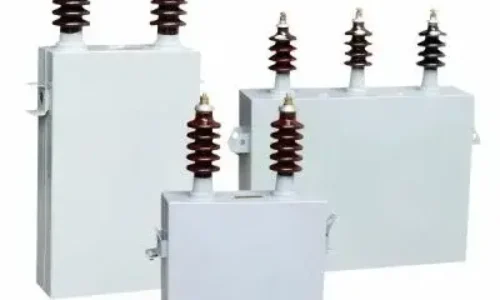
The world runs on electricity, and much of that electricity operates at voltages that would surprise most people. Behind the scenes — in power substations, medical facilities, research laboratories, and industrial plants — high voltage capacitor technology quietly enables applications that simply wouldn’t work otherwise.
These aren’t the small capacitors found in consumer electronics. A high voltage capacitor might handle tens of thousands of volts, store dangerous amounts of energy, and weigh hundreds of pounds. The applications match that scale, ranging from keeping power grids stable to generating X-rays for medical imaging.
Understanding what these specialized components actually do reveals just how essential they’ve become to modern infrastructure and technology.
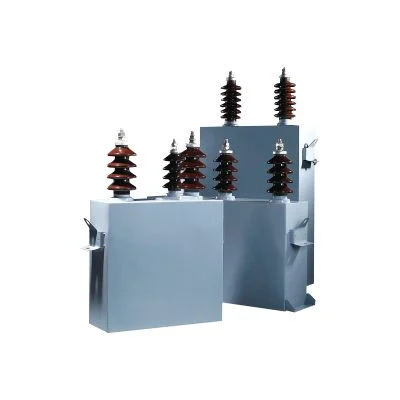
Table of Contents
Power System Applications for High Voltage Capacitor Technology
Power Factor Correction at Transmission Level
Utilities deploy massive high voltage capacitor banks throughout transmission and distribution systems. The purpose mirrors industrial power factor correction but at vastly larger scale — compensating for reactive power demand across entire regions.
These installations improve grid efficiency by:
- Reducing reactive power flow through transmission lines
- Supporting voltage levels at remote substations
- Increasing effective transmission capacity
- Minimizing system losses over long distances
A single substation capacitor bank might provide hundreds of megavars of reactive compensation. The economic impact of improved transmission efficiency at this scale runs into millions of dollars annually for large utilities.
Voltage Regulation and Stability
Grid voltage doesn’t stay perfectly constant. Load changes, generation fluctuations, and fault events all cause voltage variations. High voltage capacitor installations help stabilize voltage by injecting or absorbing reactive power as conditions change.
Switched capacitor banks respond to voltage drops by adding reactive support. When voltage rises excessively, capacitors can be disconnected. This dynamic voltage regulation keeps power quality within acceptable limits for customers throughout the service territory.
Series Compensation on Long Transmission Lines
Line Length | Without Compensation | With Series Capacitor | Capacity Increase |
200 miles | 500 MW | 650 MW | +30% |
400 miles | 300 MW | 450 MW | +50% |
600 miles | 200 MW | 350 MW | +75% |
Industrial and Medical High Voltage Capacitor Uses
Pulsed Power Systems
Some applications need enormous power delivered in extremely brief pulses — microseconds or even nanoseconds. Continuous power sources can’t respond fast enough. A high voltage capacitor charges slowly from a modest power source, then discharges its stored energy almost instantaneously.
Pulsed power applications include:
- Particle accelerators for physics research
- Electromagnetic forming of metal components
- Pulsed laser systems requiring high peak power
- Radar transmitters generating powerful radio pulses
- Fusion research devices compressing plasma
The energy storage capability of high voltage capacitor banks makes these applications possible. Nothing else can deliver megawatts or even gigawatts of power for such brief durations reliably.
Medical Equipment Applications
Medical technology relies heavily on high-voltage capacitor systems, often in ways patients never realize. X-ray machines use capacitor discharge to generate the brief, intense voltage pulses that produce X-rays. Defibrillators store energy in capacitors before delivering life-saving shocks. MRI machines require high-voltage capacitor systems for gradient coil drivers.
The common thread is that medical applications frequently need controlled, precise energy delivery—whether at high voltage for therapeutic or imaging functions, or at low voltage for signal conditioning, sensor integration, and digital control circuits. In many devices, supporting low voltage capacitor networks ensure stable power for microprocessors, amplifiers, and communication modules, making them equally essential to the reliability and accuracy of diagnostic and therapeutic equipment.
Industrial Process Equipment
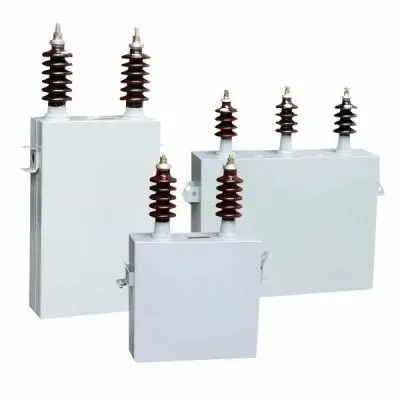
Various industrial processes depend on high voltage capacitor technology:
- Induction heating systems for metal treatment
- Dielectric heating for plastic welding and wood drying
- Spot welding equipment delivering high-current pulses
- Electrostatic precipitators removing particulates from exhaust
- Corona treatment systems for surface modification
Each application exploits the capacitor’s ability to handle high voltage, store energy, or deliver power in specific patterns that continuous sources cannot achieve.
Construction and Safety Considerations
Building capacitors for high voltage service requires fundamentally different approaches than low voltage designs. Dielectric materials must withstand intense electric fields without breakdown. Connections must prevent corona discharge and partial discharge that degrade insulation over time.
Common construction features include:
- Oil or gas impregnation to eliminate voids
- Rounded edges and graded insulation at terminals
- Pressure-relief mechanisms for fault conditions
- Robust bushings for external connections
- Internal discharge resistors for safety
The engineering investment in reliable high voltage capacitor design reflects the consequences of failure — often involving fire, explosion, or dangerous energy release.
FAQ
What voltage qualifies as a high voltage capacitor?
Definitions vary somewhat across industries, but capacitors rated above 1,000 volts generally qualify as high voltage. Power system capacitors commonly operate at 15kV to 500kV or higher. Pulsed power applications might use capacitors rated for 50kV to 100kV or beyond. Medical and industrial equipment typically falls in the 1kV to 50kV range depending on the application. The high voltage classification matters primarily for safety requirements, design standards, and handling procedures rather than representing a precise technical boundary. Installation and maintenance of any high voltage capacitor requires specialized training and safety protocols.
How dangerous are high voltage capacitors?
Extremely dangerous when charged. A high voltage capacitor stores energy that can cause fatal electrocution, severe burns, or explosive release if mishandled. The danger persists after equipment is de-energized — capacitors retain charge until actively discharged. Proper safety procedures include verified discharge before any work, grounding sticks applied to terminals, and lockout-tagout protocols. Even supposedly discharged capacitors can recover partial charge through dielectric absorption, requiring re-verification before handling. Anyone working around high voltage capacitor systems needs thorough training on specific hazards and safety requirements. These aren’t components for casual experimentation.
How long do high voltage capacitors last?
Service life varies considerably based on application conditions. Power system capacitors typically last 20-30 years under normal operating conditions. Pulsed power capacitors may survive millions of discharge cycles or fail after thousands depending on design margins and duty cycle. Temperature, voltage stress relative to rating, and discharge characteristics all affect longevity. Most high voltage capacitor failures develop gradually — capacitance loss, increased dissipation factor, or partial discharge activity — allowing detection through periodic testing before catastrophic failure. Replacement schedules should reflect both manufacturer recommendations and actual measured condition rather than arbitrary time intervals.