Table of Contents
Why Use a Capacitor Bank for Power Factor Improvement?
Poor power factor causes real headaches for facility managers and business owners. Equipment runs less efficiently, utility bills climb higher, and electrical infrastructure gets stressed unnecessarily. Among the various solutions available, using a capacitor bank remains one of the most practical and cost-effective approaches.
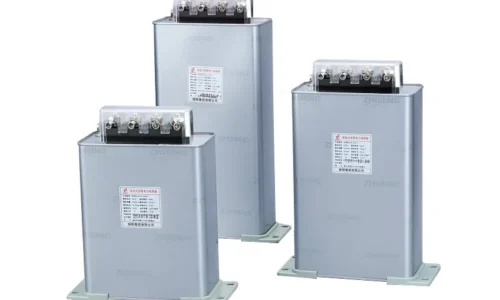
The basic concept isn’t terribly complex. Inductive loads—motors, transformers, compressors—create lagging power factor by drawing reactive power from the grid. A capacitor bank generates leading reactive power that offsets this lag, pushing the overall power factor closer to unity. Simple enough in theory, though proper implementation requires attention to several factors.

Understanding How a Capacitor Bank Works
Capacitors store electrical energy in an electric field. When connected to an AC system with inductive loads, they release this stored energy in a way that counteracts reactive power demands. The reactive currents from capacitors and inductors essentially cancel each other out—at least partially.
Think of it like balancing a scale. Too much weight on one side (inductive reactive power) throws things off. Adding weight to the other side (capacitive reactive power) brings balance back.
Power Factor Before | Capacitor Bank Size (kVAr) | Expected Improvement |
0.70 | Large capacity needed | Significant gains |
0.80 | Moderate capacity | Noticeable reduction |
0.85 | Smaller capacity | Measurable savings |
0.90 | Minimal addition | Fine-tuning results |
Steps to Improve Power Factor Using a Capacitor Bank
Getting this right involves more than just buying equipment and plugging it in. A systematic approach yields better outcomes.
Assess Current Power Factor Levels
Before anything else, establish baseline measurements. Power quality analyzers can capture actual power factor readings over time—ideally across different operating conditions. Peak loads, partial loads, seasonal variations… all worth considering.
Calculate Required Capacitor Bank Size
Sizing calculations matter quite a bit. The formula involves existing power factor, target power factor, and actual load in kilowatts. Undersizing leaves money on the table. Oversizing can cause leading power factor and voltage issues.
The general steps include:
- Measure current power factor and active power consumption
- Determine target power factor (usually 0.95 or higher)
- Calculate reactive power compensation needed using standard formulas
- Select appropriate capacitor bank rating in kVAr
Choose the Right Type of Installation
Several installation configurations exist:
- Centralized correction at main distribution panel
- Group correction for specific load centers
- Individual correction at each major load
- Automatic switching systems for variable loads
Each approach has tradeoffs regarding cost, efficiency, and complexity.
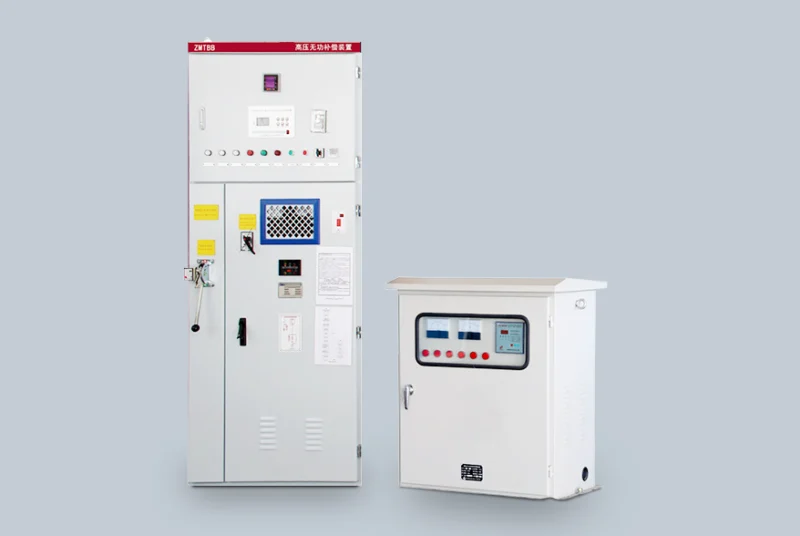
Types of Capacitor Bank Systems
Not all capacitor banks operate the same way. Understanding the differences helps in making informed decisions.
Fixed Capacitor Banks
These provide constant reactive power compensation. Best suited for facilities with steady, predictable loads. Lower initial cost but less flexibility. Manufacturing plants running consistent production lines often find these adequate.
Automatic Capacitor Banks
More sophisticated systems that switch capacitor stages on and off based on real-time power factor readings. Controllers monitor conditions continuously and adjust accordingly. Higher upfront investment, but they handle fluctuating loads much better.
Common Mistakes to Avoid
Some pitfalls show up repeatedly:
- Installing without proper load analysis first
- Ignoring harmonic distortion in the system
- Placing capacitors too close to harmonic-generating equipment
- Neglecting regular maintenance and inspection
- Failing to account for future load growth
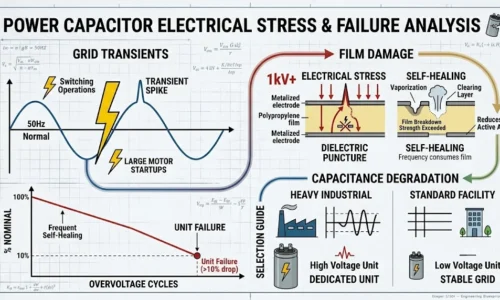
Harmonic issues deserve particular attention. Capacitor banks can amplify harmonics under certain conditions, potentially causing resonance problems. Detuned reactors or harmonic filters may be necessary in facilities with significant non-linear loads.
Maintenance Considerations
Regular inspection keeps capacitor bank systems performing reliably. Checking for swelling capacitor cans, loose connections, and proper ventilation should happen periodically. Most manufacturers recommend annual inspections at minimum. If you want to know more about capacitor bank, please read What is a capacitor bank.
FAQ
How much can a capacitor bank reduce electricity bills?
Savings typically range from 5% to 20% depending on initial power factor levels and local utility rate structures. Facilities with reactive power penalty charges often see faster payback periods, sometimes within 12-24 months.
Where should a capacitor bank be installed?
Location depends on facility size and load distribution. Centralized installation near the main panel works for smaller facilities, while larger operations may benefit from distributed placement closer to major inductive loads.
Can capacitor banks cause electrical problems?
Improperly sized or installed capacitor banks can cause issues like overvoltage, harmonic resonance, or nuisance tripping. Professional assessment and proper engineering design minimize these risks significantly.