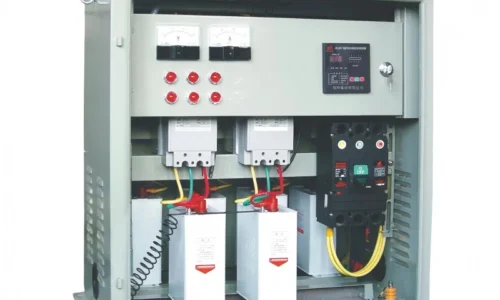
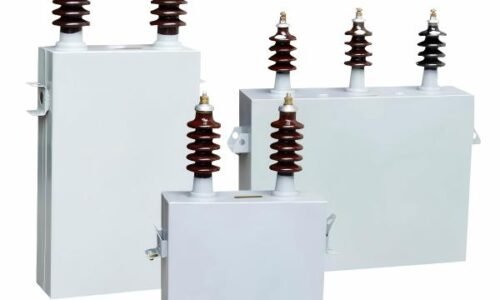
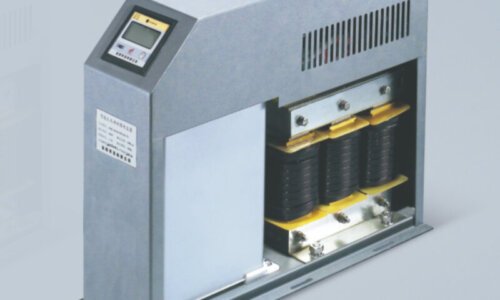
Power factor problems cost businesses money every month — sometimes substantial amounts buried in utility bills under penalty charges and inflated demand fees. The solution that facilities have relied on for decades involves installing capacitor bank systems to offset the reactive power that drags power factor down.
But how does this actually work? The explanation involves some electrical theory, though the practical effects are straightforward enough. Understanding the mechanism helps explain why capacitor bank installation remains the standard approach for power factor correction across industries worldwide.
The relationship between capacitors and inductive loads creates an elegant solution to what would otherwise be an expensive ongoing problem.
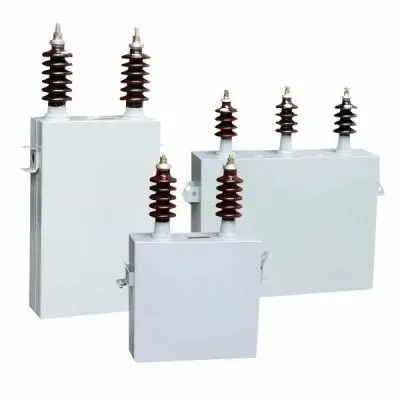
Table of Contents
Understanding Power Factor and Why It Matters
What Power Factor Actually Means
Power factor represents the relationship between real power — the electricity that actually performs useful work — and apparent power, which is what the electrical system must deliver to supply that real power. The difference comes from reactive power, which flows back and forth without doing productive work.
Think of it this way. A motor needs both working current and magnetizing current to operate. The working current produces rotation and torque. The magnetizing current creates the magnetic field necessary for operation but doesn’t contribute to output. Both currents flow through wiring, transformers, and other infrastructure.
Low power factor means excessive reactive current relative to working current. The consequences include:
- Higher current flow for the same useful output
- Increased losses throughout the electrical system
- Reduced capacity in cables and transformers
- Utility penalties for poor power factor
- Voltage drop issues at load points
Most industrial facilities operate with power factors between 0.70 and 0.90 without correction. Motors, transformers, fluorescent lighting, and other inductive equipment all contribute to the problem.
How a Capacitor Bank Corrects Power Factor
The Compensation Mechanism
Here’s where the electrical theory becomes relevant — and actually kind of interesting from a technical standpoint. Inductive loads like motors require reactive power that lags voltage. Capacitors generate reactive power that leads voltage. These two reactive components are essentially opposite in nature.
When a capacitor bank connects to the same electrical bus as inductive loads, the leading reactive power from capacitors cancels out lagging reactive power from inductors. The net reactive power flowing from the utility source decreases. Since power factor depends on the ratio of real to apparent power — and apparent power includes reactive power — reducing reactive flow improves power factor.
The capacitor bank doesn’t reduce the reactive power the motors need. It supplies that reactive power locally instead of letting it flow from the utility source through all the upstream equipment.
Quantifying the Improvement
Original PF | Load (kW) | Original kVAR | Capacitor Bank | New kVAR | Corrected PF |
0.70 | 500 | 510 | 350 kVAR | 160 | 0.95 |
0.75 | 500 | 441 | 275 kVAR | 166 | 0.95 |
0.80 | 500 | 375 | 210 kVAR | 165 | 0.95 |
0.85 | 500 | 310 | 145 kVAR | 165 | 0.95 |
Capacitor Bank Installation Approaches for Power Factor Improvement
Fixed Versus Automatic Systems
Not all capacitor bank installations work the same way. The choice between fixed and automatic systems depends on load characteristics.
Fixed capacitor banks connect permanently and provide constant reactive power compensation. They work well for:
- Steady loads with consistent power factor
- Individual motor correction
- Applications where simplicity matters
- Situations with minimal load variation
Automatic capacitor banks use controllers to switch capacitor steps based on measured conditions. These systems suit:
- Variable production environments
- Facilities with shifting load patterns
- Applications requiring precise power factor control
- Situations where overcorrection creates problems
The automatic approach costs more but adapts to changing conditions. A manufacturing facility that runs heavy during day shifts and light at night benefits from automatic switching that reduces capacitor bank output during light loading.
Location Strategy
Where the capacitor bank connects affects performance. Options include:
- Individual motor correction at each load
- Group correction at motor control centers
- Central correction at main distribution
- Combination approaches using multiple locations
Correction at individual motors provides maximum benefit — reactive current never flows through any upstream wiring. But it’s also the most expensive approach and complicates maintenance. Central correction costs less but provides less loss reduction in facility wiring.
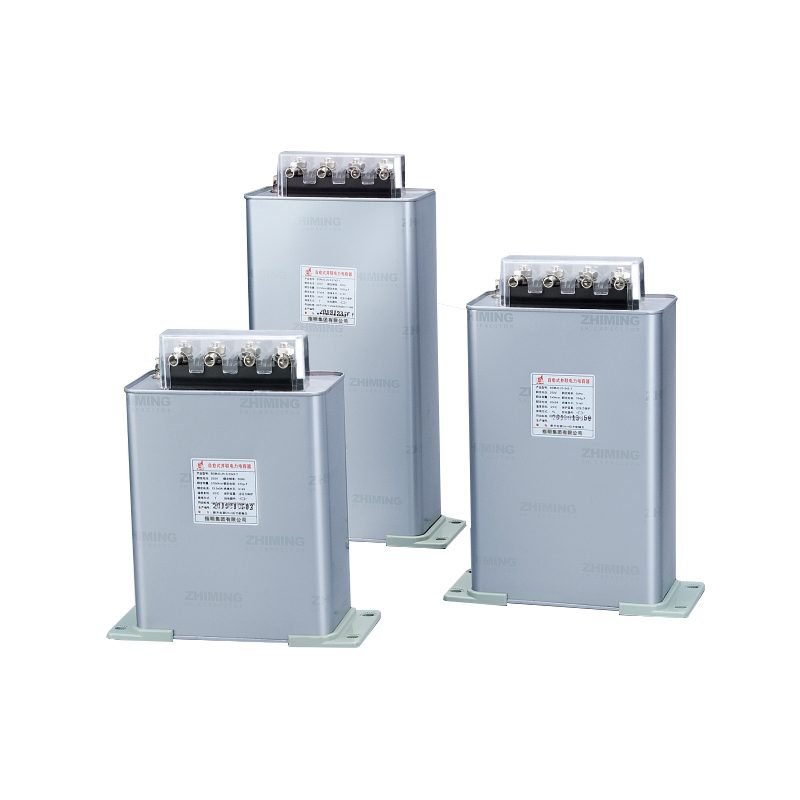
Most facilities use some combination. Large motors get individual correction while smaller loads share group or central capacitor bank installations.
Real-World Benefits of Capacitor Bank Power Factor Correction
Financial Impact
The money savings from capacitor bank installation typically justify the investment within one to three years. Benefits accumulate from several sources:
- Direct elimination of utility power factor penalties
- Reduced demand charges from lower kVA
- Decreased energy consumption from reduced losses
- Avoided costs for infrastructure upgrades
A facility paying $5,000 monthly in power factor penalties sees immediate returns from proper capacitor bank installation. The equipment might cost $15,000 to $30,000 depending on size and complexity — paid back quickly through penalty elimination alone.
System Performance Improvements
Beyond direct cost savings, capacitor bank correction improves electrical system performance in tangible ways. Voltage becomes more stable at load points. Motors run cooler and last longer. System capacity becomes available for additional loads without infrastructure upgrades.
These secondary benefits are harder to quantify but real nonetheless. Facilities that have operated for years with poor power factor often notice immediate improvement in equipment performance after capacitor bank installation. If you want to know more about capacitor bank, please read What is a capacitor bank.
FAQ
How much capacitor bank do I need to improve power factor?
The required capacitor bank size depends on current power factor, target power factor, and total load. A rough calculation multiplies total kW load by a factor from lookup tables based on starting and ending power factor values. For example, correcting 500 kW from 0.75 to 0.95 power factor requires approximately 275 kVAR of capacitor bank capacity. Real-world sizing should also consider future load growth, harmonic conditions, and whether correction will be fixed or automatic. Engineering analysis of actual load profiles provides more accurate sizing than estimates based on nameplate ratings. Oversizing wastes money while undersizing fails to achieve power factor targets.
Can capacitor banks overcorrect power factor?
Yes, and it creates problems. Overcorrection occurs when capacitor bank output exceeds reactive power demand, resulting in leading power factor. This causes voltage rise, which can damage equipment and violate utility requirements. Some utilities penalize leading power factor just like lagging power factor. Automatic capacitor bank systems avoid overcorrection by reducing connected capacitance as loads decrease.
Do capacitor banks reduce electricity consumption?
Capacitor banks reduce losses within facility electrical systems, which does decrease actual energy consumption — though the reduction is typically modest, perhaps 1-3% depending on original power factor and system configuration. The larger financial impact usually comes from eliminated penalties and reduced demand charges rather than direct energy savings. Capacitor banks don’t reduce the productive power consumed by equipment; they reduce the unproductive reactive current that creates losses in wiring and transformers. The distinction matters for setting realistic expectations about capacitor bank benefits. Power factor correction saves money primarily through rate structure benefits rather than dramatic energy reduction.