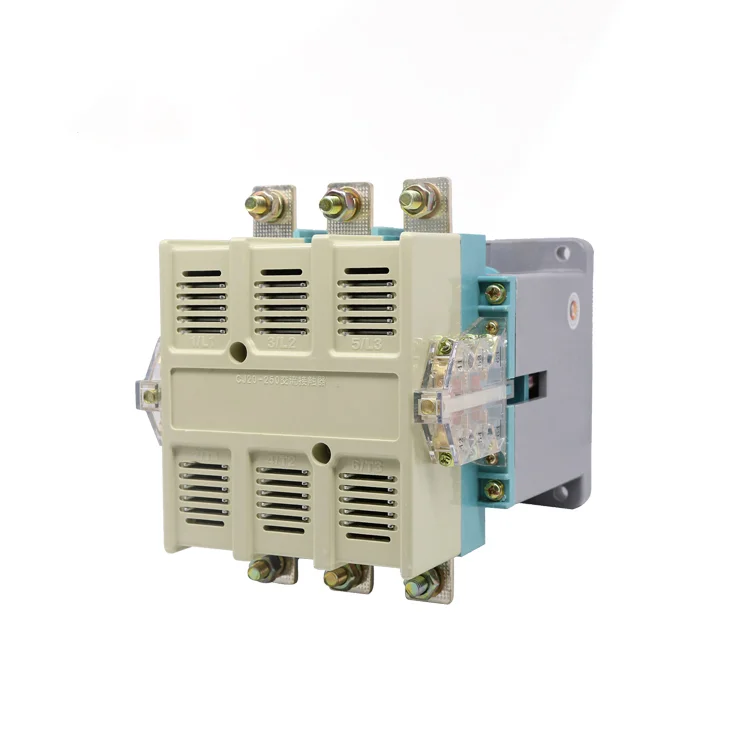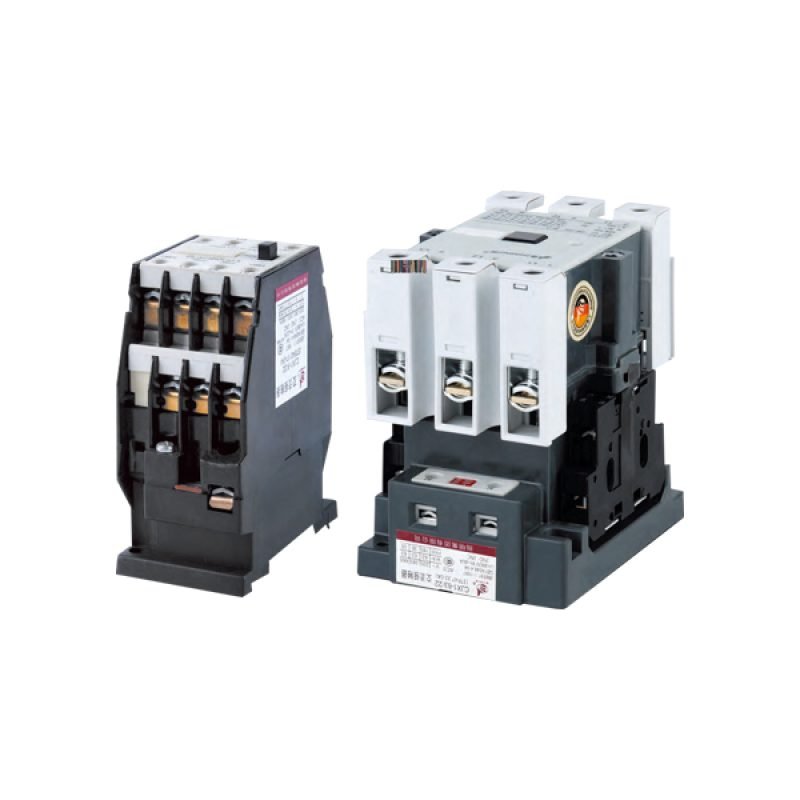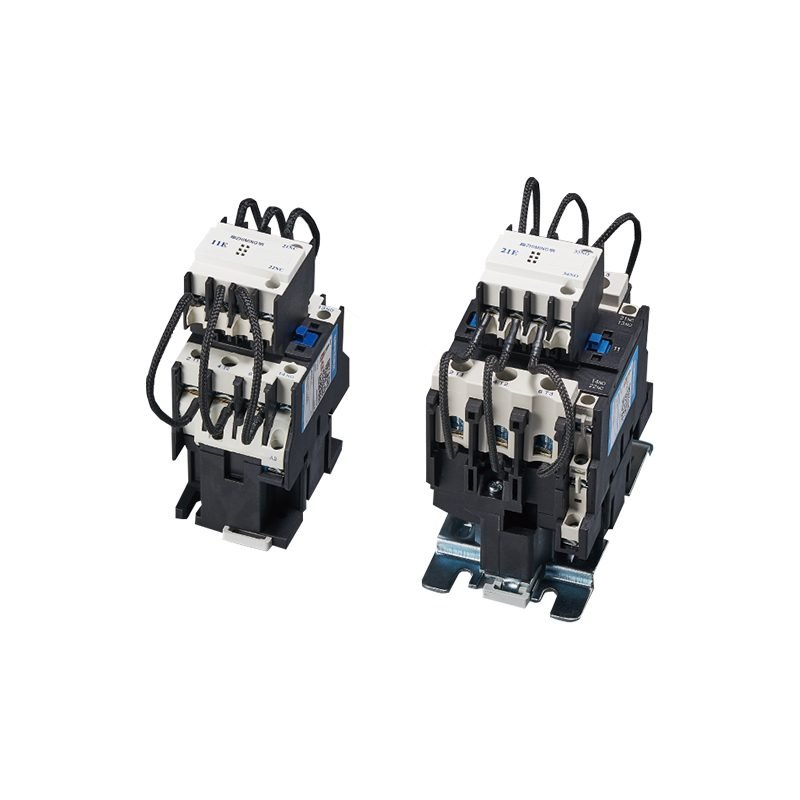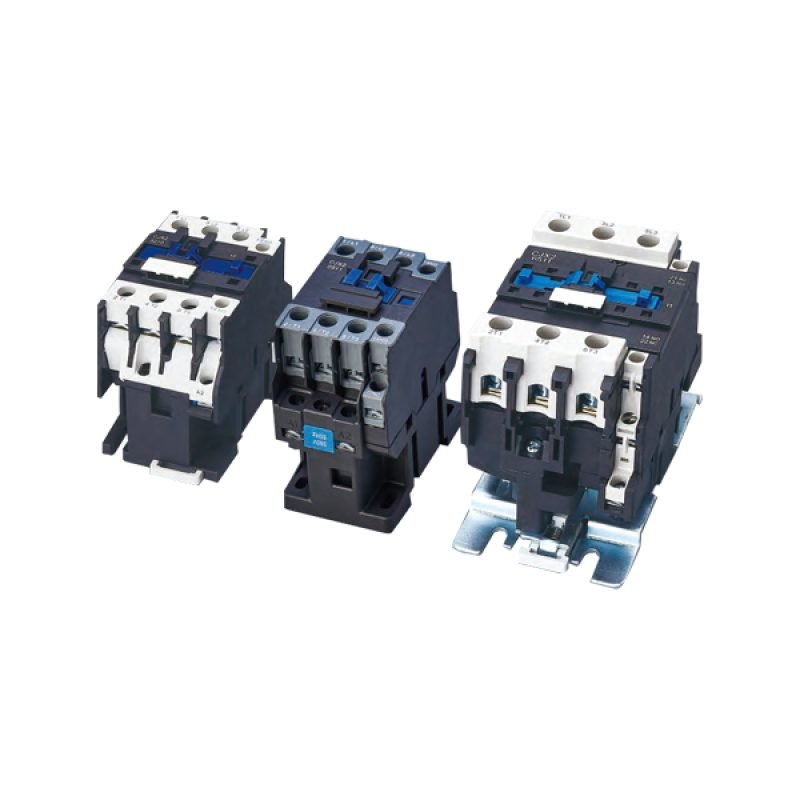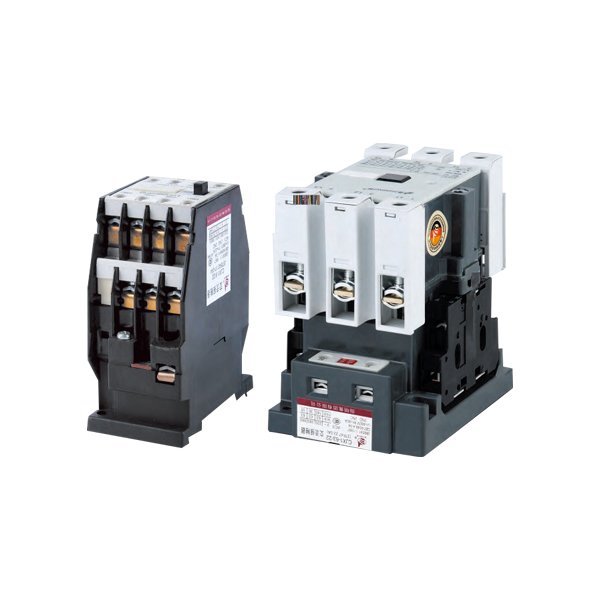
What Is AC Contactor?
ZHIMING La marca de contactores de CA de la serie CJX1 es adecuada para circuitos con una frecuencia de CA de 50 Hz o 60 Hz y una tensión nominal de funcionamiento de hasta 1000 V. Dentro de la categoría de utilización AC-3, es aplicable a circuitos con una tensión nominal de 380 V y una corriente nominal de hasta 475 A. Se utiliza principalmente para el cierre y la apertura remotos de circuitos, así como para el arranque y el control frecuentes de motores de CA. Cuando se combina con un relé de sobrecarga térmica adecuado, puede montarse en un arrancador electromagnético para proporcionar protección contra sobrecargas al circuito.
Este producto cumple con las normas GB/T 14048.4 e IEC 60947-4-1.
Working Conditions of the AC Contactor
- Rated insulation voltage (Ui) ≥ 690V AC, 50/60Hz.
- Rated operational current (Ie) per AC-3 duty (e.g., 9A–800A), withstand 8–10× Ie for short time.
- Ambient temperature –5°C to +40°C (wide‑type up to +55°C).
- Altitude ≤ 2000m; derate above 2000m.
- Pollution degree 3 (industrial environment), IP20 minimum protection.
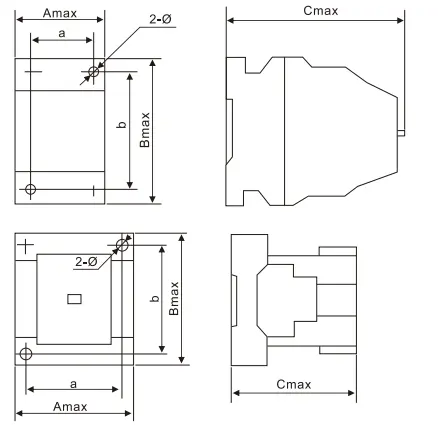
Parámetros del producto
| Tipo | Amax | Bmax | Cmáx | a | b | Ø |
|---|---|---|---|---|---|---|
| CJX1-9.12 | 46 | 79 | 106 | 35 ± 0,50 | 60 ± 0,60 | 4.8+0.48 |
| CJX1-16.22 | 46 | 89 | 116 | 35 ± 0,50 | 75 ± 0,60 | |
| CJX1-32 | 74 | 90 | 109 | 50 ± 0,50 | 75 ± 0,60 | 5+0.48 |
| CJX1-38 | 82 | 102 | 110 | 45 ± 0,50 | 75 ± 0,60 | |
| CJX1-45.63 | 92 | 120 | 125 | 70 ± 0,60 | 100 ± 0,70 | |
| CJX1-75.85 | 105 | 135 | 145 | 80 ± 0,60 | 110 ± 0,70 | 5.5+0.48 |
| CJX1-110.140 | 125 | 158 | 155 | 100 ± 0,70 | 130 ± 0,80 | 6.5+0.58 |
| CJX1-170 | 140 | 185 | 190 | 110 ± 0,70 | 160 ± 0,80 | 7.0+0.58 |
| CJX1-205 | 140 | 185 | 190 | 110 ± 0,70 | 160 ± 0,80 | 7.0 +0.58 |
| CJX1-250 | 146 | 194 | 202 | 120 ± 0,70 | 180 ± 0,80 | 9.0 +0.63 |
| CJX1-300 | 146 | 194 | 202 | 120 ± 0,70 | 180 ± 0,80 | 9.0 +0.63 |
| CJX1-400 | 162 | 205 | 224 | 130 ± 0,80 | 180 ± 0,80 | 9.0+0.63 |
| CJX1-475 | 162 | 205 | 224 | 130 ± 0,80 | 180 ± 0,80 | 9.0+0.63 |
Why Choose ZHIMING's AC Contactor?
Long Electrical & Mechanical Life
This AC contactor is designed with high‑grade silver alloy contacts and a wear‑resistant magnetic system, offering >1 million electrical operations and >10 million mechanical operations – ensuring years of trouble‑free service in frequent start/stop applications.
Wide Coil Voltage Range
Our AC contactor accepts both AC and DC coil voltages from 24V up to 380V (50/60Hz), with pick‑up voltage as low as 85% of rated voltage. This makes the AC contactor suitable for global industrial control panels without additional power conversion.
Compact & Modular Design
Despite high switching capacity (9A–800A), this AC contactor features a space‑saving footprint. Add‑on auxiliary contact blocks, surge suppressors, and mechanical interlocks can be snapped on without tools – turning the base AC contactor into a complete motor starter solution.
Built‑to‑Withstand Harsh Environments
Operating temperature range –25°C to +55°C and altitude up to 2000m. This AC contactor is sealed against dust and humidity (IP20 standard, higher optional). No derating needed for most industrial workshops, outdoor cabinets, or pumping stations.
Global Certifications & Drop‑in Compatibility
Every AC contactor is certified to IEC 60947‑4‑1, GB/T 14048.4, and CE. Mounting dimensions and terminal spacing match major existing frames (e.g., 3TS, LC1, CJX1 series) – so replacing a failed AC contactor takes minutes, not hours.
Preguntas frecuentes
What is the difference between an AC contactor and a relay?
Un AC contactor is specifically designed to switch high‑power loads (motors, capacitors, lighting) – typically above 9A – with arc extinguishing chambers, silver alloy contacts, and high short‑circuit withstand capability. A relay handles low‑power control signals (<5A). Always choose an AC contactor for motor or heating load applications.
How do I select the correct AC contactor for a motor?
First, know the motor’s full‑load current (FLC) and duty cycle. For AC‑3 duty (starting squirrel‑cage motors), pick an AC contactor with a rated operational current (Ie) ≥ FLC at your supply voltage. For heavy starting (AC‑4), oversize by 1.5–2×. Example: a 7.5kW / 400V motor draws ~15A – use an AC contactor rated 18A or 25A.
Can I use an AC contactor with a DC coil?
Yes – many AC contactor models offer both AC and DC coil options. However, a coil designed for AC (e.g., 220V AC) cannot be directly supplied with DC because DC lacks zero‑crossing, leading to coil burnout. Always specify “DC coil” when ordering an AC contactor for battery or PLC‑DC control.
Why does my AC contactor buzz loudly?
Noise usually comes from a dirty or worn shading ring (copper ring on the magnet core). Dust, corrosion, or a broken shading ring prevents the AC contactor from closing silently. Other causes: low coil voltage (<85% rated), or foreign particles on pole faces. Clean the magnet or replace the AC contactor if the buzz persists.
How often should I replace an AC contactor?
Replace an AC contactor when:
-
Contact resistance rises >2× initial value (visible pitting or welding)
-
Coil shows signs of overheating (melted encapsulation, burnt smell)
-
Mechanical operation exceeds 80% of its rated electrical life (e.g., after 800,000 starts for a 1‑million‑operation unit)
For normal motor duty (AC‑3), expect 5–10 years of service. Use an auxiliary contact to count operations and schedule proactive replacement of the AC contactor.