O Grupo Zhiming concentra-se em componentes de alta e baixa tensão e conjuntos completos de equipamento. As suas necessidades são o ponto de partida, e nós concebemos e adaptamos a produção em conformidade para garantir que cada peça de equipamento é construída para satisfazer as suas necessidades de energia.
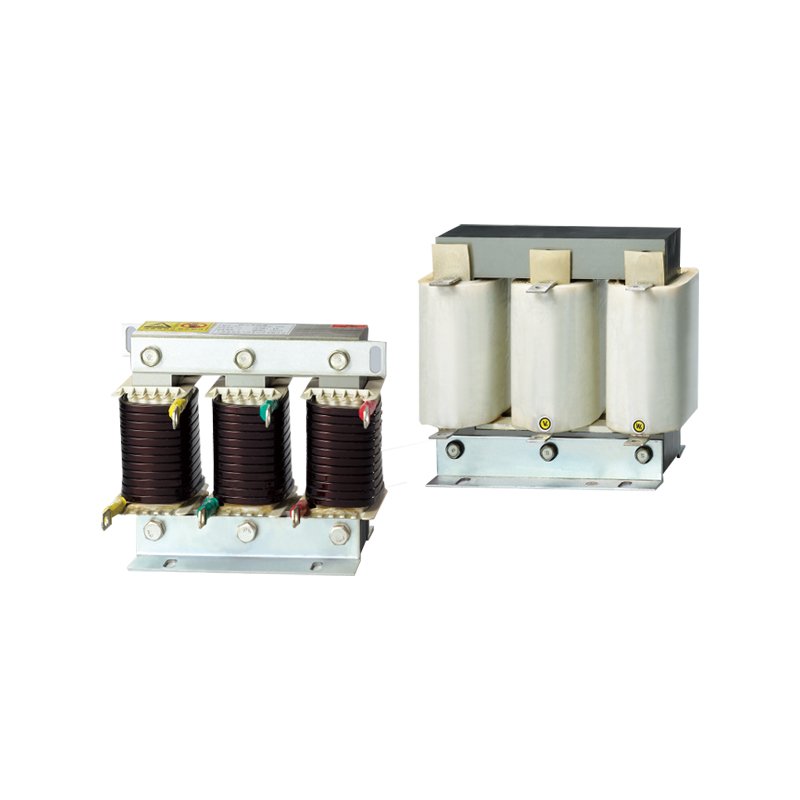
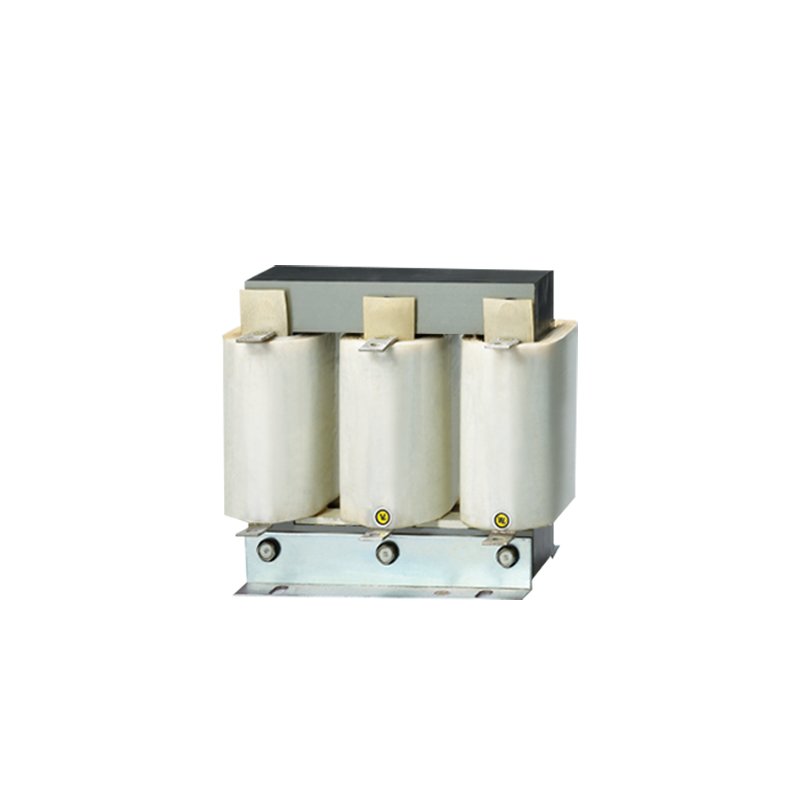
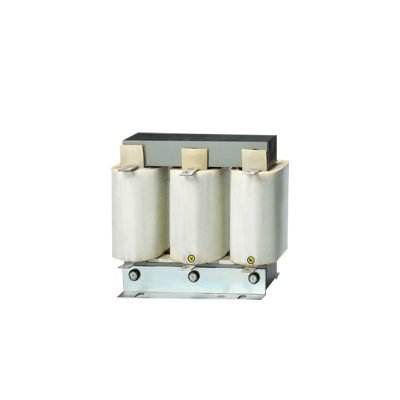
Um other low voltage reactor refers to a series-connected electromagnetic device used in low voltage AC circuits (typically below 1000V) to limit inrush current, suppress harmonics, or absorb transient overvoltages. Unlike a standard line reactor or filter reactor, the term “other” often indicates a non-standard design — for example, a dual-winding reactor, a saturable reactor, or a reactor with customized impedance (e.g., 3%, 5%, 7%). These reactors are placed between a power source and loads such as capacitor banks, VFDs, or soft starters. The main effect is to increase system impedance at certain frequencies, thereby reducing current distortion and protecting switching devices.
Core Functions of a Other Low Voltage Reactor
Função
Descrição
Inrush Current Limiting
Reduces peak inrush when switching capacitor banks or transformers. Typical reduction from 100× In to 10–15× In.
Harmonic Blocking
Tuned to 5th, 7th, or 11th harmonic (e.g., 7% impedance). Prevents resonance with power factor correction capacitors.
Voltage Notch Suppression
Smooths commutation notches caused by six-pulse VFDs. Protects other sensitive loads on the same bus.
Short-Circuit Current Reduction
Adds impedance to limit fault current. Helps existing breakers stay within interrupting rating after system expansion.
Phase Balancing (Special)
Some other low voltage reactors include asymmetric core gaps to balance load currents in delta-connected systems.
Energy Storage
Provides temporary magnetic energy during switching transitions. Reduces dv/dt across semiconductor switches.
Where an other low voltage reactor solves capacitor & drive issues A power factor correction capacitor alone can resonate with grid inductance. An other low voltage reactor placed in series with the capacitor changes the resonant frequency. Below are typical cases where our reactor — whether 5% detuned or custom-impedance — prevents capacitor fuse blowing, blocks 5th/7th harmonics from VFDs, and allows safe switching without contactor welding.
Motor industrial e cargas de indução
Problema: Fator de potência baixo (0,65-0,75) devido a grandes motores, transformadores e equipamento de soldadura.
Solução: Instalar bancos de condensadores de potência de baixa tensão nos terminais do motor ou no painel de distribuição principal.
Resultados: PF aumentado para ≥0,96; perda de energia reduzida em 12-18%; período de retorno do investimento < 8 meses.
Sistemas comerciais de AVAC e iluminação
Problema: Elevado conteúdo harmónico e cargas mensais de kVAR dos chillers, elevadores e controladores LED.
Solução: Condensador de correção do fator de potência dessintonizado com reator 7% ou 14%.
Resultados: Cumprimento dos limites de penalização dos serviços públicos de PF; 10-15% facturas de eletricidade mais baixas.
Energias renováveis (parques solares e eólicos)
Problema: A flutuação da potência reactiva causa instabilidade na rede e sobreaquecimento do inversor.
Solução: Bancos de condensadores de alta tensão automatizados com controladores de passo.
Resultado: Perfil de tensão suave, maior vida útil do inversor e melhor elegibilidade para a tarifa de alimentação.
Subestações de serviços públicos e redes de distribuição
Problema: Queda sazonal do FP devido a condições de carga leve e linhas de transmissão longas.
Solução: Bastidores de condensadores de potência comutados com contactores de vácuo.
Resultado: Redução das perdas nas linhas, libertação da capacidade dos transformadores e atraso nas actualizações das infra-estruturas.
We stock 3%, 5%, 7%, 10%, and 14% reactance types.
An other low voltage reactor with non‑standard impedance (e.g., 8.5%) is wound in 10 working days, not 8 weeks.
Linear up to 2× rated current
Core design avoids saturation even during motor starting or capacitor inrush.
This means an other low voltage reactor from Zhiming maintains its impedance from 20% to 200% load without overheating.
Low losses for continuous duty
Copper and core losses stay below 2.5% of rated kVA.
A compact other low voltage reactor can run at full load 24/7 with only 40°C temperature rise (class F insulation).
Terminal box included standard
IP20 rated with cable glands. No need to buy separate enclosure.
Every other low voltage reactor comes with labeled terminals (U1/U2, V1/V2, W1/W2) for mistake‑proof field wiring.
No audible noise above 45dB
Vacuum impregnated core and clamped laminations.
Even a 500A other low voltage reactor operates quietly inside control rooms — no humming complaints from operators.
Free resonance calculation report
Send us your capacitor bank size and transformer kVA. We compute whether a standard or other low voltage reactor is needed.
Zhiming provides a two‑page report showing the new resonant frequency and harmonic blocking performance before you order.
Um fabricante líder de condensadores de potência com mais de 25 anos de experiência está aqui para responder a todas as suas perguntas - abrangendo quaisquer questões relacionadas com o produto, questões comerciais ou preocupações relacionadas com o serviço.
1. What does “other” mean in “other low voltage reactor”?
It indicates a non‑standard design — for example, a reactor with dual windings, a saturable core, or an impedance value not common in catalogs (e.g., 8%). Zhiming’s other low voltage reactor line covers any special electrical or mechanical requirement.
2. Can I use a 5% reactor for both harmonic blocking and inrush limiting?
Yes, a 5% impedance reactor serves both purposes. It reduces inrush to about 10–12× rated current and shifts the resonant frequency below the 5th harmonic. For heavy VFD loads, a 7% other low voltage reactor may be better. kVAR = Active Power (kW) × (tanφ₁ – tanφ₂). Or simply send us 30 days of load data – we will calculate it for free.
3. What happens if the reactor saturates during fault?
Saturation causes inductance drop, so fault current rises closer to the no‑reactor value. Zhiming designs other low voltage reactor cores to saturate only above 2.5× rated current, giving protective relays enough time to trip.
4. Do I need a separate reactor for each capacitor step?
Not always. One other low voltage reactor can serve multiple capacitor steps if the reactor is placed on the main bus before the step contactors. But for best detuning, place one reactor per step — especially when steps have different kVAR ratings.
5. How do I measure actual impedance after installation?
Short the reactor output and apply low voltage (e.g., 10V AC) on input. Measure input current and calculate Z = V/I. For an other low voltage reactor, compare the result with the nameplate impedance tolerance (±5% typical).