Spis treści
What Is Intelligent Reactive Power Compensation Device?
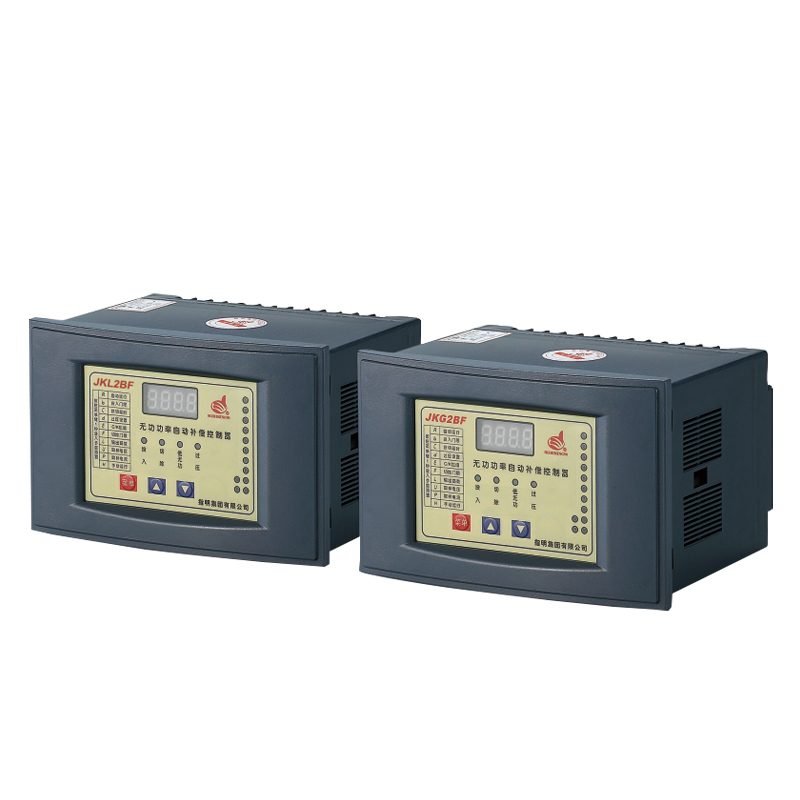
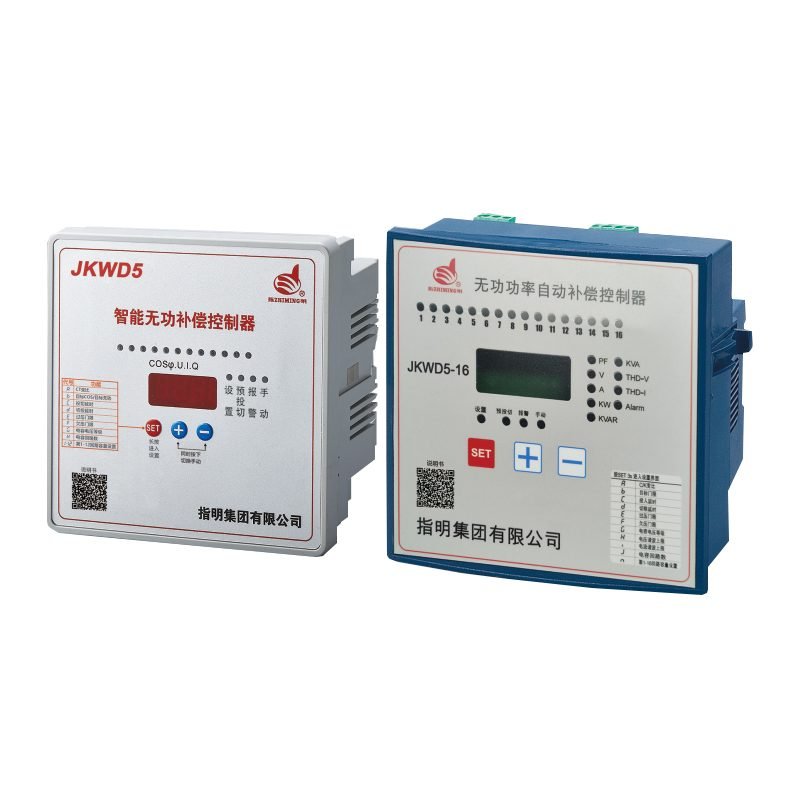
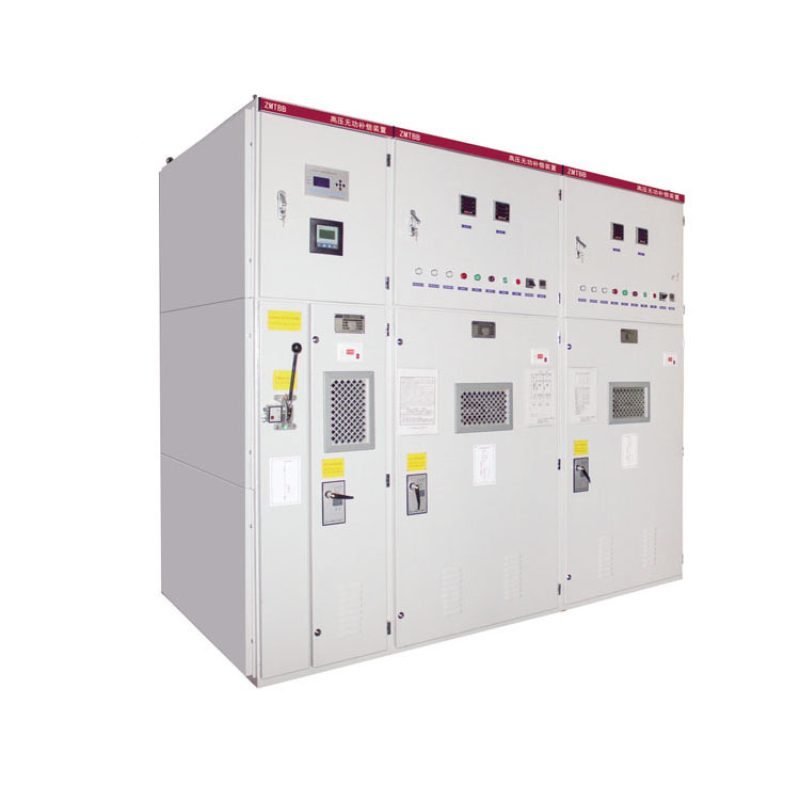
An Inteligentne urządzenie do kompensacji mocy biernej is an advanced power electronics system designed to automatically monitor, calculate, and regulate reactive power in low-voltage distribution networks (typically 380V–690V, 50/60Hz). Unlike traditional reactive power compensation cabinets that rely on basic electromechanical controllers, the intelligent device integrates a microprocessor-based controller, real‑time data acquisition, and automatic capacitor bank switching – or even static var generator (SVG) technology – to achieve precise, fast, and energy‑efficient power factor correction.
Working Conditions of the Intelligent Reactive Power Compensation Device
- Operating conditions: Altitude ≤2000m, ambient temperature -25°C to +50°C, humidity ≤50% at 20°C, installation tilt ≤5°.
- Rated voltage: 400V AC, 50Hz.
- Rated capacity (kvar): 30, 36, 40, 48, 56, 60, 64, 72, 84, 90, 96, 120, 160, 200, 250, 300, 350, 400, 500, 600.
- Operating voltage range: (0.85 ~ 1.10) × rated voltage.
- Maximum permissible overcurrent: 1.30 × rated current.
Why Choose ZHIMING's Intelligent Reactive Power Compensation Device?
Real‑Time Dynamic Response with ±0.01 Accuracy
A true intelligent reactive power compensation device must react faster than load changes. ZHIMING’s device samples voltage and current every 20ms and adjusts compensation within 1 second (or 20ms with thyristor modules). Whether you run spot welders, cranes, or elevators, this intelligent device maintains power factor ≥0.95 with ±0.01 accuracy – no over‑compensation, no penalty.
Embedded Harmonic Filtering & Resonance Protection
Unlike basic capacitors that can overheat or fail in harmonic‑rich environments, ZHIMING devices include detuned reactors (7% or 14% impedance) that block 3rd, 5th, and 7th harmonics. The intelligent controller also continuously monitors individual harmonic distortion (THDi) and automatically blocks capacitor steps if resonance conditions are detected, preventing catastrophic failure.
Plug‑and‑Play Smart Communication Suite
Every ZHIMING intelligent reactive power compensation device comes standard with RS‑485/Modbus RTU. Add optional 4G, Ethernet, or Wi‑Fi to view power factor, capacitor aging, alarm logs, and switching counts from any smartphone or SCADA. You don’t just buy a device – you get a fully connected intelligent reactive power compensation device that fits Industry 4.0.
Fail‑Safe Protection & Self‑Diagnosis
The device protects itself and your network with: Over‑voltage / under‑voltage trip Over‑temperature shutdown (with fan control) Capacitor aging detection (capacitance drop >10% triggers alarm) Thyristor short‑circuit protection Phase‑loss and reverse phase‑sequence detection A built‑in memory records the last 500 events, helping maintenance teams quickly diagnose intermittent issues.
Modular, Compact, and Customizable
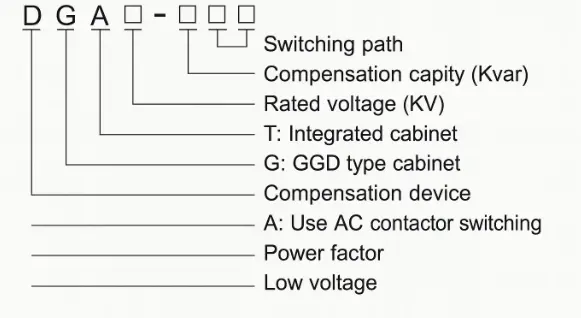
ZHIMING offers both capacitor‑based (economical) and SVG‑based (dynamic, continuous) intelligent compensation devices. Enclosure sizes start from as small as 400×300×200mm for 50kVAR, fitting into existing panels. Customization includes: Rated voltage: 380V, 400V, 415V, 690V Compensation steps: 4 to 16 steps Switching type: contactor or thyristor IP rating: IP20 to IP54 Brand preferences for major components (Schneider, ABB, Siemens) All products are certified to IEC 61439, GB/T 15576, and CE.
FAQ
What is the difference between an intelligent reactive power compensation device and a traditional capacitor bank?
A traditional capacitor bank uses a simple power factor relay that switches capacitors in fixed steps with contactors, often resulting in over‑ or under‑compensation, slow response (10–30 seconds), and no harmonic protection. An intelligent device uses a microprocessor controller with fast sampling, thyristor or SVG switching (20ms–1s), built‑in detuning reactors, remote communication, and self‑diagnosis – providing higher accuracy, reliability, and grid adaptability.
Can ZHIMING’s device compensate for rapidly changing loads (e.g., welding machines, elevators)?
Yes. ZHIMING offers thyristor‑switched capacitor (TSC) modules and static var generator (SVG) options. Thyristors switch within 20ms, and SVG (based on IGBT) provides infinitely variable reactive current injection from lagging to leading without mechanical contactor wear. For extremely fast loads (<10ms cycles), we recommend the SVG series.
What communication protocols are supported, and can I integrate with my existing SCADA?
Standard: Modbus RTU over RS‑485. Optional: Modbus TCP (Ethernet), 4G (MQTT), Wi‑Fi. All data points (PF, V, A, Q, harmonic distortion, capacitor step status, alarms) are mapped to a standard register list. Integration with Siemens S7, Schneider, Allen‑Bradley PLCs, or any SCADA system (Wonderware, WinCC, Ignition) is straightforward – we provide a free example configuration file.
How do I size the correct reactive power compensation device for my facility?
You need to know your transformer capacity (kVA) or actual load (kW) and the current average power factor. For example, to improve from 0.7 to 0.95 for a 500kVA transformer, required compensation = 500 × (cosφ₁ – cosφ₂) factor ≈ 250–300kVAR. ZHIMING’s engineering team provides free sizing based on 3‑month utility bills or onsite power logger data. Contact us with your load profile.
What is the typical payback period, and how long does the device last?
For most industrial users (electricity cost $0.10–0.15/kWh, PF penalty ~3–5%), the payback period is 6–18 months depending on load hours and PF penalty severity. The device’s expected service life is 10–15 years for capacitors (self‑healing type) and over 20 years for the controller. Regular maintenance (every 6 months) includes checking ventilation, terminal tightness, and reviewing the event log.