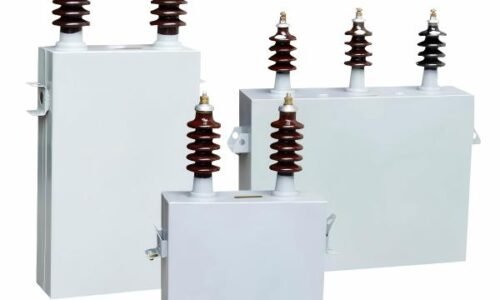
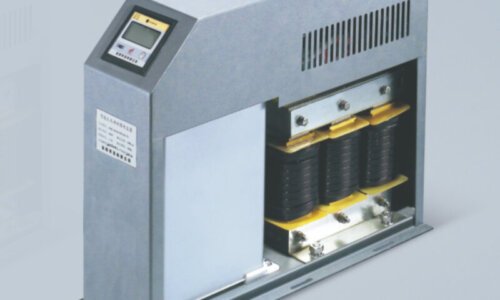
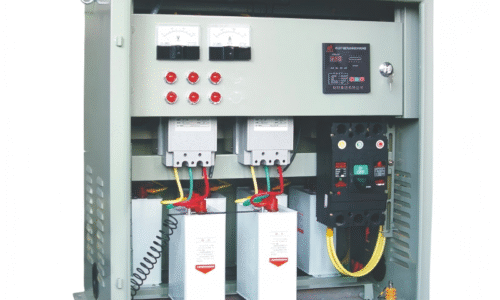
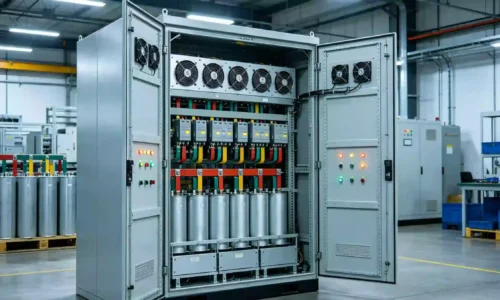
Not every electrical issue announces itself with a bang or a tripped breaker. Sometimes the problem is quieter, more insidious—like a monthly utility bill that keeps creeping up even though the equipment hasn’t changed. In many cases, the culprit is a low power factor, and the fix involves something that looks a little unassuming: a capacitor.
Connecting a kondensator mocy to improve power factor isn’t rocket science, but it also isn’t a job where one simply twists a few wires and walks away. The process sits somewhere between basic electrical awareness and a true electrician’s domain. What follows is a walk-through of what actually happens, where the capacitor goes, and a few things the manuals tend to gloss over.
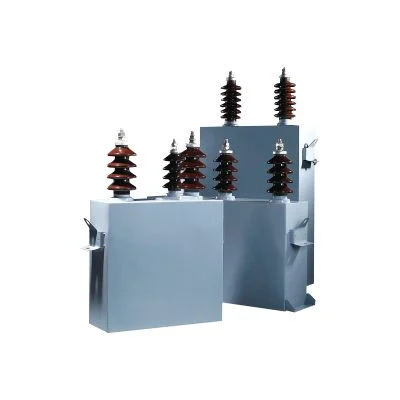
Spis treści
What Exactly Is Power Factor and Why Bother Fixing It?
Power factor, at its core, describes how efficiently the current flowing through the wires is being turned into actual, billable work. Think of it as the ratio between the horsepower that actually pushes the saw blade through the wood and the total strain on the tractor’s engine just to keep everything spinning.
When the power factor is poor—say, 0.75 or thereabouts—a noticeable chunk of the current just sloshes back and forth between the utility transformer and the motor windings. That current does nothing useful. It does, however, warm up the cables. It occupies space in the panel. And depending on the tariff structure, the power company might even add a surcharge for the privilege of wasting that capacity.
From a field observation standpoint, one of the most telling signs of a lagging power factor is the hum. Not a loud mechanical vibration, but a particular dull, heavy electrical hum from motors that are running under very little load. It’s the sound of the magnetic field building up and collapsing without much resistance to push against.
Correcting the power factor brings that current draw down. The motor still does the same job, but the system as a whole breathes easier. That’s where the capacitor bank comes in.
How to Connect a Capacitor for Power Factor Improvement
The electrical theory is one thing. The actual physical connection is another. In most scenarios involving smaller motors—think air compressors, irrigation pumps, or large HVAC blowers—the preferred method is a connection right at the motor terminals. This is commonly called “at the load” correction, and it prevents the reactive current from even having to travel back through the branch circuit wiring.
Below is a rough guide to the process, acknowledging that every panel has its own personality and age-related quirks.
Step-by-Step Connection Notes
Size the capacitor first. This is not a guess-and-check moment. One looks at the motor nameplate for the full-load amps and the no-load amps. There are tables for this, and they’re worth following because a capacitor that’s too big creates a whole new set of headaches (overvoltage on the line when the motor spins down).
Disconnect everything. And then check it again. Capacitors hold a charge even after the power is off. A screwdriver across the terminals with the handle insulated—carefully, with averted eyes—is a standard, if slightly unnerving, part of the routine.
Identify the connection point. On a magnetic motor starter, there are two logical places:
Line side of the starter contactor (keeps the capacitor energized whenever the disconnect is on).
Load side of the contactor (switches the capacitor in and out with the motor).
The load side is generally the safer, more logical choice for intermittent duty motors. It ensures the capacitor isn’t just sitting there energized 24/7, slowly cooking.
Wire in parallel. The capacitor leads connect across the same two line leads that feed the motor (for single-phase). In three-phase, it’s typically a delta connection across the three legs. Parallel connection is key. Series doesn’t correct power factor; it just makes a weird voltage divider and a lot of smoke.
A Note on Three-Phase Installations
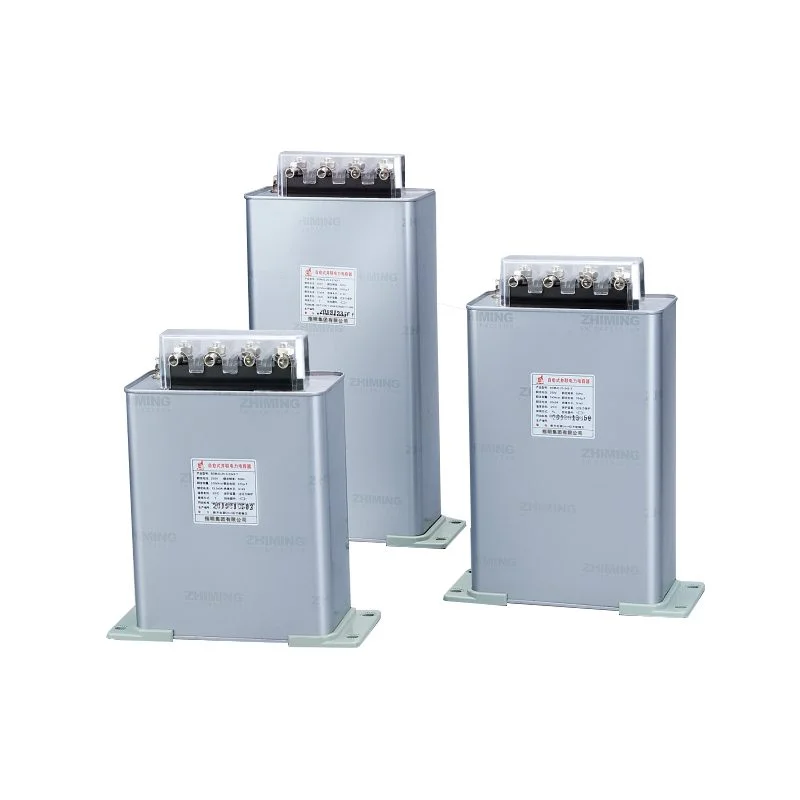
Three-phase correction often involves a bank of three capacitors—typically niskonapięciowe kondensatory mocy rated for 480V or 600V systems in commercial and light industrial settings. One might see them tucked into a separate enclosure with a dedicated fused disconnect. This is where the “connection” becomes less about twisting wire nuts and more about understanding the layout of the bus bars and the protection coordination.
One common oversight in the field is forgetting that a variable frequency drive (VFD) changes the equation. If the motor is on a VFD, the capacitor shouldn’t be placed between the drive and the motor—it belongs on the line side of the drive. Putting it on the load side tends to make the drive very unhappy, very quickly.
Subtle Signs That a Capacitor Is Helping
After the capacitor is connected, the ammeter tells part of the story. The total line amps drawn by that motor should drop by a noticeable percentage—maybe 10% to 20%, depending on how bad things were before. That’s the reactive current disappearing from the feed lines.
But there are subjective signs, too. Motors tend to run a touch cooler. That heavy, lagging hum often softens into a cleaner spinning sound. And if one ever accidentally touches the capacitor case after it’s been online for a while, the warmth is a reminder that even these “passive” devices are constantly working. They do fail, by the way. They swell, they leak a waxy substance, or they simply dry out. A visual check once in a while isn’t a bad habit.
FAQ
Can you improve power factor without a capacitor?
Yes, but the alternatives are usually less practical for small to medium facilities. Synchronous motors can be run in an “over-excited” state to supply reactive power back to the grid (acting like a capacitor). However, for most workshops or farms with standard induction motors, a synchronous condenser is a big, expensive, and maintenance-heavy piece of kit compared to a simple, passive capacitor box on the wall.
Will a power factor correction capacitor lower my electric bill?
The answer depends entirely on the utility rate structure. For residential customers in many regions, the answer is a flat “not directly,” because residential meters only register kilowatt-hours (real power). For commercial or agricultural accounts, though, the answer shifts to “likely yes.” If the bill shows a line item for “Power Factor Penalty” or “kVA Demand Charge,” then correcting the power factor can trim that specific fee significantly.
How do you know if a capacitor is the right size?
The goal is to bring the power factor close to unity (1.0) without crossing over into a “leading” power factor. A leading power factor can cause voltage regulation issues and, in extreme cases, resonance. One looks at the motor’s magnetizing current (roughly the no-load amps) and sizes the capacitor to offset about 90% of that value. It’s better to be slightly under-corrected than over-corrected.