Premium Input&Cutout Reactor Solutions

Maximiser l'efficacité et le facteur de puissance

Catégorie de produits

What Is A Input&Cutout Reactor?

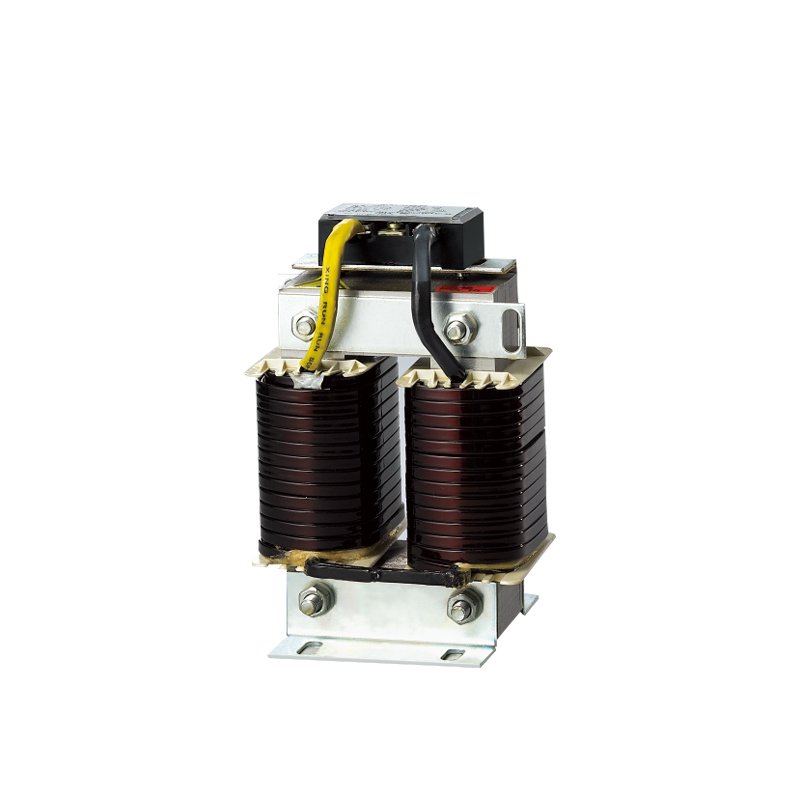
An input&cutout reactor is a dual-purpose electromagnetic device placed either at the input side of a variable frequency drive (VFD) or in series with a capacitor cutout switch. On the input side, it limits harmonic currents drawn from the supply and reduces notching caused by rectifier commutation. When used as a cutout reactor, it is inserted between a capacitor bank and its switching contactor to suppress inrush current and prevent contactor welding. Some designs combine both functions: a single reactor with two tapping points – one for input filtering and one for capacitor cutout. Typical voltage range is 208V to 690V AC, with impedance values from 3% to 10%.

Core Functions of a Input&Cutout Reactor

FonctionDescription
Input Harmonic AttenuationReduces 5th, 7th, and higher order harmonics drawn by diode bridge rectifiers. Meets IEEE 519 limits at the PCC.
Cutout Inrush Current LimitingDrops peak inrush from 100× normal current to 10–15× when switching capacitor steps. Protects contactors and fuses.
Voltage Notch ReductionSmooths the notches caused by rectifier commutation. Prevents mis-triggering of nearby sensitive electronics.
Shared Duty DesignSome input&cutout reactors are rated for continuous VFD current plus intermittent capacitor switching current.
Resonance DetuningShifts resonant frequency away from 5th or 7th harmonic when used with power factor correction capacitors.
Fault Current LimitingAdds series impedance to reduce prospective short‑circuit current. Helps existing breakers remain within rating.

Types of Input&Cutout Reactors We Offer

DC-Power-Reactor

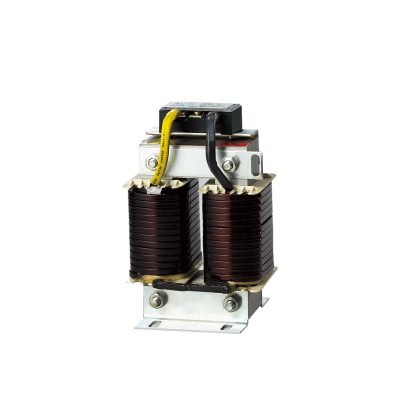
Input & Cutout Reactor

Tableau des spécifications techniques

This table helps engineers and procurement teams quickly match the right input&cutout reactor to their system requirements.

ParamètresTypical Range / Value
Tension nominale208V, 240V, 380V, 415V, 480V, 690V AC
Input Duty Current5A to 1200A (continuous, 100% duty)
Cutout Duty CurrentCapacitor steps from 5 kVAR to 200 kVAR (intermittent)
Impedance (Input)3%, 5%, 7% at rated frequency
Impedance (Cutout)5%, 7%, 10% (matched to capacitor kVAR)
Tolérance d'inductance±5%
Insulation ClassClass F (155°C) or Class H (180°C)
LinearityUp to 2× rated current without saturation
Power Loss< 2.5% of rated kVA
CoolingNatural convection (AN)
EnclosureIP00 (open) or IP20 (terminal cover)
NormesIEC 60076-6, UL 5085-3, CSA C22.2 No. 66

Applications industrielles

Where an input&cutout reactor protects both VFDs and capacitors
A power factor correction capacitor can create resonance with a VFD’s input impedance. An input&cutout reactor solves two problems at once. Below are typical installations where our reactor – placed on the VFD input line or between capacitor and contactor – lowers harmonic distortion at the PCC, stops capacitor switching transients from tripping drives, and extends contactor life by 3×.

Why Choose ZHIMING's Input&Cutout Reactor?

One part replaces two separate reactors

Saves panel space and reduces wiring time. A single input&cutout reactor from Zhiming handles both continuous VFD input current and intermittent capacitor cutout duty without overheating.

Dual impedance rating clearly marked

Input side: 5%. Cutout side: 7%. No confusion during installation. Every input&cutout reactor comes with a metal tag showing both impedance values and corresponding current ratings.

Linear core design up to 2× rated current

No saturation during motor starting or capacitor inrush. This means an input&cutout reactor maintains its harmonic blocking performance even when the VFD briefly overloads.

Low audible noise (≤42 dB at 1m)

acuum impregnated core prevents laminations from buzzing. Even a 600A input&cutout reactor runs quietly inside a control room – operators won’t complain about humming.

Terminals accept dual cable lugs

Both input supply and cutout branch can land on the same reactor terminals. An input&cutout reactor with dual lug holes (2× 25mm² each) eliminates the need for external junction blocks.

Free selection software

Enter VFD current (A) and capacitor kVAR. Software recommends the correct input&cutout reactor model. Zhiming also provides a one‑page connection diagram showing how to wire the input side and cutout branch correctly.

Vous avez des questions ?
Nous avons des réponses

L'un des principaux fabricants de condensateurs de puissance, fort de plus de 25 ans d'expérience, est là pour répondre à toutes vos questions, qu'il s'agisse de problèmes liés aux produits, de questions commerciales ou de problèmes de service.

Vous avez encore des questions ? Nous sommes là pour vous aider

Vous n'avez pas trouvé ce que vous cherchiez ?

Contactez-nous à tout moment

8093446000

Yes, but only if the capacitor step is connected downstream of the reactor (i.e., reactor between supply and both VFD + capacitor). Do not connect the capacitor before the reactor – that would bypass the inrush limiting.

Oversizing reduces voltage drop (good) but also reduces harmonic attenuation (bad). For a 5% reactor, impedance stays 5% only at rated current. At 50% current, effective impedance drops to about 3.5%. Always size within ±20% of actual VFD current.

Use the same reactor input terminals for supply line. Then connect VFD input to reactor output terminals. Also connect the capacitor contactor input to the same reactor output terminals (parallel connection). The reactor sees both loads.

Partially. It limits inrush from the supply side. But if two capacitor steps are on the same bus and one is already closed, closing a second step creates a back‑to‑back inrush that the main reactor cannot fully limit. Add a dedicated detuned reactor per step for such cases.

For an input&cutout reactor with Class F insulation, temperature rise is ≤80°C above ambient (hotspot ≤155°C). At 100% VFD current plus occasional capacitor switching, expect 70–75°C rise. Always leave 10cm clearance for cooling.

Contactez-nous, nous sommes à l'écoute de vos besoins.

Plus de 30 ans d'engagement ciblé,
Favoriser le progrès, améliorer les conditions de vie.

Contact
Veuillez activer JavaScript dans votre navigateur pour remplir ce formulaire.

Contactez-nous dès maintenant !

Veuillez activer JavaScript dans votre navigateur pour remplir ce formulaire.