Not all power factor problems look the same, and not all solutions do either. A small commercial building with a handful of motors has very different needs compared to a steel plant running arc furnaces. That’s why there isn’t just one way to handle تصحيح معامل القدرة — there are several, each designed around specific load characteristics and system conditions.
Choosing the wrong type can lead to wasted investment or, worse, equipment damage. So understanding what’s available and where each method fits is more than just useful. It’s kind of essential.
جدول المحتويات
How Power Factor Correction Methods Are Classified
There are a few ways to categorize these methods. Some people group them by the technology used (passive versus active), others by where the correction is applied in the system. Both perspectives are valid and, honestly, both matter when making a decision.
A broad classification looks something like this:
Passive methods — using fixed reactive components
Active methods — using electronically controlled devices
Hybrid methods — combining elements of both
Within each category, there are specific equipment types and configurations. The sections below break them down.
Passive Power Factor Correction Methods
بنوك المكثفات الثابتة
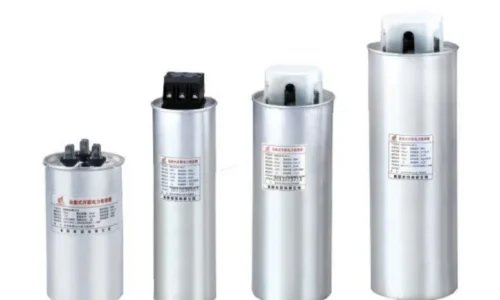
The most basic form of power factor correction. A fixed capacitor bank is sized for a specific reactive power demand and stays connected continuously. It works well when the load is stable and predictable — think of a facility running the same set of motors day in, day out.
The limitation is obvious: if the load changes, the correction doesn’t adjust. That can lead to under-correction during peak demand or over-correction during light load periods.
Detuned Capacitor Systems
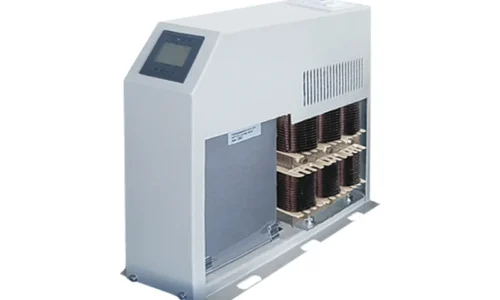
In environments with harmonic distortion (which is increasingly common with variable frequency drives and other non-linear loads), standard capacitors can run into resonance problems. Detuned systems add series reactors to shift the resonant frequency away from dominant harmonics.
It’s a relatively simple modification, but it makes a noticeable difference in system reliability. Facilities that skip this step sometimes end up replacing blown capacitors more often than they’d like.
Automatic Power Factor Correction
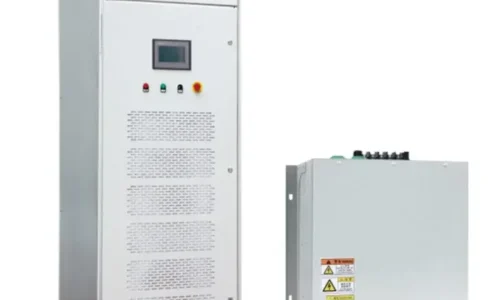
When loads fluctuate throughout the day, fixed solutions fall short. Automatic power factor correction panels — often called APFC panels — solve this by switching capacitor stages in and out based on real-time power factor readings.
How APFC Panels Work
An APFC panel typically includes:
A power factor controller (relay) that monitors the system
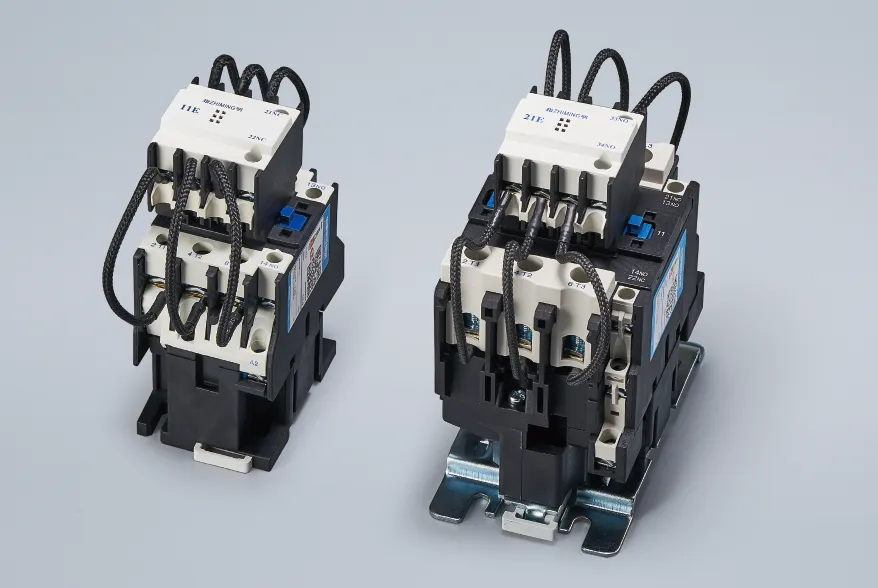
Multiple capacitor stages connected through contactors
Protection devices like fuses and surge arrestors
The controller continuously measures the power factor and adds or removes capacitor steps to maintain the target value. Response time varies, but most systems adjust within a few seconds.
بنوك المكثفات التي تعمل بتبديل الثايرستور
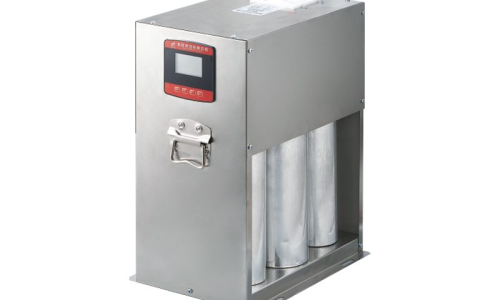
For faster switching — especially in systems where load changes happen rapidly — thyristor-switched capacitor banks replace mechanical contactors with solid-state switches. No arcing, no contact wear, and much quicker response. The trade-off is higher cost and slightly more complex maintenance.
Active Power Factor Correction Methods
Active methods use power electronics to generate or absorb reactive power dynamically. They’re more sophisticated and significantly more expensive, but they handle complex load profiles that passive methods simply can’t.
Active Harmonic Filters
These devices inject compensating currents into the system in real time, canceling out harmonics and correcting the power factor simultaneously. For facilities with heavy non-linear loads — data centers, for instance — active filters are often the only practical option.
Picking the Right Type of Power Factor Correction
There’s no universal answer here. The right method depends on a mix of factors:
Load profile — steady or variable
Harmonic content in the system
Budget and expected payback period
Space available for equipment
Whether future load growth is anticipated
For many standard commercial and industrial setups, an APFC panel with detuned reactors covers most needs. Larger or more specialized operations might require a layered approach — passive correction for the base load and active compensation for dynamic or harmonic-heavy segments.
Getting a proper power quality survey done before committing to any equipment is always worth the effort. The data from even a week-long measurement campaign can prevent costly mismatches between the correction system and the actual load behavior. If you want to know more about power factor correction, please read How to make power factor correction.
الأسئلة الشائعة
What is the difference between active and passive power factor correction?
Passive power factor correction uses fixed components like capacitors and reactors that don’t adjust to load changes. Active power factor correction relies on power electronics to dynamically compensate reactive power and harmonics in real time. Passive is simpler and cheaper; active is more precise and versatile.
Can different power factor correction methods be combined?
Absolutely. Many facilities use a hybrid approach — for example, an APFC panel for general correction combined with an active harmonic filter on a specific distribution board feeding non-linear loads. Combining methods often gives the best balance of cost and performance.
How often should power factor correction equipment be maintained?
Capacitor banks and APFC panels should be inspected at least once or twice a year. Key checks include capacitor health, contactor condition, controller calibration, and connection tightness. Active systems may need more frequent monitoring due to their electronic components, though many come with built-in diagnostics that simplify the process.